

More Than Meets The Eye
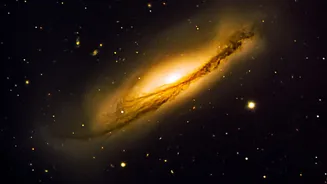
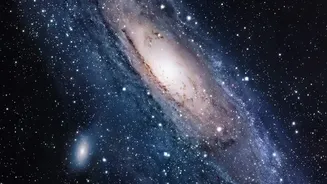
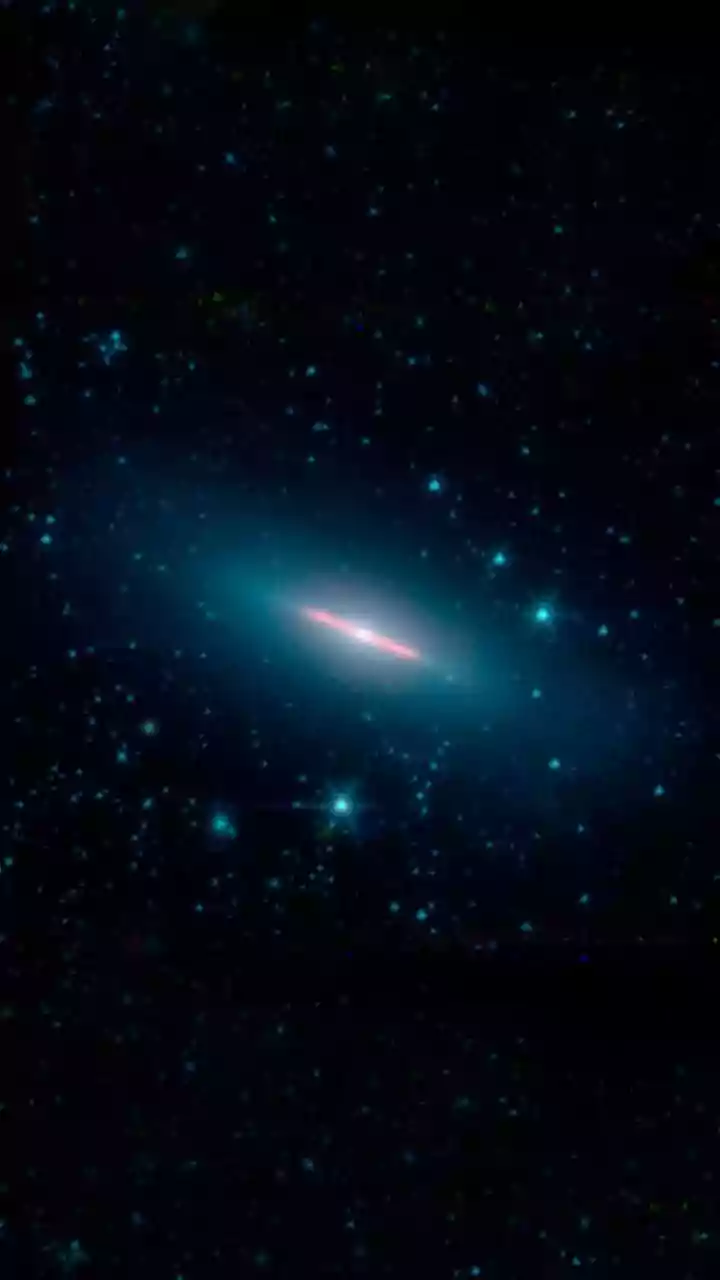
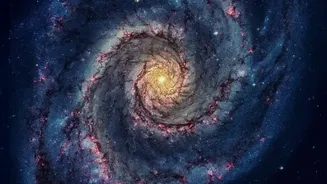
At first glance, a deep-space photograph is a flat, two-dimensional snapshot of celestial wonders. We see swirling galaxies that appear to be side-by-side, their stars and gases seemingly mingling. A recent image released by NASA, captured by the Hubble
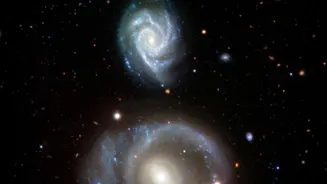
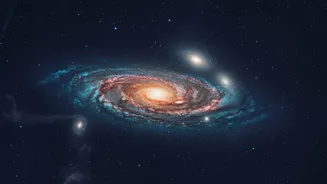
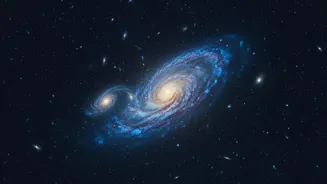
and James Webb space telescopes, uses three distinct galaxy pairings to masterfully illustrate the difference between what we see and what is really there. These images challenge our perception, forcing us to ask a fundamental question: are those two galaxies actually colliding, or are they just aligned from our specific vantage point on Earth, separated by millions of light-years of empty space? The answer teaches us about the true, three-dimensional nature of the universe. One such pair in the new imagery, VV 191, shows a spiral galaxy in front of an elliptical galaxy, but they are not interacting. This cosmic alignment is a perfect case study in perspective.
Cosmic Illusions vs. True Connections
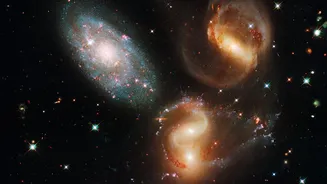
The NASA compilation brilliantly contrasts different types of galactic relationships. One of the featured pairs, known as Arp 107, showcases two galaxies that are genuinely close neighbors, located about 450 million light-years away. They are caught in a gravitational tug-of-war, a slow-motion collision that will unfold over hundreds of millions of years. Telltale signs of their interaction are visible, such as a bridge of gas and dust connecting them and the distorted shape of the larger spiral galaxy. In stark contrast is the pair VV 191. Here, a beautiful spiral galaxy appears to overlap with a smooth, white elliptical galaxy. For years, astronomers have studied these kinds of overlapping pairs. While they are relatively close, they are not actively interacting in a merger. The spiral galaxy is simply in the foreground, and the elliptical galaxy is a backdrop. This chance alignment, however, is incredibly useful for scientists.
A Cosmic Backlight
The alignment of VV 191 is more than just a cosmic coincidence; it's a scientific opportunity. The light from the background elliptical galaxy passes through the foreground spiral galaxy, backlighting its dusty arms. This allows astronomers to study the composition of interstellar dust in the spiral galaxy in incredible detail. By analyzing how the light from the background galaxy is absorbed and altered, scientists can map the dust and better understand its role in forming new stars and planets. The combined power of the Hubble telescope, seeing in visible light, and the James Webb telescope, seeing in infrared, was crucial for this analysis. Webb's infrared capabilities can peer through the dust, revealing what lies behind and within it, while Hubble captures the visible structure. This multi-wavelength view gives a more complete picture than either telescope could achieve alone.
Measuring The Void
So, how do astronomers tell the difference between a true pair and a mere illusion? They have several tools for measuring the immense distances across the cosmos. The primary method is measuring a galaxy's redshift. As the universe expands, distant galaxies are moving away from us, causing the light they emit to stretch to longer, redder wavelengths. The more significant the redshift, the farther away the galaxy is. In the case of VV 191, even though the galaxies appear close, precise redshift measurements confirm they are separated by a vast distance. Another method involves using 'standard candles'—celestial objects, like certain types of supernovae, that have a known, consistent brightness. By comparing how bright they appear to how bright we know they truly are, astronomers can calculate their distance, much like knowing how far away a headlight is by the dimness of its light.