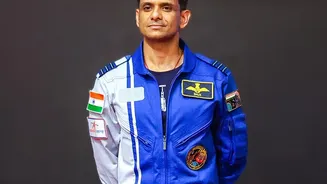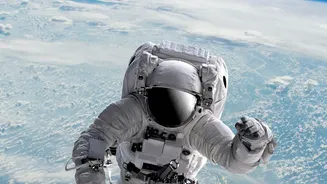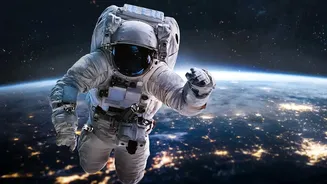








Images showing India’s Gaganyaan astronauts floating effortlessly inside an aircraft are more than just a stunning sight. They represent a critical milestone in the intensive training preparing them for India's first human spaceflight mission.
The 'Vomit Comet' Experience
The incredible
footage captures the astronauts training aboard a specially modified Ilyushin Il-76 MDK aircraft in Russia. This plane, often nicknamed a 'vomit comet', simulates weightlessness by performing a series of parabolic manoeuvres. It climbs sharply at a steep angle and then dives, creating a freefall effect for about 22 to 30 seconds. During these brief windows, everything and everyone inside becomes weightless, allowing the crew to practice moving, working, and orienting themselves without gravity. This hands-on experience is essential for adapting to the microgravity environment they will encounter in low-Earth orbit. It helps them prepare both physically and mentally for the disorienting effects of space.
A Legacy of Collaboration with Russia
India’s decision to partner with Russia for this phase of training builds on a long history of space collaboration. Russia, through its state corporation Roscosmos and subsidiary Glavkosmos, possesses decades of expertise in human spaceflight and operates world-class facilities like the Yuri Gagarin Cosmonaut Training Center. This partnership provides India’s crew access to proven training methods and unique infrastructure, such as the Il-76 MDK, which is specifically designed for these parabolic flights. The training agreement covers medical examinations, access to simulators, and the crucial zero-gravity flights, ensuring the astronauts receive comprehensive preparation from one of the world's most experienced space-faring nations.
The Faces of the Mission
The four men undertaking this rigorous training are all distinguished pilots from the Indian Air Force. The crew consists of Group Captain Prasanth Balakrishnan Nair, Group Captain Ajit Krishnan, Group Captain Angad Pratap, and Wing Commander Shubhanshu Shukla. Selected from a pool of highly qualified test pilots, their extensive flight experience and ability to perform under pressure make them ideal candidates for India's historic mission. While four astronauts are part of the training pool, the final Gaganyaan mission is expected to carry a crew of up to three members into orbit. Their training is a testament to their dedication as they prepare to become the first Indians to travel to space on an Indian spacecraft.
More Than Just Floating
While the zero-gravity flights are a highlight, they are just one component of a much broader training schedule. The astronauts' preparation is exhaustive, covering every conceivable aspect of their mission. This includes in-depth classroom learning on spacecraft systems, extensive simulations of the flight profile from launch to landing, and survival training for various terrestrial environments like sea, desert, and snow in case of an off-course landing. They also undergo rigorous physical conditioning and space medicine training to handle the physiological stresses of spaceflight. This multi-faceted approach ensures the crew is prepared for nominal operations and any potential emergencies, prioritizing their safety above all else.
The Final Countdown to Launch
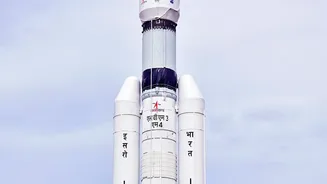
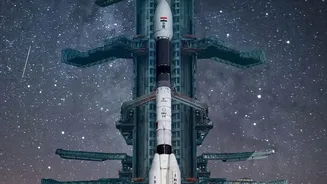
The Gaganyaan mission, formally announced in 2018, aims to send a crew to an orbit of approximately 400 kilometres for a mission lasting about three days, before returning them safely to Earth. If successful, India will become only the fourth nation in the world—after the United States, Russia, and China—to independently launch a human into space. Before the crewed flight, ISRO is conducting a series of uncrewed test missions to validate all the critical systems, including the human-rated launch vehicle (HLVM3) and the life support systems. The first of these uncrewed flights, G1, carrying the humanoid robot 'Vyommitra', is a key step in this validation process. Each successful training exercise, like these flights in Russia, moves India closer to achieving its monumental ambition in space exploration.