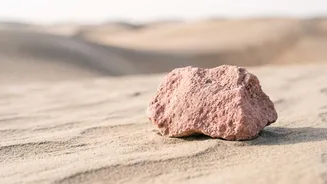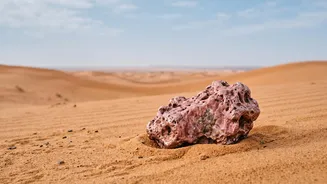





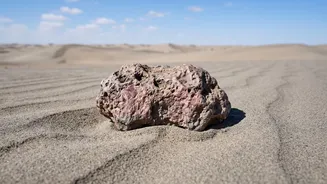

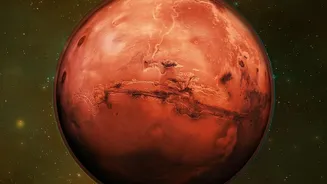
Imagine holding a piece of another world in your hand. Now, imagine that piece is a time capsule from the dawn of the solar system. Scientists are studying just that: a 'rose-coloured' meteorite from Mars, dated to over 4.1 billion years old.
A 'Rosetta Stone' from the Sahara
In 2022,
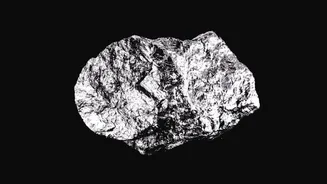
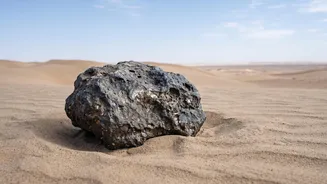
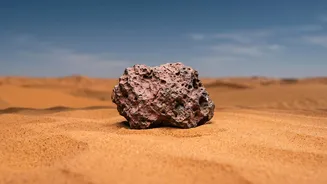
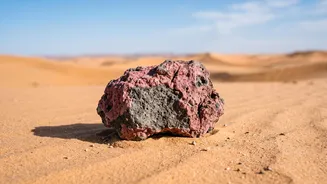
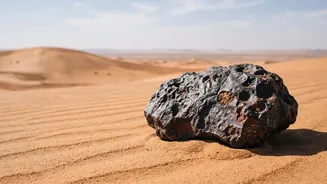
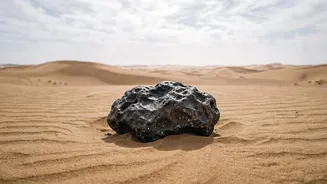
meteorite hunters discovered a series of fragments on a salt plain in Mali, part of the Sahara Desert. The rock, named Teghaza 001, didn't immediately reveal its extraordinary secrets. Weighing a total of just under 800 grams, its unique, rosy hue and mineral composition set it apart. After intensive study by a NASA-funded team, scientists confirmed its Martian origin and astonishing age. Analysis revealed that the rock had been altered by water on Mars at least 4.1 billion years ago, meaning the original rock itself is even older. This makes Teghaza 001 one of the three oldest Martian meteorites ever found on Earth, earning it the nickname a 'Rosetta Stone for Mars' for its potential to unlock the planet's earliest history.
Reading an Interplanetary Postcard
But how can scientists be sure a rock is from Mars, let alone tell its age? The confirmation comes from a combination of clues. Martian meteorites often contain trapped pockets of gas whose composition perfectly matches the atmosphere of Mars as measured by landers like the Viking probes in the 1970s. The age is determined through radiometric dating, a process that measures the decay of radioactive isotopes within minerals. For Teghaza 001, scientists focused on zircon crystals embedded in the rock. Zircons are incredibly durable and act like tiny time capsules. When they form, they lock in uranium but exclude lead. Over billions of years, the uranium decays into lead at a known rate. By measuring the ratio of uranium to lead, geologists can calculate a precise formation age, giving them a birthdate for the rock and a snapshot of the planet it came from.
A Glimpse of an Ancient, Watery Mars
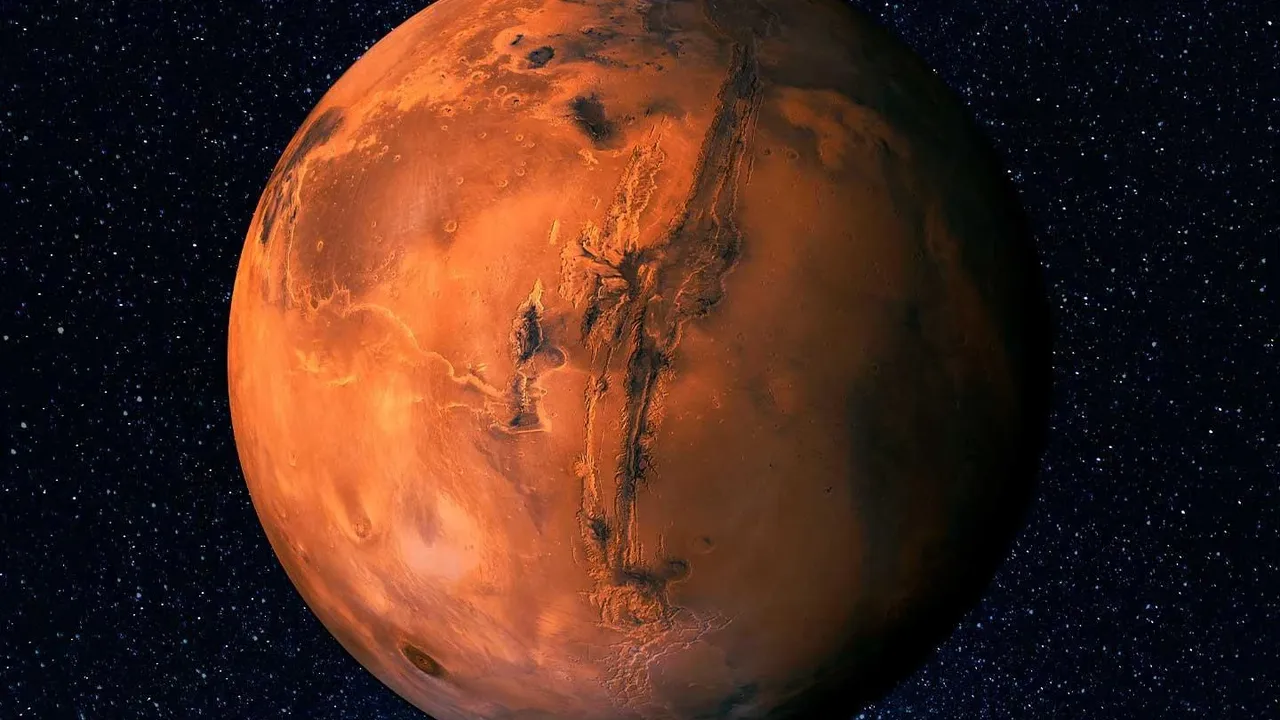
The 4.1-billion-year date is profoundly significant. It places the meteorite's formation within the first few hundred million years of Mars's existence, a period known as the Noachian era. At that time, Earth was just beginning to host the first signs of life. The evidence that Teghaza 001 was altered by liquid water this long ago provides a physical sample backing up theories of a warmer, wetter ancient Mars. Unlike many younger Martian meteorites, which are typically less than 600 million years old, Teghaza 001 offers a rare look at the planet's early crust. Its unique mix of volcanic minerals, shaped by subsurface water, matches observations made by NASA's Mars Reconnaissance Orbiter of the planet's ancient southern highlands.
A Journey Through Space and Time
The meteorite's journey to Earth was a violent one. Millions of years ago, a large asteroid or comet likely slammed into Mars with enough force to blast pieces of the crust into space, overcoming the planet's weaker gravity. This rock then orbited the Sun for an unknown period before its trajectory intersected with Earth's. It survived a fiery descent through our atmosphere to finally land in the Sahara, waiting to be discovered. Teghaza 001 is different from the more common 'SNC' group of Martian meteorites (Shergottites, Nakhlites, Chassignites) and even distinct from another famous ancient meteorite, 'Black Beauty'. Its unique chemistry suggests it comes from a region of the Martian crust that scientists have never been able to study up close before, offering a vital new piece to the grand puzzle of planetary formation.