




The Search for the Invisible
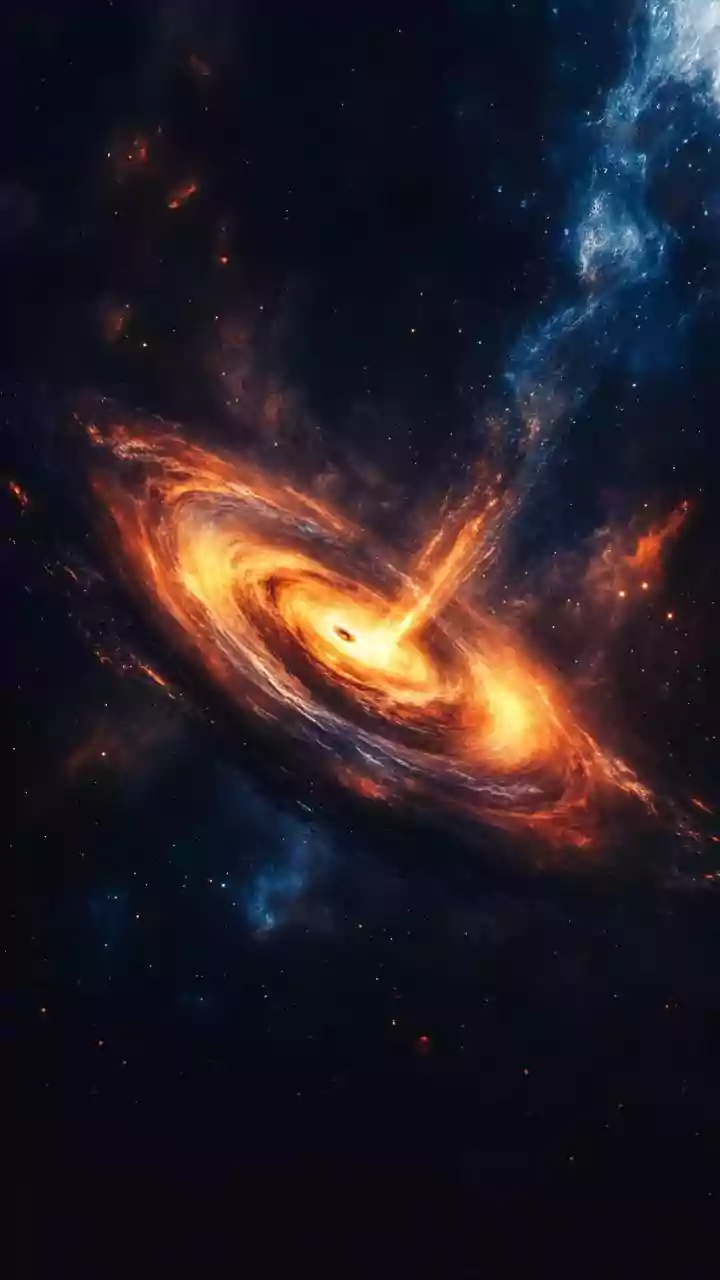
Astronomers estimate there could be millions of black holes in our Milky Way galaxy alone, yet only a small fraction have ever been found. The reason is simple: black holes are incredibly difficult to see. Their gravitational pull is so immense that not
even light can escape, rendering them invisible against the black backdrop of space. Most are only detected when they are 'feeding'—sucking in material from a nearby star, which causes a burst of detectable X-rays. The Black Hole Hunters project, however, is looking for something even more elusive: dormant black holes that aren't feeding and are therefore completely dark. It’s a cosmic game of hide-and-seek, and the project needs a lot more seekers.
Your Mission: Spot the 'Lensing' Effect
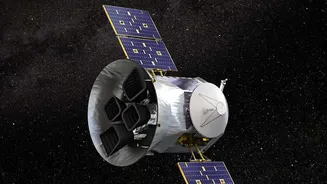
So how do you find something that's invisible? You look for its effect on the things around it. The project uses data from NASA's Transiting Exoplanet Survey Satellite (TESS), a powerful space telescope that continuously monitors the brightness of millions of stars. Your mission is to look for a specific tell-tale sign called 'gravitational self-lensing'. When a black hole in a binary system passes in front of its companion star from our point of view, its immense gravity acts like a magnifying glass, bending the star's light and making it appear temporarily brighter. This creates a distinctive, sharp peak in the star's light graph. You'll be looking at these graphs, or 'light curves', to spot these characteristic spikes.
How to Join the Hunt
Getting started is surprisingly simple and requires no background in astronomy. The project is hosted on Zooniverse, a popular platform for 'citizen science'. All you need is a computer or tablet and an internet connection. After a quick tutorial that shows you what a potential black hole 'lensing' event looks like compared to other stellar variations, you can start classifying real data from the TESS telescope. You'll be presented with a light curve and asked to identify whether you see a potential signal. Don't worry about making mistakes; each graph is shown to multiple volunteers to ensure accuracy, harnessing the power of the crowd to find these rare events.
Why Your Clicks Matter
While computers are great at processing vast amounts of data, the human eye remains uniquely skilled at spotting patterns that algorithms might miss. This project, led by researchers from institutions like the University of Southampton and the Open University, relies on volunteers to sift through millions of light curves and flag the most promising candidates. These flagged systems will then be prioritized for follow-up observations with powerful ground-based telescopes. In essence, your classifications directly guide where professional astronomers point their instruments next. Each click could be the first step toward discovering a new black hole and helping to solve a major cosmic mystery. The data collected by volunteers is also being used to train machine learning models, making future searches even more efficient.
A Global Effort for Galactic Discovery
Since it began, the Black Hole Hunters project has attracted thousands of volunteers from around the world who have made millions of classifications. This collaborative effort is crucial for mapping the hidden population of black holes in our galaxy. Understanding how many of these objects exist, and where they are, can tell us more about how stars evolve and die, and even provide new targets for detecting gravitational waves. Finding these missing black holes is a fundamental step in completing our map of the local universe. It's a massive undertaking, which is why scientists are turning to the public for help.