





The Great Indian Tax Scramble
For salaried individuals and many businesses across India, July is a month of frantic document gathering, form-filling, and number-crunching. It’s the peak of the Income Tax Return (ITR) filing season, a period marked by looming deadlines, confusing clauses,
and the collective hope of a tax refund. The government itself urges taxpayers to file early to avoid the last-minute rush and the stress that comes with it. This annual ritual is a fundamental part of life in a developing nation of over 1.4 billion people, where income tax, corporate tax, and GST form the financial backbone of public services, infrastructure, and welfare schemes. Taxes on income are a crucial source of revenue that funds everything from roads and railways to defence and healthcare. It’s a civic duty, but one that undeniably brings a significant amount of pressure.
A Different World: Monaco's 1869 Pivot
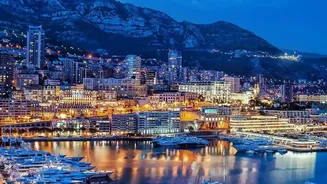
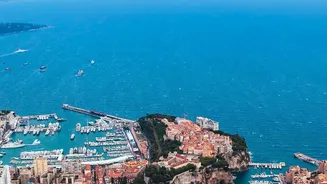
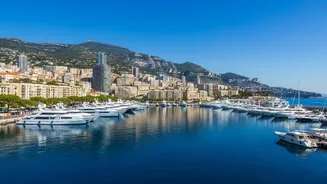
Now, imagine a country where personal income tax doesn't exist. This isn't a futuristic fantasy; it's been the reality in the Principality of Monaco for over 150 years. In 1869, Prince Charles III made a landmark decision to abolish income tax for Monaco's residents. This wasn't just a benevolent gesture. In the mid-19th century, Monaco was on the brink of bankruptcy after losing 80% of its territory—and its primary agricultural revenue from citrus and olive groves—to France. Facing a crisis, Prince Charles III pivoted. He enlisted French casino magnate François Blanc to develop a world-class resort centred around the Monte Carlo Casino. The venture was a spectacular success, attracting wealthy tourists from across Europe where gambling was largely illegal. The casino's profits became so immense they were sufficient to fund the entire state's operations.
How Does a Country Run Without Income Tax?
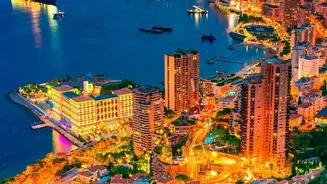
If personal income tax is off the table, how does Monaco pay for its high-end public services, robust police force, and pristine infrastructure? The modern-day answer is a diversified, business-focused model. While the casino still contributes, it's no longer the main source of revenue. A significant portion, estimated to be around 50%, comes from a Value Added Tax (VAT) of 20%, levied on goods and services. This tax is paid by residents and, crucially, by the millions of tourists who visit the tiny, glamorous state each year. The government also collects revenue from a tax on corporate profits for businesses that generate more than 25% of their turnover outside Monaco. Other sources include taxes on real estate transactions and state monopolies in sectors like tobacco and postal services.
The Catch: It's Not a Free-for-All
Before you pack your bags for a tax-free life on the French Riviera, there are a few catches. The exemption from personal income tax applies only to residents of Monaco. And becoming a resident in one of the most densely populated and expensive places on Earth is no easy feat. Furthermore, there's a notable exception: French citizens residing in Monaco are generally still subject to French income tax, a rule established by a 1963 treaty. While Monaco has no wealth tax or property tax, inheritance and gift taxes apply to assets located within the principality. The system is designed to attract high-net-worth individuals and successful businesses, but it is an exclusive club with a very high cost of entry.
A Tale of Two Realities
Could a model like Monaco's ever work in India? The simple answer is no. The scale and needs of the two nations are incomparable. Monaco is a city-state of less than 40,000 people in an area of just two square kilometres. India is a vast nation of 1.4 billion people with enormous developmental and social welfare responsibilities. The tax revenue collected in India is essential for poverty alleviation, education, healthcare, and infrastructure projects on a scale Monaco cannot even imagine. Monaco's economy is built on being a hub for finance, luxury tourism, and the global wealthy—a model that thrives on its unique, small-scale context. India's economic engine is driven by its massive domestic population and diverse industries.