





Why Tapping Your Toes Matters
Often overlooked, simple movements of the feet can have a significant impact on our overall physical well-being. Toe-tapping exercises are a low-impact way to improve circulation, especially for those who sit for long periods. More importantly, these
movements challenge and enhance your coordination and balance. They do this by improving proprioception, which is your body’s ability to sense its own position in space. This sharpened sense can reduce the risk of falls, particularly for older adults. By engaging the muscles in your feet, ankles, and lower legs, you are strengthening the very foundation that supports all of your daily movements, from walking on an uneven sidewalk to reaching for something on a high shelf.
The Foundational Seated Toe Tap
The perfect starting point for any fitness level is the seated toe tap. This variation ensures stability and allows you to focus purely on the movement. Sit upright in a sturdy chair with your feet flat on the floor and your knees bent at a 90-degree angle. Keeping your heels on the ground, simply lift the toes and front of your right foot, then lower them back down in a tapping motion. Start with a slow, deliberate rhythm. Perform 15-20 taps on your right foot, then switch to your left. As you get comfortable, you can increase the speed. The goal is to feel the muscles in your shin (the anterior tibialis) working. This simple drill is excellent for boosting circulation and warming up the lower legs.
Challenge: Alternating Taps
Once the basic tap feels easy, it’s time to challenge your coordination. While seated, begin by tapping both feet simultaneously. Then, try alternating your taps: as your right toes go up, your left toes go down. This requires more focus and builds a stronger connection between your brain and your muscles. For an added layer of difficulty, try a heel-and-toe combination. Tap your right toes, then tap your right heel. Switch to the left foot and repeat. Combining these patterns forces your brain to work harder, enhancing neuromuscular coordination. You can even put on some music and try to tap along to the beat, turning your exercise into a fun, rhythmic activity.
Standing Taps for Balance
Taking the exercise upright adds a significant balance component. Stand near a wall or a sturdy piece of furniture for support if needed. From a standing position, shift your weight to your left leg. Now, extend your right foot slightly in front of you and tap your toes on the floor several times. Bring it back and switch legs. To increase the challenge, you can perform a 3-way toe tap. While balancing on your left leg, tap your right toes to the front, then to the side, and then behind you, returning to the center each time. This dynamic movement strengthens the stabilizing muscles in your standing leg's hip, knee, and ankle, drastically improving your single-leg balance.
Lying Down Taps for Core Strength
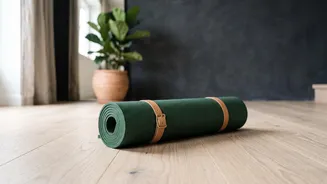
Toe taps can also be a fantastic core-strengthening exercise. Lie on your back on a mat, with your knees bent and directly over your hips, and your shins parallel to the floor (a 'tabletop' position). Keeping your core engaged and your lower back pressed gently into the floor, slowly lower your right foot and tap your toes on the mat. Return the right leg to the starting tabletop position with control, and then repeat with the left leg. The key is to prevent your back from arching and to move slowly, which forces your deep abdominal muscles to work to stabilize your pelvis.
Comfort Is Key, Not Pain
The headline says it best: these exercises should be a comfortable challenge, not a test of pain. It is crucial to listen to your body. If you feel any sharp or shooting pain in your joints, stop immediately. The sensation you're looking for is muscle fatigue or a mild stretch. Start with a small number of repetitions and gradually increase as you get stronger. The beauty of these movements is their adaptability. If standing feels unstable, stick with the seated versions. If lying down is uncomfortable, focus on seated and standing variations. The aim is consistency and pain-free progress, building a stronger, more coordinated body one tap at a time.