




The Game Changer: Faster Trains
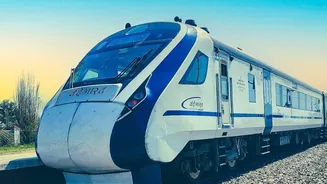
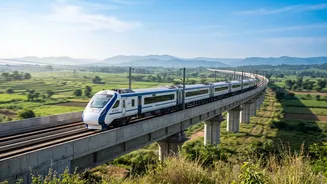
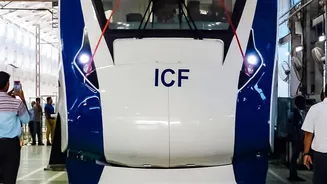
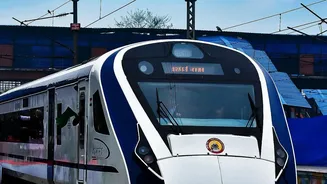
The single biggest shift in Delhi-Varanasi travel has been the introduction of the Vande Bharat Express. These semi-high-speed trains have significantly cut down the journey time, making rail travel a far more attractive option for a short trip. The Vande Bharat Express can complete
the journey in approximately eight hours, a considerable improvement over many other trains that can take anywhere from 10 to 17 hours. This means a traveller can leave Delhi in the morning and be in Varanasi by the afternoon, making a two-day weekend feel much less rushed. With chair-car seating and onboard catering, it offers a comfortable alternative to overnight journeys, allowing tourists to arrive fresh and ready to explore. While the long-term vision includes a high-speed bullet train that could slash the journey to under four hours, the Vande Bharat is the 'here and now' solution making an immediate impact.
On the Road: Smoother and Quicker Drives
Driving from Delhi to Varanasi was once an endurance test, often taking upwards of 14-15 hours. However, significant progress on new expressways is set to make road travel a more viable and faster option. The development of corridors like the Varanasi-Kolkata Expressway and other connecting highways is steadily reducing this travel time. While the full end-to-end expressway is still a work in progress, sections are becoming operational and improving the driving experience. These modern, access-controlled highways are designed for higher speeds and safety, promising to eventually bring the Delhi to Varanasi drive closer to the 10-hour mark. This opens up the possibility of a comfortable overnight drive or a shared journey with friends, adding flexibility for weekend travellers who prefer the freedom of their own vehicle.
In the Air: A Major Airport Overhaul
For those shortest on time, flying has always been the fastest way to get to Varanasi. The journey is now becoming even more seamless thanks to a massive expansion of Lal Bahadur Shastri International Airport. A ₹2,870 crore project is underway to dramatically increase the airport's capacity from 3.9 million to 9.9 million passengers annually. This includes a new, larger terminal building, an extended runway capable of handling bigger aircraft, and the country's first-ever under-runway highway tunnel. The expansion, parts of which are being fast-tracked for completion, means more flights, better facilities, and potentially more competitive airfares. For Delhi residents, this enhanced air connectivity solidifies Varanasi's status as a 'fly-in, fly-out' weekend destination.
Getting Around Varanasi: The Final Hurdle
Reaching Varanasi is only half the battle; navigating its famously congested streets is the other. Here, too, significant changes are afoot. The city is preparing to launch India's first urban public transport ropeway system. Targeted for operation by November 2026, this 3.8 km corridor will connect Varanasi Cantt station to Godowlia, near the ghats, in about 16 minutes. This will be a game-changer for tourists, bypassing the chaotic traffic of the old city. Additionally, the new Varuna Elevated Corridor, an ambitious project approved in 2026, will create a high-capacity road link across the city, drastically cutting travel times between the airport, railway stations, and major highways from nearly an hour to around 20 minutes in some cases. These projects will make getting from your train or plane to the heart of the action quicker than ever before.