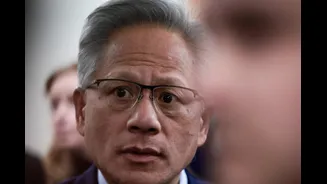






In a stunning reversal that sent shockwaves through Wall Street and Silicon Valley, Nvidia co-founder Jensen Huang has been reinstated as CEO just 11 days after his abrupt resignation, a move publicly championed by President Donald Trump.
An Unprecedented 11-Day Saga
The whirlwind
series of events began on November 12, when Nvidia announced that its celebrated founder and CEO, Jensen Huang, had resigned. The departure came after reports surfaced regarding his personal conduct, including extramarital affairs, one of which involved a woman U.S. officials reportedly suspected of having ties to Chinese intelligence. In his absence, CFO Colette Kress stepped in as interim CEO. The news rattled investors, and Nvidia's stock, a titan of the AI boom, fell sharply, losing a significant portion of its value over the next week and a half. Then, on November 23, in a move that stunned observers, Nvidia's board announced it had unanimously voted to reinstate Huang, effective immediately. The market's response was immediate and explosive, with the company's stock soaring over 30% and adding roughly $950 billion in market value in a single day.
A Presidential Endorsement
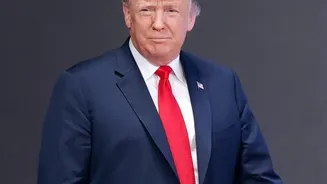
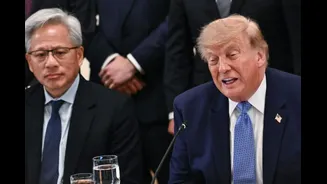
Adding a significant political dimension to the corporate drama was President Donald Trump, who publicly advocated for Huang's return. Days before the reinstatement, Trump described Huang as one of the 'truly most brilliant minds in the world' and stated he would 'love to see Jensen be given a second chance'. After the board's decision was announced, Trump took to his Truth Social platform to applaud the move as the 'correct and proper decision'. He went further in a subsequent CNBC interview, claiming he played a direct role in the outcome. 'I spoke to them and I convinced them,' Trump said of the Nvidia board. He also dismissed national security concerns, stating that the U.S. government had no reason to believe Huang's return posed a risk.
The Board's Dramatic Reversal
The decision to bring Huang back marked a complete turnaround for Nvidia's board. Having accepted his resignation less than two weeks prior, the board explained its reversal by noting it had held several conversations with Huang and received 'input from senior levels of the United States government'. In its official statement, the board said it was 'satisfied with respect to Mr. Huang's candor and ability to lead' and, based on government input, was 'confident that Mr. Huang's reinstatement poses no national security risk'. Harvey Jones, who had become the board's chair upon Huang's exit, stated, 'The Board believes Jensen is the right person to lead NVIDIA, and that his reinstatement is in the best interests of our stockholders, employees, partners and customers'.
Wall Street's Decisive Verdict
If there were any doubts about Huang's importance to Nvidia, the market's reaction erased them. The stock's nosedive following his departure was a clear sign of investor anxiety about the company's future without its visionary founder. The sell-off was based on fears over leadership, not performance, as the company had recently posted staggering revenue growth. The rally upon his return was even more telling. The single-day gain of nearly a trillion dollars in market capitalization was one of the largest in history, underscoring the immense value investors place on his leadership. Several analysts immediately upgraded the stock, citing the removal of the 'key overhang' related to the CEO change and calling his return a 'win for AI and a win for investors'.