



The Blood Sugar Rollercoaster
Many traditional vegetarian meals, especially in India, are rich in carbohydrates. Think of a simple plate of white rice and a light dal, poha, or sabudana khichdi. These foods are primarily made of simple or refined carbohydrates. When you eat them,
your body quickly breaks them down into glucose, causing a rapid spike in your blood sugar. In response, your pancreas releases a surge of insulin to shuttle that sugar out of your bloodstream and into your cells for energy. This process can be too efficient, leading to a sharp drop in blood sugar, sometimes called a 'crash'. This sudden dip signals to your brain that you're low on energy, triggering hunger pangs and often, a craving for more carbs to bring your sugar levels back up.
The Missing Satiety Trio
The feeling of fullness, or satiety, is controlled by more than just a full stomach. It’s a complex hormonal process influenced by the nutrients you consume. Three key players in promoting lasting satiety are protein, fiber, and healthy fats. Unfortunately, a meal centered entirely around refined carbs often lacks sufficient amounts of this trio. Protein is significantly more satiating than carbohydrates. It takes longer to digest and has been shown to increase the release of hormones that signal fullness while suppressing the hunger hormone, ghrelin. Similarly, fiber, especially soluble fiber, slows down digestion by forming a gel-like substance in your stomach. This delays stomach emptying and slows the absorption of sugar, preventing those sharp spikes and crashes. Healthy fats also play a crucial role in satiety and help your body absorb essential fat-soluble vitamins.
Building a More Balanced Plate
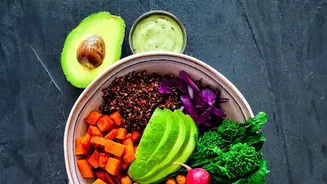
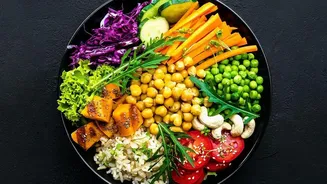
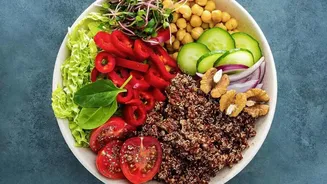
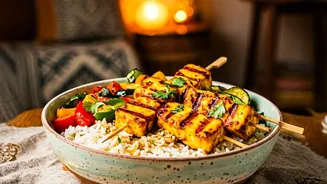
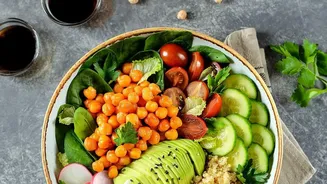
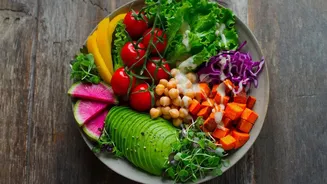
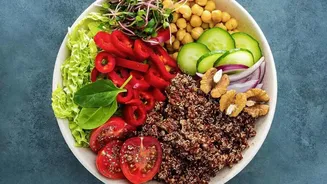
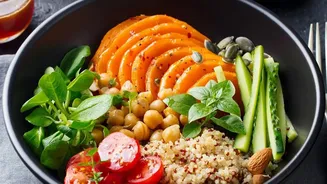
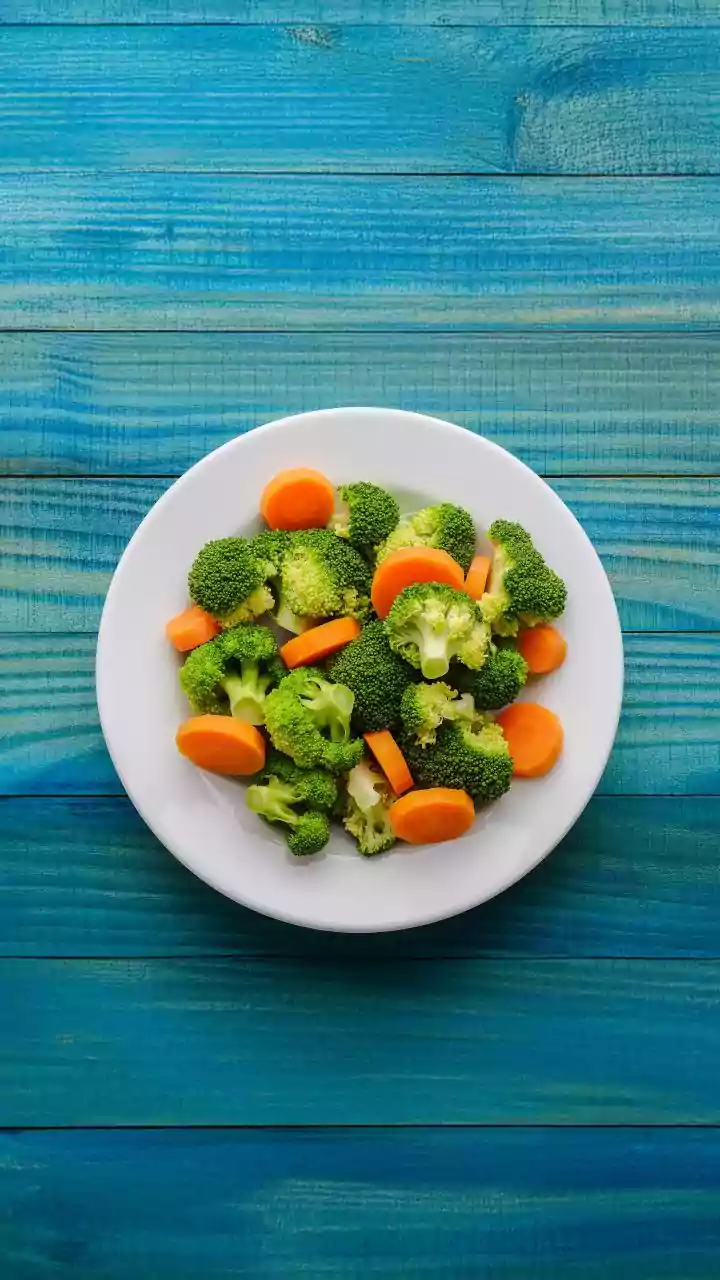
The solution isn't to eliminate carbohydrates, which are a vital source of energy, but to balance them intelligently. The goal is to create a meal that moderates the blood sugar response and keeps you feeling full for longer. A simple and effective model is the 'plate method'. Aim to fill half of your plate with non-starchy vegetables like leafy greens, broccoli, bell peppers, or cauliflower. These are packed with fiber and nutrients. One quarter of your plate should be a high-quality protein source. For vegetarians, this could be a generous serving of dal, chickpeas (chana), kidney beans (rajma), paneer, tofu, or a cup of curd. The final quarter of your plate can be your complex carbohydrate source, such as brown rice, millets, quinoa, or a whole-wheat roti.
Simple Swaps for Everyday Meals
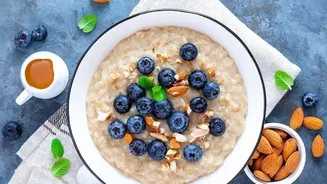
Making your everyday Indian meals more satisfying can be easy with a few simple adjustments. If you're having poha for breakfast, mix in some roasted peanuts or sprouts to boost protein and add a side of curd. When you cook dal, make it thicker and consider adding vegetables like spinach or carrots for extra fiber. Instead of relying solely on potato-based sabzis, incorporate paneer, soya chunks, or mixed vegetables. Snacking is another great opportunity to add protein and fiber. Instead of reaching for packaged namkeen, opt for a handful of nuts like almonds and walnuts, roasted chana, or a bowl of fruit with yogurt. Even your roti can get an upgrade; mixing besan (chickpea flour) with your regular wheat flour is an easy way to increase its protein content.