





A Historic Journey Begins
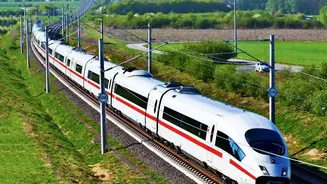
On September 27, 2026, Union Home Minister Amit Shah flagged off the inaugural run of India's first LNG-powered train from Sabarmati station in Ahmedabad, Gujarat. The eight-coach passenger train, a modified Diesel Electric Multiple Unit (DEMU), made
its first journey to Mahesana. This launch is not just about a single train; it represents a strategic pivot by Indian Railways to explore alternative fuels, aiming to slash its massive diesel consumption and move towards its ambitious goal of becoming a net-zero carbon emitter by 2030. This initiative follows closely on the heels of the introduction of a hydrogen-powered train, signaling a multi-pronged approach to greening the nation's railway network.
How an LNG Train Works
So, how does a train run on gas? The technology is a dual-fuel system, meaning the engine doesn't run on LNG alone. Instead, two 1,400-horsepower Driving Power Cars (DPCs) have been retrofitted with a sophisticated kit that allows them to run on a blend of diesel and LNG. The system is designed to substitute up to 40% of diesel with LNG. The LNG is stored in cryogenic tanks at a super-chilled -162°C, which liquefies the gas and makes it dense enough for transport and use. Each DPC is fitted with a 2,200-litre tank, giving the train a considerable range before needing a refill. This retrofitting approach is key, as it allows Indian Railways to modernize its existing fleet of DEMU trains without the immediate need for complete replacement.
The Twin Benefits: Cost and Carbon
The primary drivers behind this innovation are economic and environmental. Indian Railways is one of the country's largest consumers of diesel, and by substituting a portion of it with LNG, which is generally cheaper, the potential for cost savings is substantial. Early estimates based on trial runs project an annual saving of around ₹23.9 lakh for a single eight-coach train. Environmentally, the benefits are even more compelling. Natural gas burns much cleaner than diesel. The use of LNG is expected to significantly reduce emissions of harmful pollutants like carbon dioxide (CO2), nitrogen oxides (NOx), and particulate matter (PM). This contributes directly to cleaner air and helps India meet its climate targets.
A Bridge Fuel for a Greener Future
While Indian Railways is aggressively pursuing full electrification, with nearly 99.6% of its broad-gauge network already electrified, there remain routes where this is not yet technically or economically viable. Many DEMU trains, which generate their own power onboard and cannot be pulled by a separate electric locomotive, still have years of operational life left. Converting these assets to run on a dual-fuel LNG system provides a perfect “bridge” solution. It allows the railways to immediately lower the carbon footprint of its non-electrified routes and existing diesel-powered assets, making the fleet greener without waiting for 100% electrification or a complete switch to next-generation technologies like hydrogen.
Challenges and the Road Ahead
The successful rollout from Sabarmati is a landmark achievement, but scaling this technology across the network presents challenges. A key hurdle will be establishing the necessary infrastructure for LNG, including storage facilities and refueling stations across the vast railway network. The initial conversion cost for a DEMU rake is around ₹1.86 crore, an investment that needs to be scaled up for a wider impact. Furthermore, while this project focuses on passenger trains, the long-term vision includes adapting similar technology for heavy-duty freight transport, which accounts for a large portion of diesel consumption. The success of this pilot will be closely watched to determine the feasibility and pace of a broader, nationwide rollout.