




The New Arms Race Above
For decades, the idea of weapons in orbit was the stuff of science fiction. In 2026, it is a geopolitical fact. In a significant shift, the United States recently confirmed for the first time that it has 'on-orbit space control weapons' deployed. This
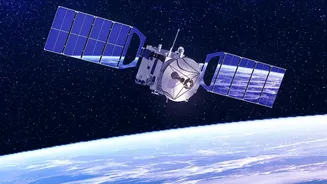
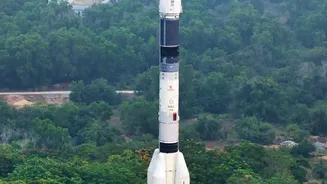
announcement follows years of strategic ambiguity and brings the shadowy world of counter-space capabilities into the light. Major global powers, including the US, China, and Russia, are actively developing and deploying technologies designed to disrupt, disable, or destroy satellites. These are not necessarily the explosive weapons of popular imagination; they include everything from signal jammers and cyber-attacks to 'co-orbital' satellites that can manoeuvre close to an adversary's assets for inspection or interference. Even India has demonstrated its own capability in this domain with the successful 'Mission Shakti' anti-satellite (ASAT) missile test in 2019, joining an exclusive club of nations. The strategic importance is clear: modern economies and militaries are critically dependent on satellites for communication, navigation (like GPS), and intelligence. Dominating space means controlling the nerve centre of a 21st-century nation.
Treaties with Gaping Holes
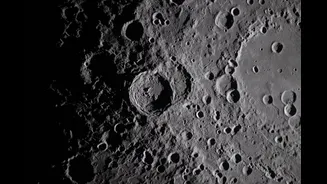
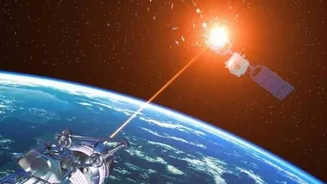
One might assume that international law prevents such a build-up. The cornerstone of space law, the 1967 Outer Space Treaty, expressly forbids placing nuclear weapons or other weapons of mass destruction (WMDs) in orbit. It mandates that celestial bodies like the Moon be used for peaceful purposes only. However, the treaty has a crucial loophole: it does not prohibit the placement of conventional weapons in space. This legal grey area has allowed for the development of kinetic 'kill vehicles', ground-based satellite jammers, and directed-energy weapons without technically violating the treaty's letter. While nations like Russia and China have called for the complete demilitarisation of space following the US announcement, their own significant investments in counter-space technology paint a more complicated picture. The existing legal framework, designed for a different era, is struggling to keep pace with rapid technological advancement, leaving a vacuum where an arms race can flourish.
The Real Limitation: Mutually Assured Destruction 2.0
If treaties are not the primary barrier, what is? The single greatest limitation on full-scale orbital warfare is not legal or even ethical, but physical. The problem is space debris. Any kinetic attack on a satellite—smashing it with a missile or another satellite—creates a cloud of thousands of pieces of shrapnel moving at hypersonic speeds. This debris does not simply vanish. It remains in orbit for years, decades, or even centuries, turning that orbital path into a lethal minefield for every other satellite, including those belonging to the attacker. This scenario is famously known as the Kessler Syndrome, named after the NASA scientist who theorised it in 1978. It posits a runaway chain reaction where collisions create more debris, which in turn causes more collisions, until entire orbital bands become unusable. This is not a distant threat; experts warn the process has already begun, with debris in low-Earth orbit growing significantly in recent years.
A War No One Can Win
The Kessler Syndrome acts as a form of mutually assured destruction for the space age. A nation that destroys an enemy's satellites also pollutes the orbital environment upon which its own critical infrastructure depends. The temporary military advantage gained would be dwarfed by the long-term economic and strategic losses. Imagine a world without reliable GPS, weather forecasting, global financial transactions, or the instant communications that power the modern world. This is the price of a kinetic war in space. Even non-destructive weapons like jammers and cyber-attacks are used with caution because of the risk of escalation. The US pledge to not conduct debris-generating ASAT tests, along with similar sentiments from other nations, acknowledges this shared danger. While non-kinetic options are preferred, the risk of a conflict escalating to physical destruction means that the debris problem casts a long shadow over all military space operations. The very physics of the orbital environment creates a powerful, built-in deterrent against its own weaponisation.