





The Reality of the 2026 Climb
Before planning an ascent, it's crucial to understand the current situation. Overtourism has prompted authorities to implement significant measures to manage the flow of hikers, especially on the popular Yoshida Trail. For the 2026 season, all climbers
on all four routes must pay a mandatory fee of ¥4,000. The Yoshida Trail now has a daily cap of 4,000 climbers, managed through a reservation system. Furthermore, its gate closes to climbers without mountain hut reservations from late afternoon until the early morning to discourage risky, non-stop 'bullet climbing'. These rules are designed to improve safety and preserve the environment, but they also mean that a spontaneous climb is largely a thing of the past. For many travelers, the logistics and crowds can detract from the spiritual experience of the mountain.
Chureito Pagoda: The Postcard-Perfect View
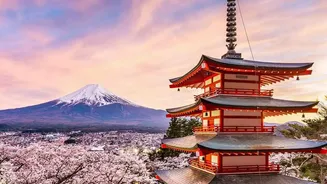
You have almost certainly seen this view online or in a travel magazine: a striking five-story red pagoda with Mount Fuji rising majestically in the background. This is the Chureito Pagoda, located within the Arakura Sengen Shrine park. Reaching the viewing platform requires a climb of nearly 400 steps, but the reward is one of Japan's most definitive and breathtaking landscapes. The scene is particularly famous during the cherry blossom season in mid-April and again during the vibrant autumn colours of early November. It perfectly frames the mountain's grandeur, offering an iconic photo opportunity and a moment of awe without the high-altitude exertion.
Lake Kawaguchiko: The Classic Reflection
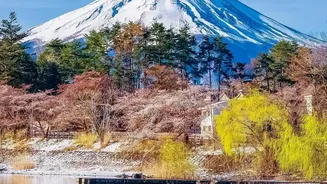
Of the Fuji Five Lakes, Kawaguchiko is the most accessible and offers some of the most sought-after views. From the northern shores, on a clear and still day, you can witness a perfect mirror reflection of Mount Fuji on the water's surface. This area is well-developed for tourism, with lakeside hotels, restaurants, and cafes all offering stunning vantage points. For a panoramic perspective, take the Mt. Fuji Panoramic Ropeway up the slopes of Mount Tenjo. Whether you’re strolling along the shore, taking a sightseeing boat across the lake, or enjoying a coffee, Lake Kawaguchiko provides a relaxed and picturesque way to appreciate Fuji's scale and beauty from its base.
Hakone: Onsen, Art, and Lakeside Vistas
Hakone is a premier resort destination nestled in the mountains, famous for its hot springs (onsen), art museums, and varied views of Fuji. A cruise on Lake Ashi is a highlight, offering glimpses of the mountain on clear days, often with the famous red torii gate of Hakone Shrine in the foreground. For an even better vantage point, the Hakone Ropeway provides sweeping aerial views as it transports you over the volcanic valley of Ōwakudani. While Fuji can be shy and often hides behind clouds, Hakone offers so much to do that a trip is never wasted. It’s an ideal choice for travelers who want to combine their Fuji-gazing with a broader cultural and relaxing retreat.
Beyond the Beaten Path: Quieter Lakes and Hikes
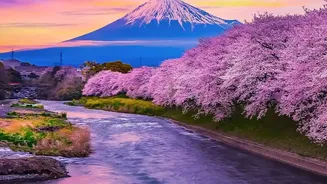
If you want to escape the crowds that flock to Kawaguchiko and the Chureito Pagoda, several other options await. The other four of the Fuji Five Lakes—Saiko, Yamanakako, Shojiko, and Motosuko—are generally quieter and offer their own unique perspectives of the mountain. Lake Yamanakako is popular with photographers hoping to capture 'Diamond Fuji,' when the rising or setting sun aligns perfectly with the summit. For those wanting a more active experience, consider a day hike on a nearby mountain. Mount Kintoki, a popular trail in the Hakone area, rewards hikers with incredible, unobstructed views of Mount Fuji from its peak, offering a sense of accomplishment with a fraction of the crowds.