



The Vision: More Than Just Speed
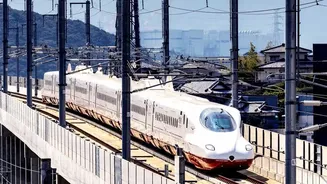
The Mumbai-Ahmedabad High-Speed Rail (MAHSR) corridor is poised to redefine intercity travel in India. Using Japan’s famed Shinkansen technology, the bullet train aims to slash the journey time between the two financial hubs from over six hours to just
under two. With a design speed of 350 kmph and an operating speed of 320 kmph, the project promises unparalleled efficiency and safety. But its significance extends beyond speed. This corridor is a pilot for a nationwide network, setting a standardised template for future high-speed rail projects across the country. The goal is to boost economic growth, enhance tourism, and create a modern, efficient transport backbone for a rapidly developing nation.
State of the Project: Progress on the Ground
Construction on the MAHSR corridor is advancing at a brisk pace, particularly in Gujarat, where land acquisition was completed relatively smoothly. According to the National High Speed Rail Corporation Limited (NHSRCL), the agency executing the project, significant progress has been made on the elevated viaducts, which form the majority of the route. As of late 2026, hundreds of kilometres of pier work and viaduct construction have been completed. Work in Maharashtra, after facing earlier delays due to land acquisition and political hurdles, is now also making rapid headway. Construction is active on elevated stations like Thane, Virar, and Boisar, and major river bridges are taking shape. This accelerated progress across both states is critical for meeting the project's ambitious timelines.
The 2027 Target: A Phased Approach
Railway Minister Ashwini Vaishnaw has confirmed that the project is targeting a trial run in 2027, with the first passenger service to follow. However, this won't be for the entire 508-km corridor at once. The launch will be phased, with the first section—likely between Surat and Bilimora in Gujarat—expected to become operational by August 2027. Subsequent sections, such as Surat-Vapi, will open progressively as they are completed. The first body frame for an indigenous high-speed train has been completed and sent for testing, with trial runs on the tracks anticipated between May and June of 2027. These trials are expected to last for two to four months before the inaugural service is launched.
Overcoming Hurdles and Building Expertise
The journey to this point has not been without challenges. The project has contended with complex land acquisition processes, the global pandemic, and the engineering complexities of building in diverse terrains, including an undersea tunnel near Mumbai. These factors contributed to initial delays and an increase in project costs. However, the project is also a massive exercise in capacity building. Under the 'Make in India' initiative, there's a strong push for indigenous manufacturing of components and even the train sets themselves. This collaboration with Japan involves significant technology transfer, aiming to create a domestic ecosystem for high-speed rail that will serve India for decades to come. The experience gained from the MAHSR is creating a blueprint that officials hope will make future corridors faster and more cost-effective to build.
A Glimpse into India's Future
The bullet train is more than an infrastructure project; it's a statement of intent. As concrete pillars rise and tracks are laid, the 2027 trial run is emerging as a tangible milestone for India's technological and developmental ambitions. While the full corridor linking Mumbai and Ahmedabad may still be a few years from completion, the launch of the first section will mark a revolutionary step in Indian public transport. It will serve as a proof of concept for the wider high-speed network planned to connect other major cities like Delhi, Chennai, and Hyderabad. The project aims to deliver not just speed, but also world-class safety and reliability, setting a new standard for travel in the nation.