

The Ultimate Ejection Seat
Think of the Crew Escape System (CES) as the most advanced ejection seat ever built. But instead of ejecting a single pilot from a fighter jet, its job is to pull the entire crew capsule, with the astronauts inside, away from a malfunctioning rocket.
Its sole purpose is to ensure the survival of the crew if something goes wrong during the most dangerous phases of a mission: on the launchpad or during the rocket's powerful ascent through the atmosphere. The philosophy is simple and uncompromising: the rocket can be lost, but the crew must be brought home safely. This system is a cornerstone of the Gaganyaan programme, representing India's commitment to the highest global standards of astronaut safety.
How It Works: A Race Against Time
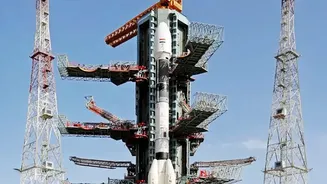
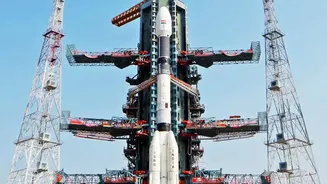
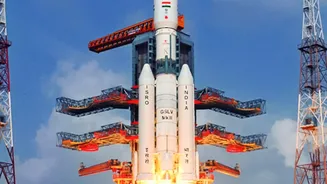
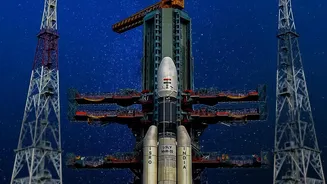
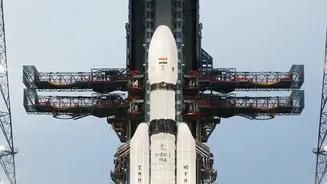
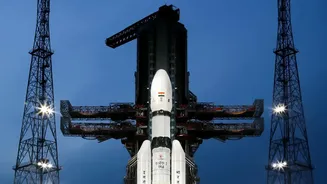
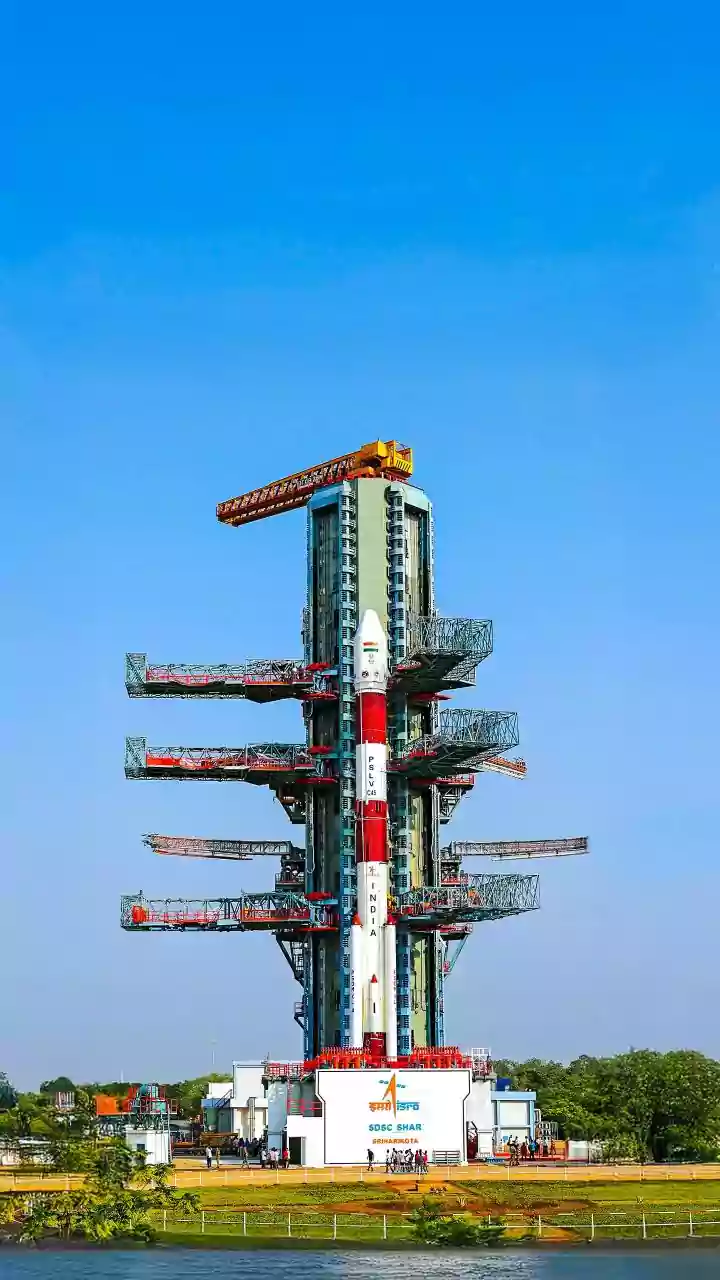
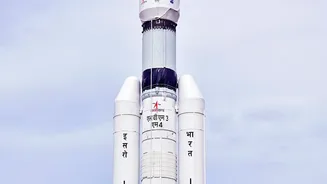
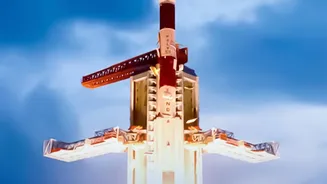
The Crew Escape System is a tower-like structure fixed to the very top of the LVM3 rocket, directly above the crew module. This 'puller' type system is equipped with a set of powerful, quick-acting solid rocket motors. These aren't ordinary motors; they use high-burn-rate propellants designed to fire with immense force, generating an acceleration far greater than the launch vehicle itself. The entire process is automated. An Integrated Vehicle Health Management system constantly monitors the rocket for any signs of trouble, like a loss of thrust or structural failure. If a critical problem is detected, it triggers the abort sequence in milliseconds. The CES motors ignite, violently pulling the crew module clear of the failing rocket. Special reverse-flow nozzles are used on some motors to direct the hot exhaust away from the crew capsule, ensuring their safety during the escape. Once at a safe altitude, the escape system detaches, and a complex sequence of parachutes deploys to slow the capsule for a gentle splashdown in the sea.
Trial by Fire: Rigorous Testing
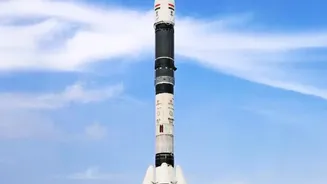
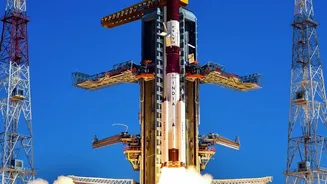
A system this critical cannot be left to chance. The Indian Space Research Organisation (ISRO) has been conducting a series of exhaustive tests to prove the CES works perfectly under the most stressful conditions imaginable. A major milestone was the Pad Abort Test in July 2018, which demonstrated the system's ability to pull the crew module to safety from the launch pad itself. More recently, the Test Vehicle Abort Mission-1 (TV-D1) in October 2023 was a spectacular success. ISRO launched a special test rocket and deliberately triggered an in-flight abort as the vehicle was travelling at Mach 1.2, or slightly above the speed of sound. The CES performed exactly as planned, separating the module, which was then successfully recovered from the Bay of Bengal by the Indian Navy. Further tests, like the planned TV-D2 mission, will continue to validate the system across different flight conditions before any astronaut flies.
A Global Standard for Safety
The use of a launch abort system is not a new concept; it's a proven, globally accepted necessity for human spaceflight. Similar 'puller' style escape towers have been a feature of crewed spacecraft since the early days of space exploration, including the American Apollo missions that went to the Moon and the reliable Russian Soyuz spacecraft. In fact, the Soyuz escape system famously saved the lives of two cosmonauts in 1983 when their rocket exploded on the launchpad. By developing and rigorously testing its own advanced Crew Escape System, ISRO is not just reinventing the wheel; it is ensuring that India's 'gaganauts' will fly with a level of safety that matches the world's most experienced spacefaring nations like the US, Russia, and China.