




What We Thought We Knew
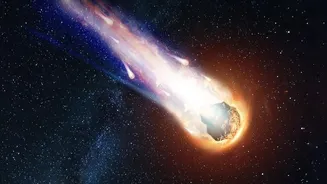
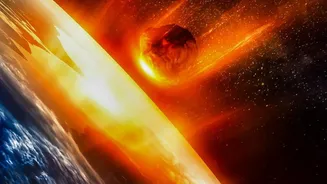
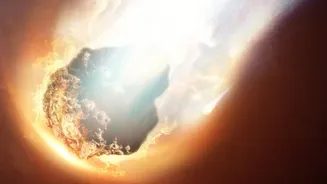
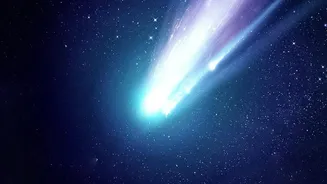
For a long time, the common explanation for the colour of a meteor was straightforward: it was all about the air. The incredible speed of a meteoroid entering our atmosphere—anywhere from 25,000 to 160,000 mph—compresses and superheats the air in its
path, creating a brilliant streak of light. Scientists believed the colours were primarily caused by atmospheric gases, mainly nitrogen and oxygen, which glow red when intensely heated. This made sense, as it’s a similar principle to how auroras are formed. The meteoroid itself was seen as the trigger, but the atmosphere was the main source of the light show. According to this model, faster meteors would create more intense colours, but the palette was largely limited to the chemical makeup of our own air.
A More Complex Cosmic Recipe
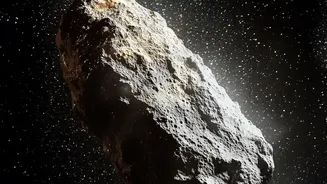
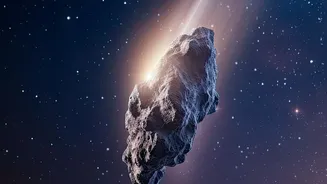
Recent observations and a deeper analysis of meteor spectra have painted a much more intricate picture. NASA findings now emphasise that the colour is a dynamic blend of two sources: the heated atmosphere and the chemical composition of the meteoroid itself. As the space rock plummets, it doesn’t just heat the air; it vaporises. The tiny piece of rock or dust, often no bigger than a grain of sand, burns up and releases its own elemental signature. This process is like a high-speed, cosmic flame test. Different elements within the meteoroid emit light at specific wavelengths as they are incinerated, producing a unique colour palette that tells a story about the object’s origin.
Decoding the Colours
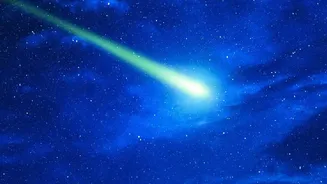
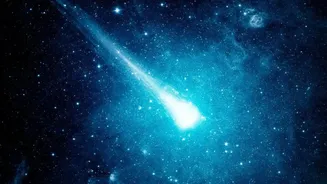
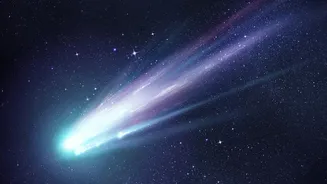
This new understanding allows scientists to read the streaks in the sky like a chemical label. A bright yellow or orange-yellow flash, for instance, points to the presence of sodium, while iron tends to produce a distinct yellow glow. Green or blue-green hues are often a tell-tale sign of magnesium or nickel vaporising. Rarer violet or purple streaks indicate calcium. The final colour we see is often a combination. The red from atmospheric nitrogen and oxygen still plays a role, especially for slower meteors where the atmospheric glow can dominate. However, for faster meteors, the brilliant colours from the vaporising minerals of the rock itself often outshine the atmospheric effect. This explains why meteors from the same shower, like the Perseids, often share similar colour characteristics—they come from the same parent comet and share a similar chemical makeup.
Why This New Picture Matters
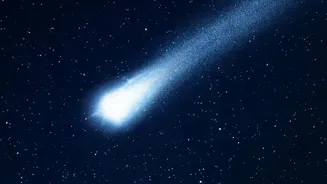
Understanding the true source of a meteor's colour is more than just solving a cosmic curiosity. It provides a powerful, remote-sensing tool for astronomers. By analysing the light from a meteor streak—a field known as spectroscopy—scientists can determine the composition of the original meteoroid without ever touching it. This gives them invaluable clues about its parent body, whether it was a comet or an asteroid. Knowing what these objects are made of is crucial for planetary science, helping us understand the building blocks of our solar system. Furthermore, it has practical applications for planetary defence. By better identifying the makeup of space rocks that cross Earth's path, scientists can more accurately predict how they might behave upon entering our atmosphere, distinguishing between a dense iron body and a more fragile, rocky one.