



The Moon's Communication Black Spots
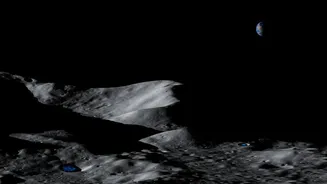
For as long as humans have explored space, communication has relied on a direct line of sight. If you can't see Earth, you can't talk to it. This poses a huge problem for ambitious lunar missions. The far side of the Moon is permanently blocked, creating
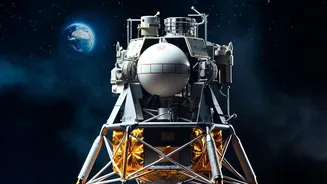
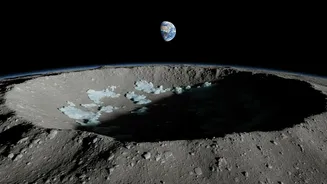
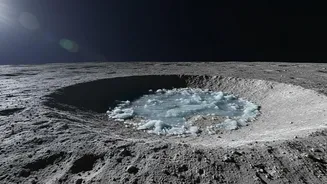
a total radio silence. Similarly, the deep, permanently shadowed craters of the lunar South Pole—a prime target for exploration due to the potential for water ice—have limited or no visibility of Earth. During the Apollo era, missions were restricted to the near side for this very reason. To go further and establish a sustained presence, especially for the Artemis program, NASA needs to solve this fundamental problem.
An Internet for the Moon
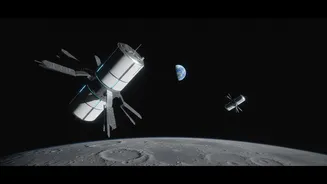
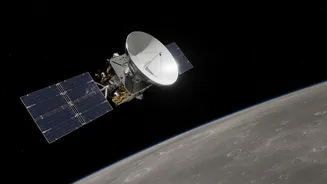
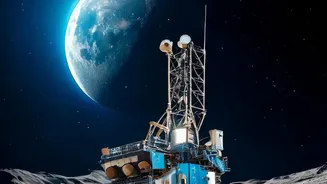
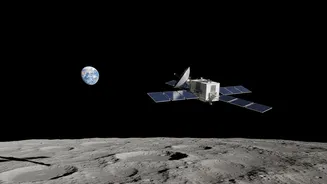
NASA's solution is called LunaNet. It’s an ambitious plan to create a network of interconnected satellites orbiting the Moon, much like the internet and GPS satellites that orbit Earth. Instead of missions needing to schedule precious time with ground antennas back home, they can simply connect to this local lunar network. This framework is designed to be scalable and interoperable, allowing commercial companies and international partners like the European Space Agency (ESA) to contribute their own satellites, or "nodes," to the network. One of the first such missions is the Lunar Pathfinder, a commercial spacecraft developed in collaboration with ESA, set to be one of the first elements of this growing infrastructure.
More Than Just a Phone Home
LunaNet is designed to provide much more than just a communications link. It will offer a suite of services critical for modern exploration. The primary function, known as Position, Navigation, and Timing (PNT), will act like a GPS for the Moon. Spacecraft in orbit, landers on approach, and rovers on the surface will be able to determine their exact location and time autonomously, without relying on constant input from Earth. This capability is crucial for precise landings in hazardous terrain and for astronauts navigating on foot or in a rover. Recently, NASA delivered a key piece of hardware, the NavCube3-mini, to its commercial partner Intuitive Machines for integration into one of the first relay satellites, marking a significant step toward making this lunar GPS a reality.
Unlocking the Moon's Final Frontiers
With a reliable communication and navigation network, the most scientifically interesting parts of the Moon finally become accessible. Astronauts and robotic explorers can venture into the permanently shadowed craters at the South Pole to search for water ice, a resource vital for future long-term habitation. Scientists can also finally explore the far side of the Moon, a pristine environment shielded from Earth's radio noise, making it an ideal location for radio astronomy. This infrastructure turns these challenging locations from high-risk, high-reward targets into manageable destinations for science and exploration, paving the way for a permanent human base.
Building the Network, Piece by Piece
The LunaNet architecture won't appear overnight. It is being built incrementally through NASA's Lunar Communications Relay and Navigation Systems (LCRNS) project. NASA is partnering with commercial companies like Intuitive Machines to deploy the first satellites. These initial relays will provide a dramatic improvement in coverage and safety for upcoming Artemis missions. While one relay offers significant benefits, a network of two or more will provide 100% coverage for the lunar South Pole. This commercial-first approach is designed to be cost-effective and foster innovation, building an entire economic and operational ecosystem around the Moon that extends far beyond NASA's own missions.