

A Lion's Roar in Infrared
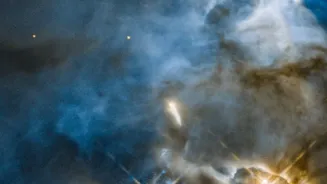
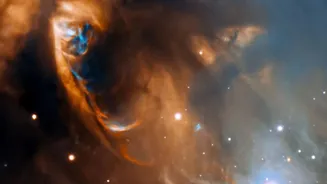
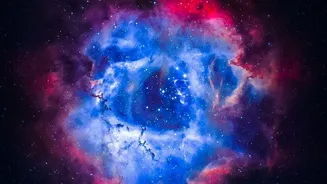
The latest subject of Webb’s gaze is NGC 2392, a celestial object more popularly known as the Lion Nebula due to its resemblance to a lion’s majestic mane. Located thousands of light-years from Earth, it is a planetary nebula—an expanding, glowing shell
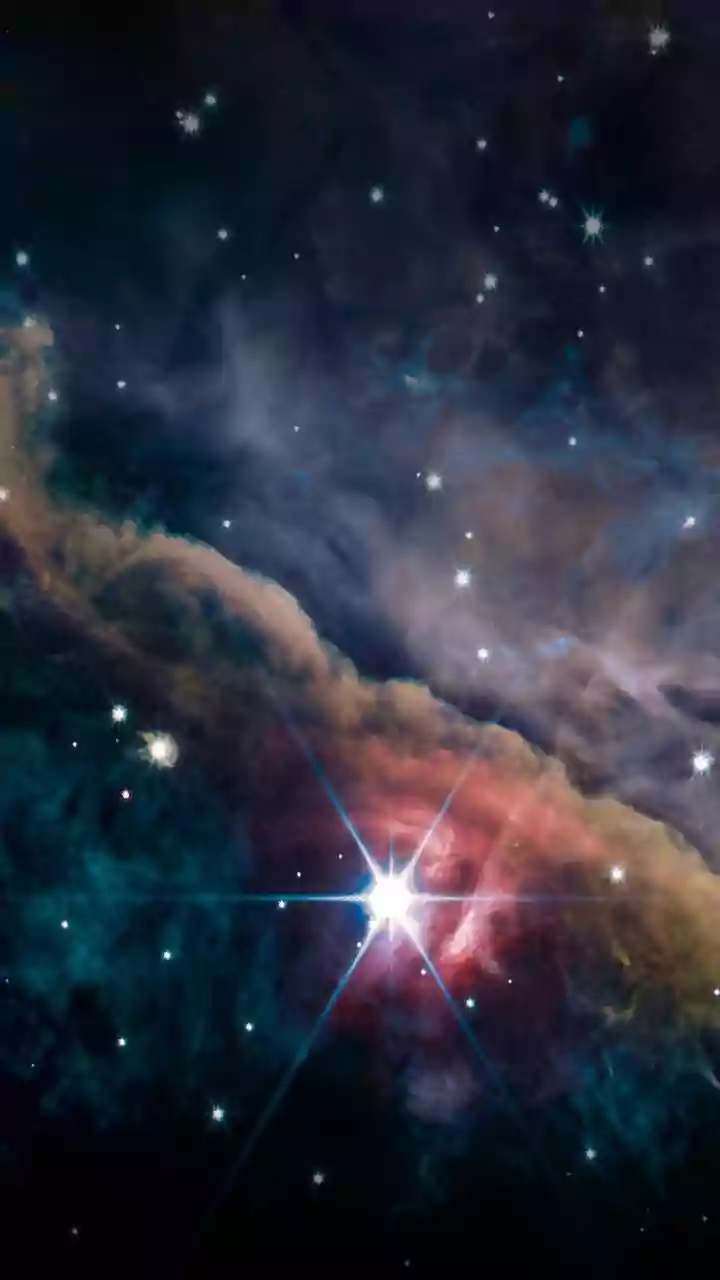
of gas and dust shed by a star in the final stages of its life. While the Hubble Space Telescope imaged this same object in 2000, Webb’s new observations provide a much sharper and more detailed perspective. By capturing the nebula in infrared light, the telescope can pierce through obscuring layers of cosmic material, unveiling intricate structures that are invisible in optical light. This allows astronomers to see the delicate filaments of gas and surviving pockets of dust with unprecedented clarity.
The Dying Star at the Center
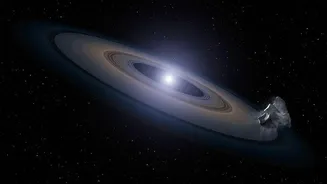
At the heart of the Lion Nebula lies the stellar remnant that created it: a hot, dense white dwarf. This object, which appears like the 'nose' of the lion, is the collapsed core of a star that was once similar to our Sun. Having exhausted its nuclear fuel, the star shed its outer layers into space. The intense radiation pouring from this incredibly hot white dwarf now energizes the surrounding gas, causing it to glow and creating the spectacle we see. The bubble of ionized gas, which forms the lion's 'face', is constantly expanding and destroying dust in its path, while other dusty filaments manage to survive. Webb's instruments, NIRCam (Near-Infrared Camera) and MIRI (Mid-Infrared Instrument), are perfectly suited to study these competing processes of creation and destruction.
Unraveling a Cosmic Life Cycle
Planetary nebulae are cosmic laboratories for understanding the end-of-life stages of most stars in the universe, including our own Sun. They represent a relatively brief phase, and Webb’s snapshot freezes the Lion Nebula in a single moment of its evolution. The image reveals a complex structure of rings and shells, the formation of which is still an active area of research for astronomers. By studying the shape of the nebula and the distribution of its gas and dust, scientists can piece together the history of the dying star and the powerful forces it unleashes. Webb’s data helps differentiate between the haze of ionized gas and the dense clumps of dust that have survived the star's radiation, providing key clues about how these structures form and evolve.
A Fleeting Masterpiece
While it has taken thousands of years for the Lion Nebula to form, its stunning appearance is fleeting on a cosmic timescale. Astronomers estimate that the gases and dust will continue to expand and drift away from the central white dwarf, and the entire nebula will disperse and fade from view in about 10,000 years. In that sense, Webb’s image is not just a scientific tool but also the preservation of a temporary work of celestial art. Each new observation from the James Webb Space Telescope deepens our understanding of the universe's life cycles. This stunning view of the Lion Nebula is another reminder of the dynamic and ever-changing nature of the cosmos, offering a glimpse into the dramatic final act of a star’s life.