




What is V2V Technology?
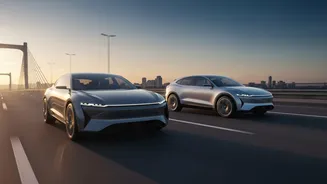
Imagine your car could ‘talk’ to other vehicles around it. That's the core idea of Vehicle-to-Vehicle (V2V) communication. It’s a wireless system that allows cars, bikes, and trucks to constantly exchange small packets of information, like their speed,
position, and direction. This happens automatically, creating a local network of vehicles that are aware of each other’s movements. Unlike Advanced Driver Assistance Systems (ADAS), which rely on cameras and sensors with a limited line of sight, V2V can detect a hazard even if it’s hidden around a blind corner or behind a large truck. The system doesn't take control of the car; it simply provides the driver with crucial early warnings through audio or visual alerts.
The Life-Saving Promise of Sudden-Braking Alerts
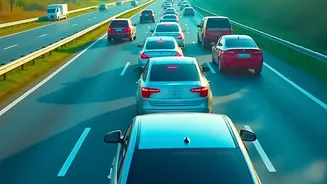
One of the most touted benefits of V2V is the sudden-braking alert. Picture a common scenario on an Indian highway: a vehicle several cars ahead brakes sharply. By the time the brake lights are visible to you, it might be too late to avoid a rear-end collision. With V2V, the moment the first car brakes hard, it transmits an emergency signal to all following vehicles in the chain. Your car would receive this alert almost instantly, giving you precious extra seconds to react long before you see the danger yourself. This single feature has the potential to drastically reduce pile-ups and improve safety in dense traffic and low-visibility conditions like fog.
Why the Big Push in India Now?
The timing is driven by a stark reality: India has one of the highest rates of road accident fatalities in the world. In 2023 alone, over 172,000 people lost their lives on Indian roads. In response, the Ministry of Road Transport and Highways (MoRTH) has proposed making V2V communication systems mandatory for all new vehicles—including two-wheelers, cars, and trucks—starting from October 1, 2028. This ambitious plan is part of a broader goal to halve road deaths by 2030, aligning with a global commitment. By setting a clear deadline, the government aims to create a unified ecosystem where automakers, technology providers, and regulators work towards a common standard, designated AIS-230.
The Practical Questions on Indian Roads
While the vision is compelling, the practical hurdles are immense. India’s traffic is a complex mix of vehicles, from modern cars and heavy trucks to auto-rickshaws, scooters, and cyclists, not all of which will have V2V technology for many years. This 'mixed traffic' environment is a major challenge, as the system's effectiveness grows with the number of connected vehicles on the road. There's also the question of cost, with estimates suggesting the onboard unit could add thousands of rupees to a vehicle's price, a significant factor in India's price-sensitive market. Furthermore, ensuring reliable connectivity and standardisation across all manufacturers is a monumental task. Cybersecurity is another critical concern; a system that exchanges sensitive data is a potential target for hacking or signal spoofing, which could cause accidents instead of preventing them.
Can Technology Overcome the Chaos?
Successfully implementing V2V in India will require a uniquely Indian solution. The government has already taken a key step by allocating a specific radio frequency band (C-V2X) for this technology, which operates without needing mobile networks. However, technology alone isn't the answer. For the foreseeable future, V2V will need to complement existing systems like cameras and radar, which can detect non-connected vehicles, pedestrians, and animals. A phased rollout, starting with new vehicles, gives manufacturers and suppliers time to adapt. Experts believe that for V2V to be truly effective and trustworthy, India needs a robust regulatory framework covering data privacy, liability in case of system failure, and common interoperability standards—much like the government-led approach that made UPI a success.