







Why Tang is Your First Priority
Think of acid as the ingredient that turns the lights on in a room. Before you add it, the flavours are there, but they’re muted and dull. A hit of acidity—the component we perceive as tang—wakes everything up. It cuts through richness and fat, preventing
a sauce from feeling heavy or greasy. If you’ve ever tasted a dish and felt it was missing something you couldn’t quite name, the answer is rarely more salt. More often than not, it needs a bright, acidic lift. This is because acid provides contrast and balance, making all the other ingredients taste more like themselves. A sauce without a proper acidic foundation will always feel one-dimensional, no matter how much sweetness or spice you add later.
The Science of Waking Up Your Palate
There’s a reason tang feels so essential. On a chemical level, acids have a pH lower than 7 and work to break down other molecules, which we perceive as flavor and texture changes. Acidity makes your mouth water, preparing your palate for the flavors to come. It tenderizes proteins in marinades and can even preserve the color of vegetables. When it comes to balancing taste, acid is a team player. It sharpens and enhances saltiness, counteracts bitterness, and most importantly, prevents sweetness from becoming overwhelming. By establishing the sour notes first, you create a vibrant canvas. The sweetness you add later doesn't have to work as hard; instead of being the only star, it becomes a complementary layer, adding depth and roundness rather than just sugary intensity.
Your Arsenal of Acidity
Building tang is easier than it sounds, and your kitchen is likely already stocked with the right tools. Each acidic ingredient offers a unique personality. Citrus fruits like lemon and lime provide a fresh, zesty brightness that is best added towards the end of cooking to preserve its aroma. Vinegars offer a wider spectrum, from the gentle tartness of rice vinegar to the robust, complex notes of balsamic or red wine vinegar. In Indian cooking, the options are even more diverse. Tamarind paste offers a deep, slightly sweet sourness perfect for chutneys and curries. Amchur, or dry mango powder, gives a potent, distinctly North Indian tang that can brighten everything from a chole masala to a paneer tikka marinade. Even yogurt, buttermilk, and tomatoes contribute essential acidity to create a well-rounded base.
The Gentle Art of Adding Sweetness
Once your tangy foundation is set, it’s time to introduce sweetness. The goal is not to create a sugary sauce, but to round out the sharp edges of the acid. This is a balancing act. Sweetness tames excessive sourness, creating a harmonious final product where neither flavor dominates. The type of sweetener matters. White sugar offers clean sweetness, while jaggery or brown sugar provides deeper, more caramel-like notes that add complexity. Honey can contribute floral hints, and fruit purees can bring their own natural sweetness and body. The key is to add your chosen sweetener incrementally. Stir in a small amount, taste, and then decide if it needs more. You are not trying to make the sauce taste sweet; you are using sugar to make the entire flavor profile feel more complete and balanced.
Putting It All into Practice
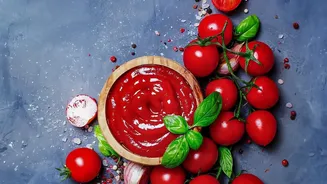
Let’s apply this to a simple tomato sauce. Start with your base of tomatoes, which already provide some natural acidity. As they cook down, taste the sauce. Does it feel a little flat? Add a splash of red wine vinegar to liven it up. Now, it might be too sharp. This is where sweetness comes in. Add a tiny pinch of sugar, stir it in completely, and taste again. You'll notice the harsh edge of the vinegar disappears, and the rich flavor of the tomatoes shines through more clearly. The same principle applies to an Indian tamarind chutney. Start with the tamarind paste (your acid). It will be intensely sour. Then, slowly introduce jaggery. As you stir and taste, you'll find the point where the aggressive sourness mellows into a pleasant, complex tang, and the deep, molasses-like sweetness of the jaggery rounds out the flavor profile. This method—acid first, then sweet to balance—is a universal rule that will transform your cooking.