




What Exactly Is SOLVE?
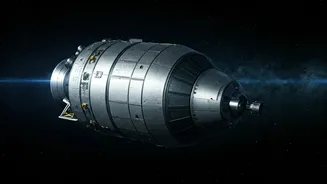
SOLVE stands for Sub-Orbital Launch Vehicle for Experiments. It is a new, dedicated test rocket developed by the Indian Space Research Organisation (ISRO). Its purpose isn't to circle the Earth, but to serve as a flexible and cost-effective platform to test crucial
systems for the much larger Gaganyaan mission. Think of it as a specialized rehearsal stage for one of the most critical parts of sending astronauts to space and bringing them back: the landing. On July 3, 2026, ISRO successfully conducted the first ground test of the solid motor that will power SOLVE, a major milestone for the program.
A Trip to the Edge of Space
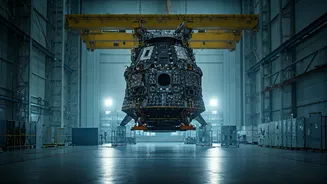
So if it's not orbital, what does it do? The SOLVE rocket is designed for sub-orbital flights, carrying a test version of the Gaganyaan crew module to an altitude between 10 and 17 kilometres. Once it reaches this height, the crew module will separate from the rocket. This altitude is perfect for simulating specific phases of re-entry and descent without the complexity and expense of a full orbital mission. By focusing on this specific segment of the flight, ISRO engineers can gather invaluable data on how the hardware performs under realistic stress. It is a prime example of ISRO's methodical, step-by-step approach to ensuring every component is tested and proven.
The Parachute Puzzle
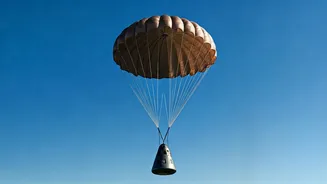
The primary job for SOLVE is to validate the Gaganyaan crew module's parachute-based deceleration system. Safely returning astronauts from orbit is arguably the most challenging part of any human spaceflight mission. After the crew module separates from SOLVE, a complex, choreographed sequence of 10 different parachutes will deploy. This includes smaller parachutes to stabilize the module and massive main parachutes to slow it down for a gentle splashdown in the sea. SOLVE provides a way to repeatedly test this entire sequence under various conditions, ensuring it is reliable enough to protect the lives of Indian astronauts.
An Adaptable and Smart Solution
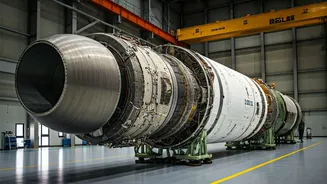
The engineering behind SOLVE is a testament to ISRO's philosophy of smart innovation. The vehicle's solid stage is ingeniously derived from the tried-and-tested strap-on booster motors of the Polar Satellite Launch Vehicle (PSLV). However, it has been significantly modified for its new role. These changes include a slower-burning propellant to achieve the desired flight profile and a new steering system for better control. Developing SOLVE gives ISRO greater flexibility to conduct numerous test missions, simulating a wide range of scenarios that could occur during an actual crewed flight. This allows engineers to build a robust safety net for the Gaganyaan mission.