



Why Go Natural with Your Sauce?
Commercial food manufacturers often add artificial colours to their products for a few key reasons: to ensure a uniform look from batch to batch, to make the product more visually appealing, and because synthetic dyes are often cheaper and more stable
than natural alternatives. These colours, like Red 40, are derived from petroleum and serve no nutritional purpose; they are purely cosmetic. By making your own sauce, you take full control of the ingredients, avoiding unnecessary additives and focusing purely on flavour and nutrition. The result is not only healthier but often tastes fresher and more authentic, celebrating the true flavour of the tomatoes.
The Foundation: Choosing the Right Tomatoes
The secret to a naturally red sauce starts with the main ingredient. The vibrant red in tomatoes comes from lycopene, a powerful antioxidant. To get the most colour, choose the ripest, reddest tomatoes you can find. Varieties like Roma or San Marzano are often recommended because they have dense flesh and a lower water content, which creates a richer, less watery sauce. While fresh, in-season tomatoes are fantastic, high-quality canned tomatoes, especially those with a 'Protected Designation of Origin' (D.O.P.) label, are an excellent year-round option that ensures a deep, savoury flavour and a velvety texture.
Secret Weapon 1: Kashmiri Red Chilli
For a brilliant red hue without overwhelming heat, Kashmiri red chilli powder is an essential ingredient in many Indian kitchens. Unlike hotter chilli powders, the Kashmiri variety is prized for its high concentration of natural red pigments and low level of capsaicin, the compound that creates spiciness. This means you can add a generous amount to your sauce to achieve a restaurant-quality deep red colour without making it too fiery. Its primary role is to add a beautiful colour and a mild, rounded flavour, making it a perfect natural dye for sauces and gravies.
Secret Weapon 2: A Touch of Beetroot
Another powerful tool in the natural colour arsenal is the humble beetroot. Used for centuries as a natural dye, even a small amount can impart a deep, ruby-red colour to your sauce. You can add a small, peeled and grated raw beetroot to the sauce as it simmers. The earthy sweetness of the beet complements the tomatoes and adds a layer of complexity to the flavour profile. For a more concentrated colour, you can use beetroot powder or a splash of pure beetroot juice. It's a simple, healthy way to enhance the colour dramatically with just a single, wholesome ingredient.
A Simple Guide to Homemade Sauce
Creating your own sweet-tangy sauce is straightforward. Start by sautéing finely chopped onions, garlic, and ginger in a little oil until soft. Add your tomatoes (freshly chopped or canned and crushed) and let them simmer for about 20 minutes to break down and release their flavour. Now, introduce your natural colour enhancers. Stir in a teaspoon or two of Kashmiri red chilli powder and a small grated beetroot. To achieve the perfect sweet-tangy balance, add a touch of natural sweetener like jaggery or a little sugar, and a splash of vinegar for acidity. Continue to simmer until the sauce thickens to your desired consistency. For a smooth, ketchup-like texture, allow the mixture to cool slightly before blending it until creamy.
Storing Your Creation
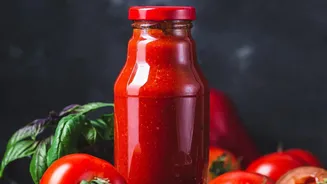
Once your beautiful, naturally coloured sauce has cooled completely, transfer it to a sterilized, airtight glass jar. Stored in the refrigerator, your homemade tomato sauce should stay fresh for several weeks. The vinegar not only provides tang but also acts as a natural preservative, helping to extend its shelf life. For longer-term storage, you can freeze the sauce in freezer-safe containers or ice cube trays for easy-to-use portions. Always ensure your containers are clean and dry to prevent any spoilage, preserving the fresh taste and vibrant colour you worked to create.