





A New Chapter Begins in Gujarat
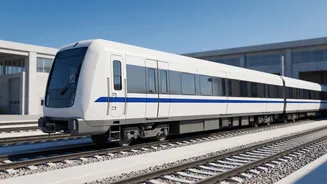
On September 27, 2026, the country's first train running on a dual LNG-diesel system was flagged off from Sabarmati station in Ahmedabad, Gujarat. The inaugural run was an eight-coach passenger train operating between Sabarmati and Mahesana. This launch
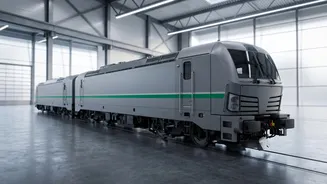
marks a pivotal moment in Indian Railways' continuous search for alternative fuels. It follows the introduction of a hydrogen-powered train earlier in the year, signalling a clear intent to explore multiple technologies for a greener railway system. The project involved retrofitting two 1,400 horsepower Driving Power Cars (DPCs) to run on the new dual-fuel system, a modification that was extensively tested over 2,000 kilometres of field trials to ensure its reliability and performance before its formal inauguration.
How Does a Dual-Fuel Train Work?
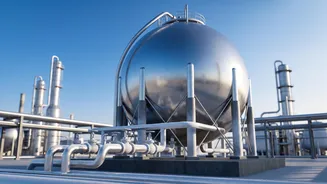
This innovation is not about completely eliminating diesel but significantly reducing its use. The retrofitted engines are designed as a dual-fuel system, meaning they can run on a mixture of LNG and diesel. Essentially, LNG is used to replace up to 40% of the diesel that a conventional engine would consume. This provides crucial flexibility; the train can operate solely on diesel if LNG is unavailable, ensuring that services are not disrupted. The LNG is stored in a cryogenic state at -162°C in a special 2,200-litre tank on the power car. When needed, it is vaporised and injected into the engine along with diesel, which acts as the pilot ignition source. This system maintains the engine's power and performance while cutting down on diesel consumption.
The Promise: Cleaner Air and Cost Savings
The primary drivers behind this initiative are environmental and economic. By substituting a portion of diesel with LNG, Indian Railways expects a significant reduction in harmful emissions. LNG combustion produces lower levels of pollutants like carbon dioxide (CO2), nitrogen oxides (NOx), and particulate matter (PM), which are major contributors to air pollution. Beyond cleaner air, there's a strong financial incentive. Based on trial estimates, the switch could save approximately ₹11.9 lakh per year for a single power car, and around ₹23.9 lakh annually for an entire eight-coach train. With Indian Railways being one of the largest consumers of diesel in the country, scaling up such technology could lead to substantial savings on imported fuel costs.
Why It's a Trial, Not a Revolution (Yet)
Despite the promising start, it is crucial to understand that this is a pilot project. A nationwide shift to LNG-powered trains faces considerable hurdles. The most significant challenge is infrastructure. A massive network of LNG storage facilities and refuelling stations would need to be built across the country, which requires huge upfront investment. Furthermore, while LNG is cleaner than diesel, it is still a fossil fuel and its price can be volatile on the global market. There are also environmental concerns about methane leakage during the production and transport of LNG, which could offset some of its climate benefits. This trial is designed to study the long-term feasibility, maintenance needs, and real-world performance before any wider rollout is considered.
Part of a Bigger Green Mission
The LNG train should be viewed within the broader context of Indian Railways' ambitious goal to become a 'Net Zero Carbon Emitter' by 2030. This is not a standalone solution but one of several strategies being explored. The primary focus of the green mission remains the full electrification of its broad-gauge network, which is already nearing completion. For routes where electrification is not economically viable, the Railways is testing other solutions like the LNG dual-fuel system and even more advanced, zero-emission hydrogen fuel-cell trains. Each technology has its place. Electrification is the backbone, while LNG serves as a potential transitional fuel to clean up existing diesel fleets, and hydrogen represents a longer-term vision for completely clean rail transport.