







A Vision for All-Weather Observation
GalaxEye was founded by a group of IIT-Madras alumni with an ambitious goal: to solve a fundamental problem in Earth observation. Satellites with optical sensors, like powerful cameras, capture clear, intuitive images but are rendered useless by clouds,
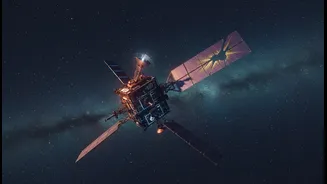
smoke, or darkness. Satellites using Synthetic Aperture Radar (SAR) can pierce through these obstacles, but their data is complex and less intuitive. GalaxEye’s solution was Mission Drishti, the world's first satellite to mount both optical and SAR sensors on a single platform. This groundbreaking OptoSAR technology promised the best of both worlds: clear, analysis-ready images, day or night, in any weather. Launched on May 3, 2026, the 190kg spacecraft was not just a world-first, but also the largest privately developed Earth observation satellite in India, marking a major milestone for the nation's burgeoning private space sector.
A Mission Cut Short by Nature
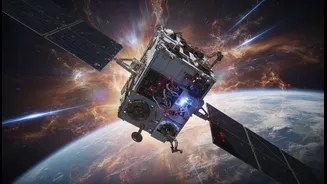
Following its launch aboard a SpaceX Falcon 9 rocket, everything seemed to be going according to plan. For several weeks, Mission Drishti operated in orbit, successfully completing a large part of its critical Launch and Early Orbit Phase (LEOP). The team at GalaxEye’s Bengaluru Mission Control Centre established communication, deployed systems, managed the satellite's attitude control, and validated its onboard computers. But in the final stage of this initial phase, disaster struck. The satellite encountered a severe geomagnetic solar storm. The company's analysis suggests that radiation from this powerful space weather event damaged a critical onboard system. Communication with Mission Drishti became intermittent and was eventually lost entirely. Despite ongoing recovery efforts, the company stated that the likelihood of re-establishing contact was low.
The Pain of a Lost Asset
The loss of Mission Drishti is undeniably a painful blow. A satellite designed for a mission life of several years was disabled in just a couple of months. For any startup, but especially one in the capital-intensive space industry, losing your primary asset is a significant setback. It disrupts timelines, delays commercial services, and presents a challenge to investor confidence. The dream of delivering revolutionary OptoSAR data to clients in defence, disaster management, and agriculture was suddenly put on hold. The anomaly served as a harsh reminder of the unforgiving environment of space, where even the most innovative technology is vulnerable to the sheer power of the cosmos.
The Silver Lining of Invaluable Data
Despite the premature end, GalaxEye has emphatically framed the mission as a crucial learning experience. Before the failure, the satellite had already proven that the company’s core technology and operational infrastructure worked. It validated the team's ability to design, build, launch, and operate a sophisticated spacecraft from the ground up. In a statement, GalaxEye CEO Suyash Singh stressed that the mission provided "invaluable engineering insights that will directly strengthen our future missions." In essence, while the satellite itself was lost, the data from its successful operational period was not. The startup learned what worked, what was vulnerable, and how to build a more resilient system next time.
A New Strategy Forged in Failure
The most significant "useful lesson" has been strategic. In response to the anomaly, GalaxEye announced a major pivot: it will accelerate plans to bring a larger portion of its supply chain, manufacturing, and development processes in-house. This move towards vertical integration is a direct lesson learned from the failure, aimed at gaining greater visibility and control over the quality, reliability, and resilience of every component in its satellites. This painful lesson has reshaped the company's entire operational strategy. Armed with this new approach and the data from their first mission, GalaxEye is not retreating. Instead, the company plans to build and launch two new, next-generation OptoSAR satellites within the next 24 months, incorporating the hard-won knowledge from Drishti into their very architecture.