




The Promise of the 'Naughty Boy'
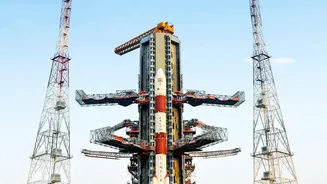
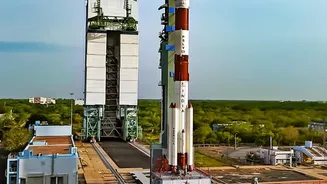
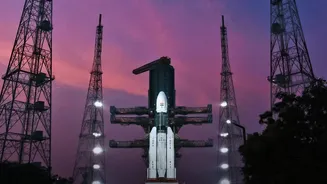
The Geosynchronous Satellite Launch Vehicle, or GSLV, is one of the Indian Space Research Organisation's (ISRO) most critical pieces of technology. Unlike its reliable cousin, the Polar Satellite Launch Vehicle (PSLV), the GSLV is designed to do the heavy
lifting. Its main task is to deliver large satellites, weighing over 2,000 kg, into Geosynchronous Transfer Orbit (GTO). This high-altitude path is essential for communication, navigation, and advanced earth observation satellites that need to match the Earth's rotation. The key to this capability lies in its technologically complex cryogenic upper stage. This stage uses super-cooled liquid hydrogen and oxygen as propellants, providing immense thrust and efficiency. Mastering this technology places India in an elite club of space-faring nations and is vital for national self-reliance in launching its heaviest payloads.
A Heartbreak in the Skies
The GSLV's journey has been marked by challenges, earning it the affectionate but wary nickname 'the naughty boy' from ISRO scientists. This reputation was starkly reinforced on August 12, 2021. The GSLV-F10 rocket lifted off carrying the advanced earth observation satellite, EOS-03. After a normal liftoff and performance from its first two stages, the mission abruptly ended. The indigenously developed cryogenic upper stage failed to ignite, causing the rocket to deviate from its path and resulting in the loss of the satellite. An investigation later revealed the cause: a leak in a valve led to insufficient pressure in the liquid hydrogen tank, which prevented the engine's fuel pump from functioning correctly. The failure was a significant setback, grounding the GSLV program and delaying crucial satellite deployments.
The Path to Redemption
Following the GSLV-F10 failure, ISRO did what it does best: meticulously analyze, correct, and improve. A national-level Failure Analysis Committee was formed to deep-dive into the anomaly. Engineers conducted extensive simulations and ground tests to replicate the failure conditions and validate their findings. The committee recommended several corrective measures to make the cryogenic stage more robust and reliable. This included strengthening key components to prevent leaks and ensuring proper pressure build-up before engine ignition. This period of intense review and modification was crucial. It wasn't just about fixing a technical glitch; it was about restoring confidence in one of the most important assets for India’s future in space, including the ambitious Gaganyaan human spaceflight mission which will use a more powerful variant of the GSLV.
A Triumphant Return to Flight
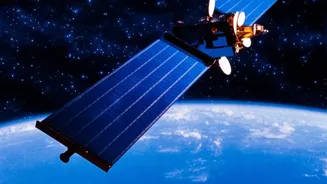
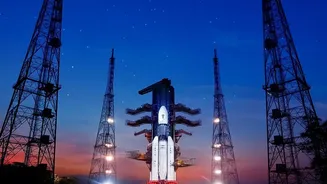
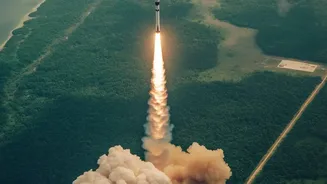
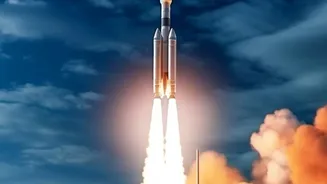
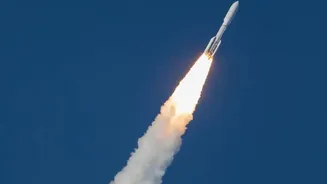
The true comeback for the GSLV occurred on May 29, 2023. After a nearly two-year gap following the F10 failure, the GSLV-F12 rocket stood ready on the launchpad. Its payload was the NVS-01, a next-generation navigation satellite weighing over 2,232 kg. The launch was flawless. The rocket lifted off with a thunderous roar and, about 19 minutes later, precisely injected the NVS-01 satellite into its intended orbit. ISRO Chairman S. Somanath publicly acknowledged the 'debacle' of the previous mission and expressed his happiness with the corrections made to the cryogenic stage, deeming it more reliable. The successful mission not only deployed a crucial satellite for India's NavIC constellation (an alternative to GPS) but also marked the resounding return to success for the GSLV program.
Clearing the Confusion: What About EOS-05?
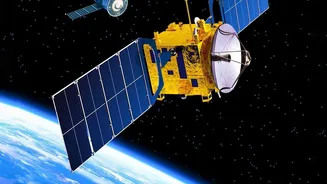
While the headline pairs EOS-05 with the GSLV's return, the context is slightly different. The satellite lost in the 2021 GSLV failure was EOS-03. The EOS-05 satellite, also known as GISAT-1A, is essentially its replacement. However, it was not launched on the GSLV's immediate comeback flight. In a mission that took place on September 4, 2026, ISRO successfully launched the EOS-05 satellite using a GSLV-F17 rocket. This mission was a success in its own right, placing the heavy 2,367 kg imaging satellite into orbit to provide near real-time observation capabilities for disaster monitoring and strategic purposes. This successful launch further solidified the GSLV's restored reliability after its 2023 return.
Why This Reliability Matters
Having a dependable GSLV is about more than just national pride; it is a strategic necessity. India’s aspirations in space—from launching heavier, more capable communication satellites to deep-space missions and sending humans into orbit—all depend on a powerful launch vehicle. Relying on foreign launchers is not only expensive but also creates strategic dependencies. The success of the GSLV-F12 and subsequent launches demonstrates that ISRO has mastered the complex cryogenic technology, securing its end-to-end capability for launching any type of satellite. This solidifies India’s position in the global space economy, opening doors for commercial launches of heavy satellites for other nations and ensuring its own ambitious space programs can proceed with confidence.