




Two Missions, One Star
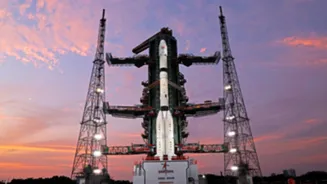
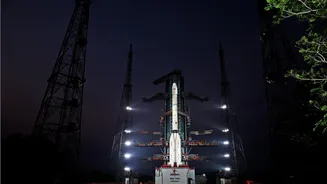
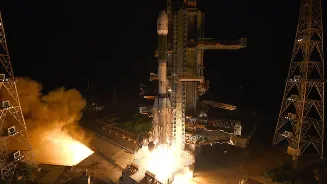
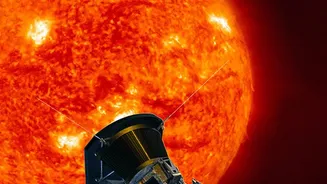
At the heart of this breakthrough are two extraordinary space missions: India's Aditya-L1 and the European Space Agency's Proba-3. Launched by ISRO, Aditya-L1 is India's first dedicated solar observatory, strategically positioned at the Lagrange point
1 (L1), about 1.5 million kilometres from Earth. From this vantage point, it maintains an uninterrupted watch on the sun, free from the planet's shadow. Its instruments, particularly the Visible Emission Line Coronagraph (VELC), are designed to study the sun's outer layers continuously, providing a constant stream of data on solar activity. Proba-3, on the other hand, is a technological marvel of a different kind. It is the world's first precision formation-flying mission, comprised of two satellites that fly in a fixed, incredibly precise configuration. One satellite acts as an 'occulter', blocking the bright face of the sun, while the other, a 'coronagraph', captures images of the faint corona right down to the solar limb. Together, they create a near-perfect artificial eclipse on demand, offering views of the inner corona that are impossible to get from the ground.
A Partnership Forged in Science
While both missions are formidable on their own, their true power is unlocked through collaboration. The newly published study represents a remarkable synergy between ISRO and ESA scientists. Think of it like a sophisticated camera system. Aditya-L1 provides the wide-angle, 24/7 view, capturing the overall behaviour of the corona and spotting large-scale events like Coronal Mass Ejections (CMEs) as they develop. Proba-3 provides the powerful zoom lens, focusing with unprecedented detail on the chaotic region just above the sun's surface where these events originate. By combining the continuous broad observations from Aditya-L1 with the high-resolution close-ups from Proba-3, researchers can now connect the dots in a way that was never before possible. This joint effort allows them to trace the journey of energy and matter from the sun's surface all the way out into space, creating a complete and dynamic picture of our star's atmosphere.
What the New Study Reveals
The findings, published in a leading scientific journal, detail the most comprehensive mapping of the solar corona's magnetic structure to date. For the first time, scientists have been able to directly link magnetic field activity on the sun's visible surface to the subsequent eruption of a CME into space. The study meticulously tracked a solar eruption, using Proba-3's data to see its roots in the low corona and Aditya-L1's data to follow its path as it expanded into the outer atmosphere. This provides concrete evidence for theories about what triggers these violent solar outbursts, which can have significant effects on Earth, disrupting satellites and power grids. This integrated view is a crucial step forward in improving our models for 'space weather' prediction, offering the potential for more reliable warnings before a solar storm hits our planet.
Solving the Coronal Heating Puzzle
Beyond tracking solar storms, this collaboration is providing critical clues to solving the age-old 'coronal heating problem'. For decades, scientists have been baffled as to why the sun's atmosphere is hundreds of times hotter than its surface, which defies the basic laws of thermodynamics. One leading theory suggests the corona is heated by a constant barrage of tiny explosions, or 'nanoflares', driven by the tangling and snapping of magnetic field lines. However, these events are too small and fast to be observed directly by most instruments. The combined sensitivity and high resolution of Aditya-L1 and Proba-3 are allowing the team to hunt for the tell-tale signatures of this process. The new study presents compelling new data that supports the role of magnetic reconnection in heating the corona, bringing scientists one step closer to finally understanding the fundamental physics that power our star.