
The Grand Vision
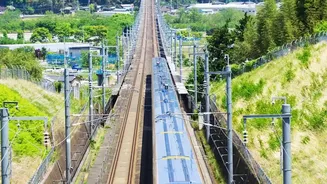
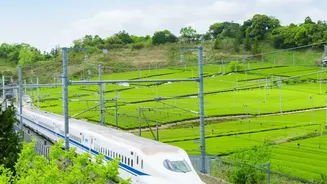
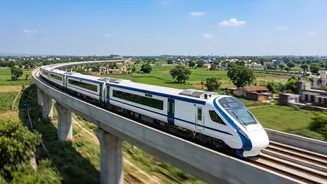
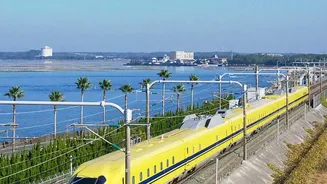
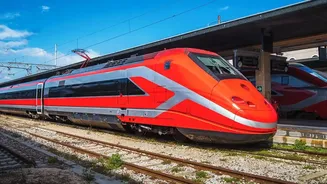
The Mumbai-Ahmedabad High-Speed Rail (MAHSR) Corridor is India’s flagship bullet train project. Spanning a distance of 508 kilometres, it is designed to connect the economic hubs of Mumbai and Ahmedabad. The project aims to slash travel time between the two
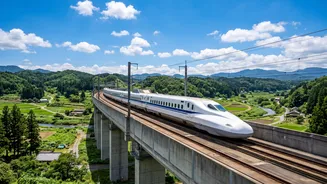
cities to just under two hours for limited-stop services, a massive reduction from the current six to eight hours by conventional rail. Being built with Japanese Shinkansen technology, known for its impeccable safety and punctuality, the corridor will feature 12 stations across Maharashtra, Gujarat, and Dadra and Nagar Haveli. The plan involves running trains at an operating speed of 320 kmph, setting a new benchmark for transportation infrastructure in the country.
Progress on the Ground
After initial delays, construction has gained significant momentum. According to recent updates from Railway Minister Ashwini Vaishnaw, civil construction work is advancing rapidly, particularly in Gujarat. The civil work for the Vapi-Surat section is expected to be completed by December 2026. Work on viaducts, bridges over several rivers, and station construction is visibly progressing. A major milestone was recently achieved with the completion of the first coach body frame, which has been sent for testing. This signals a crucial step forward, not just for the corridor but also for the 'Make in India' initiative, as indigenous manufacturing of high-speed trainsets is a key project goal.
The All-Important Timeline
The most pressing question for many is: when will it be operational? According to the Railway Minister, the project is slated for a phased launch. The first section, a 50 km stretch between Surat and Bilimora in Gujarat, is targeted to become operational in August 2027. Following this, other sections are expected to open, with officials aiming for the entire corridor to be functional between 2028 and 2029. While the first indigenous bullet train prototype is expected to begin testing by May or June 2027, the full rollout remains a few years away. These timelines represent a revision from initial estimates, largely due to hurdles in land acquisition and the pandemic's impact.
Hurdles on the High-Speed Track
The journey to building India's first bullet train has not been without its challenges. Land acquisition, particularly in Maharashtra, proved to be a significant bottleneck in the early stages, though many of these issues have now been resolved. Another major challenge is the sheer cost and complexity of financing such a massive undertaking. Critics also point to the high dependence on Japanese technology for critical components like rolling stock and signalling systems, which can be expensive and create integration challenges. Experts have noted that achieving true self-reliance in high-speed rail will require not just building the tracks but also manufacturing the trains and their complex systems within India.
More Than Just Speed
The bullet train project is seen as more than just a transportation upgrade; it's a catalyst for economic growth and technological advancement. The National High Speed Rail Corporation Limited (NHSRCL), the body executing the project, views the Mumbai-Ahmedabad corridor as a template for a future network of high-speed lines connecting major Indian cities. The project is also creating a skilled workforce, with Indian engineers learning from Japanese experts in planning, discipline, and execution. Furthermore, there is a strong push to develop indigenous capabilities, with BEML Limited tasked with manufacturing prototype trainsets capable of running at 280 kmph, which will reduce future dependency on foreign technology.