







The Promise of a Regular Paycheque
For many investors, a Systematic Withdrawal Plan (SWP) is a cornerstone of financial planning. It’s an arrangement where you instruct your mutual fund to redeem a fixed amount of money at regular intervals—typically monthly or quarterly—and deposit it into
your bank account. This creates a predictable cash flow, making SWPs ideal for retirees or anyone needing a steady income from their investments to cover expenses. The appeal is obvious: it automates your income stream and instills financial discipline by preventing large, impulsive withdrawals.
The Hidden Cost of Market Downturns
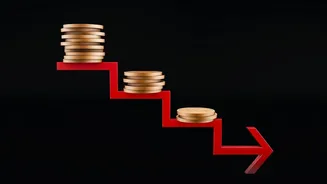
The problem arises when financial markets turn sour. Mutual funds have a Net Asset Value (NAV), which is the price per unit of the fund. When the market is up, your fund's NAV is high. When the market falls, the NAV drops. If you are committed to withdrawing a fixed amount, say ₹10,000 per month, you will be forced to sell more fund units to generate that same amount when the NAV is low. For instance, if the NAV is ₹100, you only need to sell 100 units. But if the market drops and the NAV falls to ₹80, you now have to sell 125 units to get your ₹10,000. This is how market falls make your withdrawals more 'costly'—not in fees, but in the number of units you sacrifice.
Understanding Sequence of Returns Risk
This phenomenon is known as the 'sequence of returns risk'. It refers to the danger that the order, or sequence, in which you experience investment returns can dramatically impact how long your money lasts, especially when you are making regular withdrawals. Poor returns early in your withdrawal phase can cause disproportionate damage. Selling more units at lower prices leaves fewer units in your portfolio to benefit from the eventual market recovery. This can permanently reduce your portfolio’s value and shorten its lifespan, even if your average returns over many years look healthy.
The Long-Term Damage
Consistently selling more units during a bear market accelerates the depletion of your capital. Each unit you sell at a low price is a unit that can't participate in the eventual market rebound. This locks in your losses and leaves you with a smaller investment base. Over time, this can be the difference between a portfolio that sustains you for life and one that runs out prematurely. The risk is highest for those who have just retired or are about to, as a market downturn in the first few years of withdrawal can be difficult to recover from.
Strategies to Protect Your Portfolio
The good news is that you can take steps to mitigate this risk. One popular method is a 'bucket strategy', where you divide your investments into three buckets: short-term, mid-term, and long-term needs. The short-term bucket holds cash or liquid funds for 1-3 years of expenses, which you can draw from during a downturn without selling equity units at a loss. Another approach is to adopt a dynamic or flexible withdrawal strategy. Instead of a fixed amount, you adjust your withdrawals based on market performance—taking out less during down years and perhaps a little more in good years. Even a temporary reduction in discretionary spending can significantly preserve your capital.