



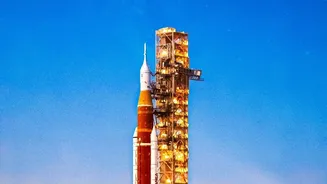


A Spectacular Pre-Dawn Launch
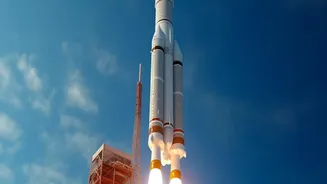
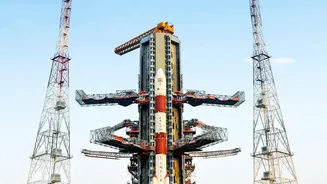
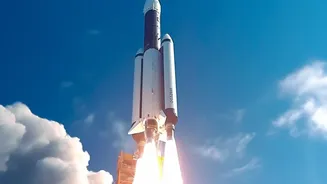
On September 4, 2026, at 2:55 AM, the Indian Space Research Organisation (ISRO) added another feather to its cap with the successful launch of the GSLV-F17 mission. The 51.7-metre tall rocket, a workhorse of India's space efforts, majestically lifted
off from the Second Launch Pad at the Satish Dhawan Space Centre in Sriharikota. The mission's primary goal was to deploy the EOS-05 satellite, a sophisticated Earth observation spacecraft, into a Sub-Geosynchronous Transfer Orbit (Sub-GTO). Roughly 19 minutes after a flawless launch, the rocket successfully placed the 2,367 kg satellite into its intended orbit, marking a crucial success for ISRO. The launch was a significant moment, being ISRO's first successful mission of 2026 and a powerful comeback after a hiatus.
EOS-05: India’s New Eye in the Sky
The star of the GSLV-F17 mission is the EOS-05 satellite, also known as GISAT-1A. What makes EOS-05 special is that it is India's first imaging satellite designed to operate from a geosynchronous orbit, approximately 36,000 km above the Earth. Most Earth observation satellites are in Low Earth Orbit, meaning they pass over a particular location only at specific times. EOS-05, however, will orbit in sync with the Earth's rotation, allowing it to continuously monitor a large swathe of the Indian subcontinent. This 'eye in the sky' capability is a game-changer for near-real-time monitoring of natural disasters like cyclones and floods, as well as for applications in agriculture, forestry, and water resource management.
The Powerhouse: GSLV-F17
The Geosynchronous Satellite Launch Vehicle (GSLV) that carried out this mission, sometimes nicknamed the “naughty boy” for its challenging development history, has truly matured into a reliable launcher. This was the 19th flight for the GSLV. The three-stage rocket is powered by a combination of solid, liquid, and cryogenic engines. The successful functioning of the indigenous cryogenic upper stage is particularly noteworthy, as it represents a complex technology that is crucial for launching heavier satellites into high orbits. In fact, the 2,367 kg EOS-05 is the heaviest payload ever carried by a GSLV rocket, showcasing the vehicle's enhanced capability. This demonstrates India's self-reliance in the critical area of heavy-lift launch vehicles.
A Challenging Orbit with High Rewards
The GSLV-F17 did not place EOS-05 directly into its final orbit. Instead, it was injected into a Sub-Geosynchronous Transfer Orbit (Sub-GTO). This is a highly elliptical path with its closest point (perigee) at around 170 km and its farthest point (apogee) much higher. The satellite was placed in a sub-GTO because its weight pushed the limits of the GSLV's current capacity for a direct GTO injection. Over the next few days, ISRO scientists will perform a series of complex orbit-raising maneuvers using the satellite's own onboard propulsion system. These carefully planned burns will gradually circularize the orbit and raise it to its final destination, 36,000 km above the equator.
Strengthening India's Strategic Capabilities
The successful launch of EOS-05 is a significant boost for India's strategic and observational capabilities. Continuous monitoring of the Indian subcontinent and its maritime interests provides invaluable data for national security and disaster management agencies. This mission not only enhances India's ability to respond quickly to natural calamities but also reinforces its position as a major space-faring nation. Each successful launch like GSLV-F17 builds confidence and experience, paving the way for even more ambitious projects on ISRO's horizon, including the Gaganyaan human spaceflight program. This launch proves that ISRO is not just reaching for the stars but is methodically building the infrastructure to make space a tool for national development and security.