






The Golden Rule of Sunlight
Strawberry plants are powered by the sun. It’s the energy source they use to produce the natural sugars that make the berries sweet and flavourful. For healthy growth and a rewarding harvest, your potted strawberries need at least six to eight hours of
direct sunlight each day. Anything less, and you might notice your plants looking weak, with pale or yellowing leaves and little to no fruit. While they can survive in partial shade, the harvest will likely be smaller and the berries less sweet. Think of sunlight as the main ingredient for a delicious crop.
Assess Your Balcony’s Light
Before you even buy your plants, become an observer of your own space. Balconies have unique microclimates where light can be blocked by railings, walls, or nearby buildings. Spend a day tracking the sun's path across your balcony. Note when direct sunlight first hits different areas and when it disappears. A south-facing balcony is often ideal, receiving strong, consistent light for most of the day. A west-facing one gets intense afternoon sun, while an east-facing balcony receives gentler morning light. Knowing your specific light pattern is the most important step in choosing the right spot.
Strategic Pot Placement
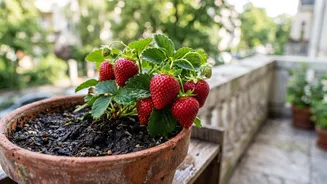
Once you know where the sun shines, you can arrange your pots for maximum effect. Place them in the brightest spots you identified. Don't be afraid to chase the sun; the great advantage of container gardening is that you can move your plants as needed. If space is tight, think vertically. Use railings, tiered shelves, or hanging baskets to lift some plants up, preventing them from shading each other and capturing light at different angles. A simple rotation of your pots every week can also promote more even growth on all sides.
Choosing the Right Strawberry Variety
Not all strawberries are created equal, and your choice of variety can make a big difference, especially in a container. For balcony gardening, 'day-neutral' or 'everbearing' types are often recommended. Varieties like Albion, Seascape, and Tristar are popular because they produce fruit throughout the growing season, giving you a steady supply rather than one single large harvest. In an Indian context, varieties such as Chandler, Sweet Charlie, and Camarosa have been successfully grown, though their performance can vary by region. Day-neutral types are generally a good starting point for home gardeners in pots.
When Sunlight Isn't Enough
What if you’ve done your assessment and realised your balcony is just too shady? Don’t give up. You still have options. One clever trick is to use reflective surfaces to bounce more light onto your plants. A light-coloured wall or even strategically placed foil can help amplify the available sun. If your balcony is particularly dark, you might consider investing in a full-spectrum LED grow light to supplement the natural light, which can be essential for north-facing spaces. Alternatively, you could try growing alpine strawberries, a less common type that tolerates shade better, though their fruits are much smaller.
Proper Planting and Care
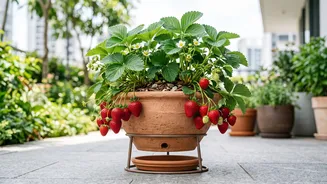
Sunlight is key, but a few other details ensure success. Choose a pot that is at least 8 to 10 inches deep with good drainage holes to prevent root rot. Use a high-quality potting mix, not heavy garden soil. When planting, the most critical step is to keep the 'crown'—the woody part where leaves emerge—right at soil level. If you bury the crown, the plant will likely rot. Keep the soil consistently moist but not waterlogged, and consider adding a layer of straw mulch on top. This keeps the berries clean, conserves moisture, and can even reflect a little extra light back onto the plant.