





A Groundbreaking Polar Mission
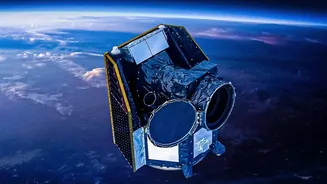
Since July 2024, two tiny satellites, each no bigger than a shoebox, have been circling the Earth in a unique near-polar orbit. This is NASA's Polar Radiant Energy in the Far-InfraRed Experiment, or PREFIRE. Its mission is to do something that has never
been done systematically before: measure the far-infrared radiation escaping from the Arctic and Antarctic. This type of energy accounts for nearly 60% of the heat Earth radiates into space, but it has remained a significant blind spot in climate science until now. The poles act as the planet's refrigerators, releasing excess heat that is transported from the tropics via ocean currents and weather systems. By precisely measuring this heat loss over two full seasonal cycles, PREFIRE is filling a critical gap in our understanding of Earth's energy budget.
Seeing the Poles in a New Light
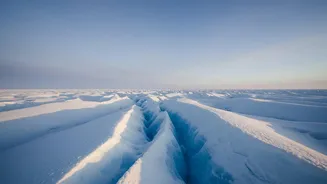
The key to the PREFIRE mission is its ability to see light in the far-infrared spectrum. Think of it like a thermal camera, but one that is exquisitely tuned to the specific wavelengths of heat that ice, snow, and frigid atmospheres emit. This is important because different types of surfaces release heat differently. For example, new data has already shown that different kinds of ice can vary in how much far-infrared radiation they release. Before PREFIRE, our satellite sensors couldn't distinguish these subtle but important differences. Armed with this higher-resolution data, scientists can now build a much more detailed picture of how, when, and where the poles shed heat throughout the year. This detailed accounting is essential for refining the climate models that predict everything from sea-level rise to shifting weather patterns.
The Contrasting Rhythms of Arctic and Antarctic
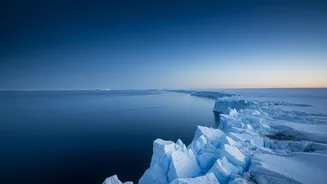
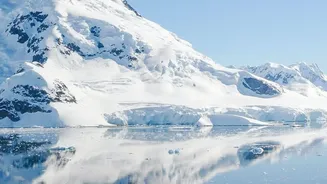
The new two-year dataset vividly illustrates just how different the planet's two poles are. The Arctic is an ocean surrounded by land, while the Antarctic is a massive continent surrounded by ocean. This fundamental geographical difference drives their opposing seasonal rhythms. The PREFIRE data shows the Arctic's dramatic swing from cold, dark winters to summers warm enough to melt vast areas of sea ice and tundra. This melt exposes darker ocean and land surfaces, which absorb more heat. In contrast, Antarctica, the coldest continent on Earth, sees summer temperatures that rarely climb above freezing. Its climate is dominated by a colossal ice sheet. West Antarctica has been warming significantly, while the colder, more stable East Antarctica has shown different trends. PREFIRE's measurements will help scientists better model these unique dynamics and understand why the Arctic is warming faster than any other region on Earth.
Why This Polar Data Matters Globally
What happens in the Arctic doesn't stay in the Arctic. The heat exchange at the poles influences the jet stream, shapes weather patterns, and drives the ocean currents that regulate the entire planet's temperature. By providing a direct measure of the energy leaving the polar regions, PREFIRE gives climate modelers a crucial anchor point. This improves the accuracy of their simulations, which are used to forecast long-term climate change and its impacts. Better models mean more reliable predictions about the stability of ice sheets in Greenland and Antarctica, which is directly linked to future sea-level rise. It also leads to improved weather forecasts, especially for maritime and defence logistics in the increasingly accessible Arctic. This isn't just an academic exercise; it provides tangible information that helps communities and governments prepare for a changing world.