



The Day the Solar System Shrank
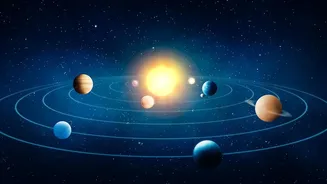
For 76 years, Pluto was the ninth planet, an icy outlier discovered by American astronomer Clyde Tombaugh in 1930. But by the early 2000s, powerful telescopes began revealing a crowded neighborhood in Pluto's corner of the solar system, the Kuiper Belt.
The discovery in 2005 of Eris, a distant object even more massive than Pluto, brought things to a head. Astronomers faced a choice: either add Eris, and potentially dozens of other new worlds, to the list of planets, or create a more exclusive definition. The IAU chose the latter. At its General Assembly in Prague, the group established three criteria for a celestial body to be called a planet: it must orbit the Sun, be massive enough for its own gravity to pull it into a round shape, and have “cleared the neighbourhood” around its orbit. Pluto met the first two conditions but failed the third, leading to its reclassification.
The Sticking Point: Clearing the Neighborhood
The third criterion, “clearing the neighborhood,” is the heart of the entire dispute. It means the object must be the dominant gravitational force in its orbital zone, having either absorbed or flung away other significant bodies. Pluto shares its orbital space with other large objects in the Kuiper Belt, so it fails this test. Proponents of the IAU definition argue this is a clear, functional distinction that separates the eight major planets from the solar system's many smaller worlds. They point to the asteroid belt between Mars and Jupiter; its largest object, Ceres, was once considered a planet in the 1800s but was reclassified as it became clear it was just one of many bodies in that region. The IAU's decision treated Pluto similarly, establishing a new category of “dwarf planet” for round objects that haven't cleared their orbits, which includes Ceres, Eris, and Pluto.
The Case for a Comeback
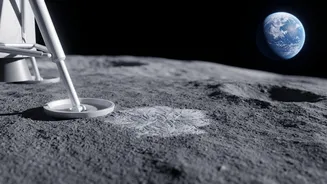
Many planetary scientists immediately rejected the IAU definition, and their opposition has not waned. A key figure in the pro-Pluto camp is Dr. Alan Stern, the principal investigator for NASA’s New Horizons mission. Critics argue the “clearing the neighborhood” rule is poorly defined and inconsistent. They point out that even Earth, Mars, and Jupiter haven't fully cleared their orbits of asteroids and other bodies. If Earth were placed in Pluto’s orbit, it too would fail the test. These scientists advocate for a geophysical definition: if a celestial body is large enough to be rounded by its own gravity, it's a planet. By this measure, Pluto qualifies, as would dozens of other objects in our solar system, including our own moon. The argument is that what an object is—its geology and complexity—should matter more than where it is.
What New Horizons Revealed
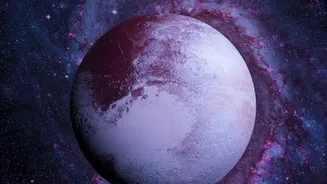
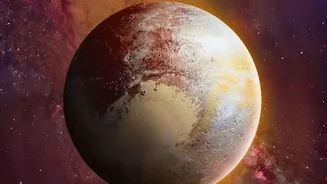
The debate was supercharged in 2015 when the New Horizons spacecraft flew past Pluto, transforming it from a fuzzy speck into a vibrant, complex world. The images sent back were stunning, revealing soaring mountains of water ice, vast nitrogen glaciers, a thin atmosphere, and hints of a possible subsurface ocean. Pluto was shown to be far more geologically active and diverse than anyone had anticipated. To supporters of Pluto's planethood, this was the ultimate proof. This was no simple ice ball; it was a dynamic world with many of the same features as planets like Earth or Mars. The findings from New Horizons provided powerful emotional and scientific ammunition, proving that even on the frozen fringes of our solar system, planetary-scale processes are at work.
Why the Debate Still Matters
Twenty years on, the argument is more than just semantics or nostalgia. The definition of a planet shapes how we approach scientific research, funding, and public understanding of the cosmos. Figures like NASA Administrator Jared Isaacman have voiced support for Pluto's reinstatement, keeping the discussion in the public eye. The controversy forces us to confront fundamental questions about classification in science. Should definitions be based on an object's intrinsic properties (its geology) or its extrinsic ones (its orbit)? As we discover thousands of exoplanets around other stars, this question becomes even more critical. The fight over Pluto’s status is ultimately a debate about the nature of our solar system and the universe itself. It reminds us that science is not a static collection of facts, but a dynamic and often passionate process of discovery and re-evaluation.