
What is the Petermann Ice Tongue?
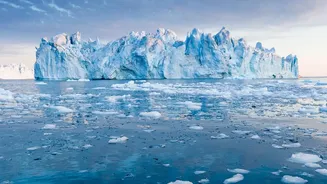
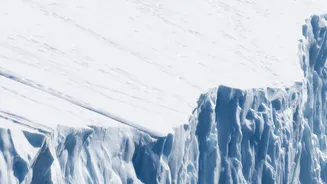
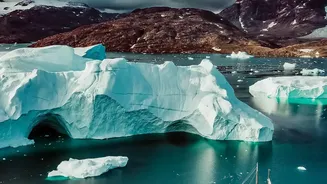
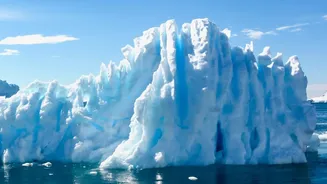
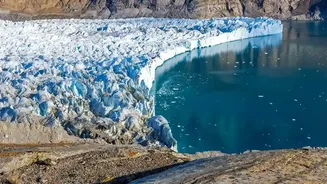
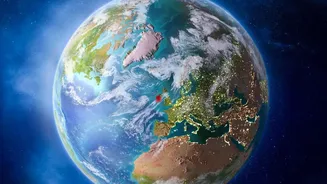
The Petermann Glacier is one of the largest and most significant glaciers in the Northern Hemisphere. It connects the vast Greenland ice sheet directly to the Arctic Ocean. The 'ice tongue' is a long, floating extension of the glacier that juts out into
the sea. Think of it as a natural brake or a gatekeeper; this floating shelf of ice helps to slow the flow of the much larger, land-based glacier behind it. The stability of this tongue is crucial. If it weakens or breaks apart, the ice upstream can accelerate its march toward the ocean, contributing more significantly to sea-level rise. The Petermann glacier system alone holds enough ice to raise global sea levels by 38 centimetres if it were all to melt.
A Summer of Alarming Change
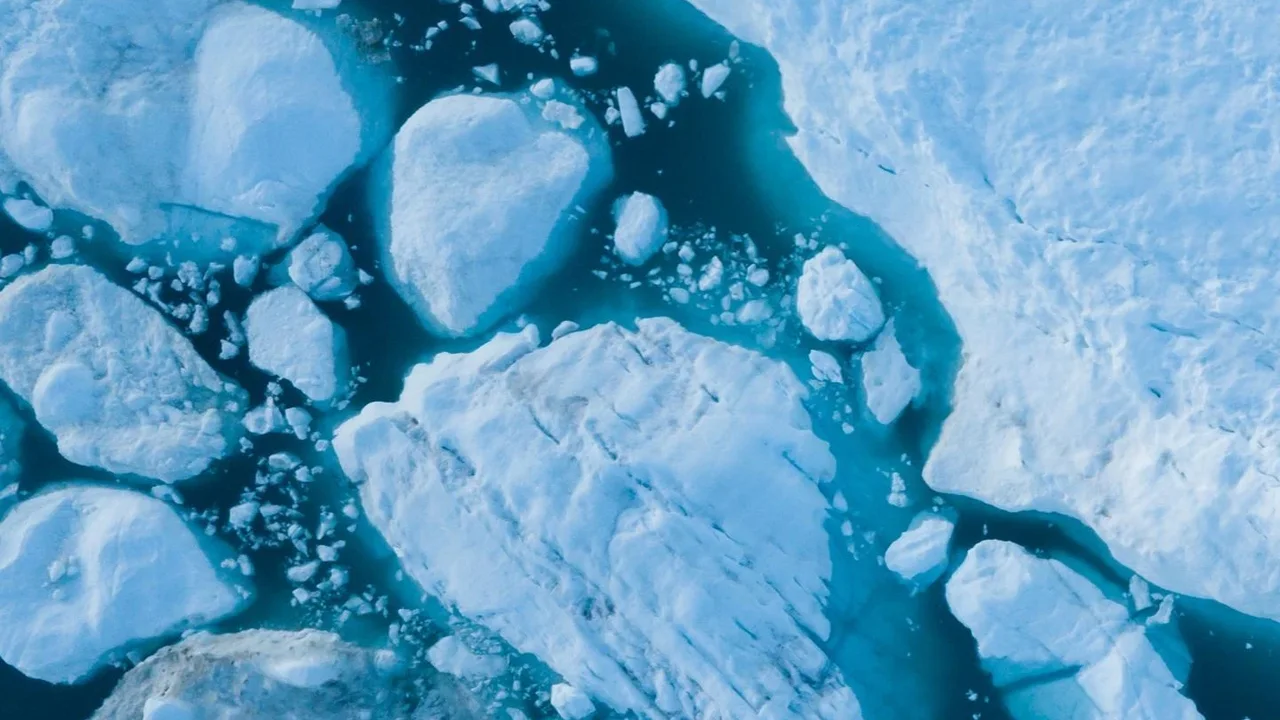
In early August 2026, scientists monitoring the glacier via satellite confirmed a major event. A massive section of the ice tongue, measuring approximately 76 square kilometres—an area roughly the size of Manhattan—broke away from the main glacier. This process, known as calving, created a new 'ice island'. The event was the glacier's largest loss of floating ice since 2012 and the most significant calving event in the Arctic since 2020. Researchers had been watching cracks develop for years, but the final separation happened swiftly, captured by the European Space Agency's Sentinel-1 mission. This isn't just a one-off event; scientists have noted that further large fractures are developing, suggesting more significant breaks are likely in the near future.
The Science Behind the Melt
This dramatic retreat isn't happening in a vacuum. It is a direct consequence of a warming world. The primary culprit is not necessarily warmer air melting the ice from above, but warmer ocean water eating away at it from below. Relatively warm Atlantic water is infiltrating the fjord hundreds of metres below the surface, melting the base of the ice tongue. This 'basal melting' accounts for about 75% of Petermann's recent ice loss. Warmer summers can create a dangerous feedback loop: melting on the surface creates freshwater that flows down through the glacier, which can enhance ocean circulation underneath, drawing even more warm seawater toward the ice's base. It's a two-pronged attack, from both above and below, driven by rising global temperatures.
From Greenland to Global Coastlines
Why does a melting glacier in the remote Arctic matter to the rest of the world? The answer is simple: sea-level rise. While the breaking of an already floating ice tongue doesn't immediately raise sea levels, it's a critical destabilizing event. The removal of this floating buttress allows the grounded ice sheet behind it to flow faster into the ocean. That grounded ice, when it melts, adds directly to the volume of the world's oceans. The Greenland Ice Sheet is already responsible for about 20% of current sea-level rise, losing hundreds of billions of tonnes of ice each year. Events like the Petermann calving are a clear and visible demonstration of this accelerating process, which threatens coastal communities everywhere.
The Indian Connection
For India, with its extensive 7,500-kilometre coastline, this is not an abstract issue. Millions of people and critical infrastructure are located in low-lying coastal areas. Major cities like Mumbai, Kolkata, and Chennai are already listed among the world's most vulnerable to the impacts of rising seas. Projections indicate that continued melting of ice sheets in Greenland and Antarctica could lead to devastating consequences, including more frequent and severe coastal flooding, erosion of land, and saltwater intrusion into freshwater sources, affecting agriculture and drinking water supplies. The slow, steady melting in the Arctic is directly linked to the future security and stability of India's coastal megacities and the livelihoods of hundreds of millions of its citizens.