






India's Future Home in Space
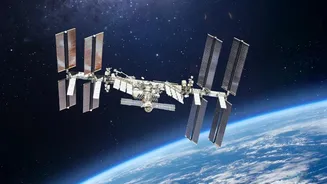
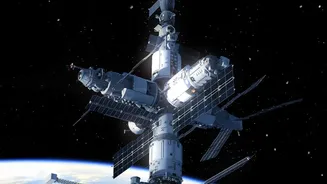
The Bharatiya Antariksh Station (BAS) is India’s answer to the International Space Station—a homegrown, modular orbital laboratory designed to host astronauts for long durations. Envisioned as a key part of India's long-term space roadmap, the station
will serve as a permanent hub for scientific research in microgravity. The plan involves launching five distinct modules in phases, which will interconnect to form the complete station. Once fully operational, a target set for 2035, the BAS will allow Indian astronauts to live and work in space for periods of three to six months, conducting experiments in fields like biotechnology, materials science, and medicine. This initiative places India in an elite club of nations with the capability to maintain a human presence in space, marking a significant stride in its goal of becoming a global space power.
Meet BAS-01: The Foundation Module
Every great structure begins with a cornerstone, and for the Bharatiya Antariksh Station, that is BAS-01. This is the official name for the first and most fundamental module of the station, with a targeted launch set for 2028. Weighing approximately 10 tonnes, BAS-01 is designed to be the base module, housing the essential systems needed to get the station started. This includes primary life support, power distribution, and the crucial docking ports that will allow future modules and crewed Gaganyaan spacecraft to connect. The successful development and launch of BAS-01 are critical, as it lays the very foundation upon which the rest of the station will be built over the following decade.
From Blueprints to Building Blocks
The recent announcement that the BAS-01 program has moved to "subsystem development" is a significant milestone. In a recent statement to Parliament, the government confirmed that the initial design phase, known as the Baseline Design Review, has been successfully completed. This means that after releasing dozens of detailed design documents, the Indian Space Research Organisation (ISRO) has now been given the green light to start working on the actual hardware. Engineers are no longer just theorizing on paper; they are actively designing and creating prototypes for the station's critical components. This includes the complex environmental control and life support systems, flight controls, and docking mechanisms that will bring the module to life. This transition from concept to concrete engineering is the moment a space program truly begins to take physical shape.
Building on the Gaganyaan Legacy
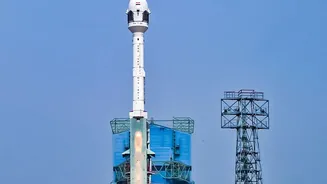
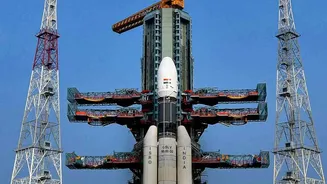
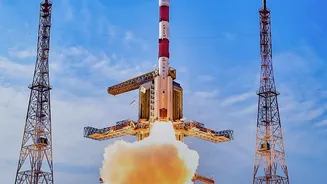
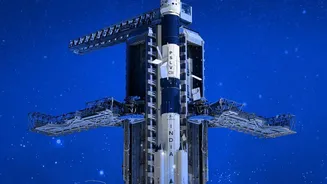
The development of the Bharatiya Antariksh Station does not exist in a vacuum. It is deeply intertwined with and builds upon the achievements of India's Gaganyaan mission, the country's first human spaceflight program. The powerful, human-rated LVM3 launch vehicle, the orbital module for carrying astronauts, the crew escape systems, and the extensive ground infrastructure developed for Gaganyaan are all foundational technologies for the space station. In essence, Gaganyaan is teaching India how to safely send humans to space and bring them back. The BAS program is the next logical step: giving them a place to stay and work for extended periods. This synergy ensures that investments and knowledge gained from one flagship project directly fuel the success of the next.
The Long Road to 2035
While the start of subsystem development is cause for celebration, the journey ahead is long and challenging. The 2028 launch target for BAS-01 is just the first major milestone in a marathon of engineering and logistics. Following its launch, ISRO plans to add four more modules, including a core module for station control and dedicated science labs, to complete the station by 2035. This entire program is a critical stepping stone in an even grander vision outlined in India's 'Amrit Kaal Vision 2047,' which includes a crewed mission to the Moon by 2040. The Bharatiya Antariksh Station will serve as an invaluable training ground and technological testbed for these deeper space exploration missions, proving out systems and preparing astronauts for journeys far beyond Earth's orbit.