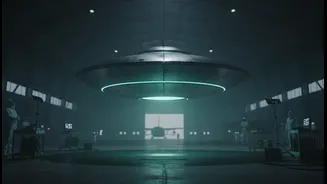










A New Era of Transparency
The most significant recent development is a White House directive pushing for greater transparency on Unidentified Anomalous Phenomena (UAPs). This initiative has led to the creation of a public website and the rolling release of previously classified
files, including documents, videos, and images from agencies like the Pentagon, CIA, and FBI. This follows a February 2026 directive to begin declassifying government files related to UAPs. The stated goal is to provide the public with direct access to the information and allow people to draw their own conclusions. These releases, which began in May 2026 and have continued in batches, represent a major shift from past government policy, which often involved discrediting or dismissing such reports. The latest tranche of files was released just days ago, on July 10, 2026.
What 'Structured Attention' Looks Like
The centerpiece of this new, structured approach is the All-domain Anomaly Resolution Office (AARO), established within the Department of Defense in 2022. AARO's mandate is to centralize and standardize the collection and analysis of UAP reports from across the U.S. government, including the military and the Federal Aviation Administration (FAA). This replaces a previously fragmented system where data was often stove-piped within different agencies. AARO is tasked with investigating objects in the air, sea, and space. To bolster its scientific credibility, a new UAP Science Advisory Council, led by Harvard physicist Avi Loeb, was formed in June 2026 to advise a higher-level interagency UAP Governance Board on how to scientifically resolve the nature of these phenomena. This structure ensures that reports are systematically analyzed, rather than anecdotally dismissed.
The Shift from 'Aliens' to 'Anomalies'
Officials are quick to point out that this increased focus is not driven by a search for extraterrestrial life. Instead, the primary motivation is national security. Unidentified objects in sensitive airspace, near military installations, or over nuclear facilities pose a potential threat, whether they are advanced drones from a foreign adversary or some other unexplained phenomenon. By renaming UFOs as UAPs, the government is reframing the issue away from pop culture tropes and toward a more sober risk assessment. AARO's reports have consistently stated they have found no evidence of alien technology. The goal is to apply rigorous, data-driven analysis to distinguish legitimate anomalies from misidentified conventional objects, sensor glitches, or natural phenomena. This allows military and intelligence agencies to focus on the truly unexplained incidents that could represent breakthrough technologies developed by adversaries.
A Process Years in the Making
While recent announcements have captured headlines, this shift has been building for years. Congressional pressure, including provisions in annual defense bills, was instrumental in forcing the Pentagon and intelligence communities to take the issue more seriously and create bodies like the UAP Task Force, AARO's predecessor. High-profile reporting in 2017, which revealed a secret Pentagon program and shared compelling videos from Navy pilots, reignited public and official interest. Lawmakers have continued to push for more transparency and for protections for whistleblowers who come forward with their accounts. The creation of AARO and the subsequent transparency initiatives are the culmination of this sustained pressure from both Congress and the public, moving the UAP topic firmly into the realm of official oversight and policy.