
What the Screen Is Actually Showing
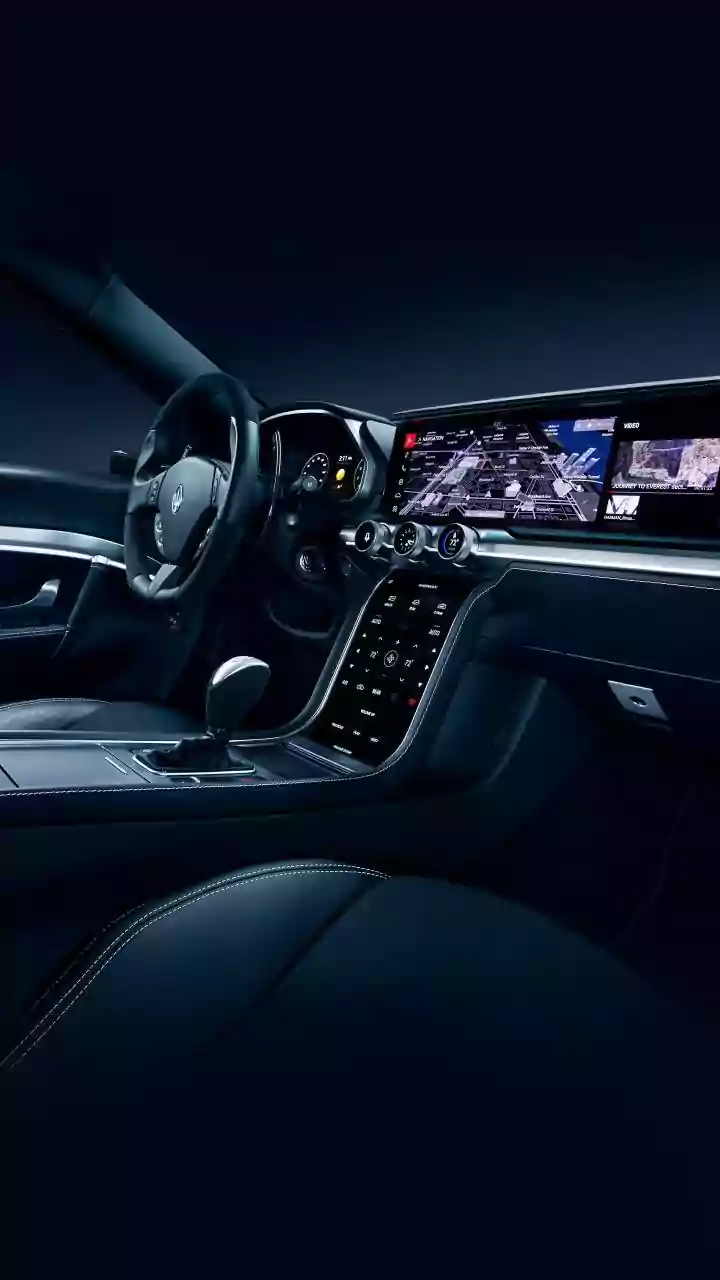
The captivating visuals come from Tesla’s Full Self-Driving (FSD) interface, which displays what the car’s cameras and sensors 'see'. Each car, motorcycle, or pedestrian is rendered as a distinct object. The system is designed to track these objects,
predict their paths, and navigate accordingly. In most Western countries, this results in a clean, organised display. But in India, the screen becomes a bustling ecosystem of vehicles and people, showcasing the sheer density of traffic. Footage has shown the system identifying dozens of separate objects simultaneously, from auto-rickshaws and weaving two-wheelers to pedestrians crossing busy lanes—a testament to the perception system's ability to detect its surroundings.
The Great Indian Traffic Test
Indian roads are notoriously complex for both human drivers and artificial intelligence. The environment presents a unique set of challenges that autonomous systems, primarily trained in structured Western settings, struggle with. This includes heterogeneous traffic, where cars, buses, trucks, auto-rickshaws, motorcycles, and cyclists share the same space, often without clear lane discipline. Add to this the unpredictable behaviour of drivers, pedestrians, and even stray animals, and the system is faced with a scenario far more chaotic than a typical US highway. Poor road infrastructure, including potholes and faded lane markings, further complicates navigation for AI that relies on clear visual cues.
A System Under Stress, but Learning
While social media users joked that the system's 'brain' might melt down, the reality is more nuanced. The visualization, while chaotic, shows that the core detection technology is working. The car is seeing and classifying a multitude of objects, including uniquely Indian vehicles like auto-rickshaws, which are not part of its original training data. This is a crucial first step. The harder challenge, however, comes after detection: navigation. Driving in India often involves informal negotiation, using honks for communication, and anticipating sudden, unsignalled manoeuvres—'unwritten rules' that an AI cannot easily learn from a manual. Although Tesla's FSD is not yet officially approved for use in India beyond basic features, the company has been actively collecting data by hiring test drivers in cities like Mumbai and Delhi to train its AI on these specific conditions.
The Long Road to an Autonomous India
The cluttered screen highlights the broader reality for all autonomous vehicle makers in India. Success isn't just about importing technology; it requires deep localisation. Any company aiming to achieve true self-driving in the country must build and train its AI models on massive, India-specific datasets. This process of gathering data and teaching the AI to handle local 'edge cases'—like three-wheelers or sudden jaywalkers—is a monumental task. Furthermore, significant regulatory hurdles remain. India currently lacks a comprehensive legal framework for autonomous driving, leaving questions of liability and safety certification unresolved. While the government has shown interest, a clear policy is needed before widespread adoption can become a reality.