




A Gateway at Extreme Altitude
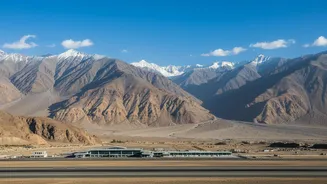
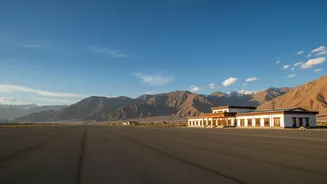
Perched at 3,256 metres (10,682 feet) above sea level, Kushok Bakula Rimpochee Airport is India’s highest commercial airport and one of the highest in the world. This staggering elevation is the primary reason for most of its unusual characteristics.
The air at this altitude is significantly thinner, which has a major impact on both passengers and aircraft. For planes, lower air density reduces engine performance and lift, requiring longer runways and more power for takeoff. For travellers, the immediate exposure to such high altitude means acclimatisation starts the moment you step off the plane.
The Morning-Only Flight Window
If you're flying to or from Leh, you'll notice that almost all commercial flights are scheduled in the early morning. This isn't a matter of convenience; it's a rule dictated by nature. As the sun heats the surrounding Himalayan peaks during the day, strong, unpredictable winds begin to surge through the valley. This turbulence, combined with the already thin air, makes afternoon operations hazardous. Airlines must get their planes in and out before these conditions develop, typically wrapping up operations before noon to ensure safety.
A Unidirectional Landing Challenge
Unlike most airports where planes can land or take off from either end of the runway, Leh is essentially a one-way street. The airport is nestled in a valley, and towering mountains at one end of the runway make a straight approach from that direction impossible. Pilots must navigate a specific, winding visual approach path through the mountain-flanked corridor to line up for landing. There's very little margin for error, and go-arounds are complex manoeuvres. This makes the descent into Leh one of the most visually spectacular, yet technically demanding, in the world.
Specially Trained Pilots at the Helm
You can’t just be any pilot to fly into Leh. Given the high altitude, complex approach, and challenging weather, operating flights to IXL (the airport's IATA code) requires special certification. Pilots must undergo rigorous training, which includes simulator sessions specifically for Leh's unique conditions. They are trained to handle engine-out scenarios in this difficult terrain, an exercise required for very few airports globally. This ensures that only the most skilled and prepared crews are in control of your flight.
A Vital Military and Civilian Hub
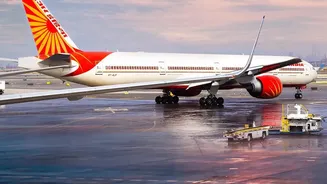
Leh’s airport isn’t just for tourists; it is a strategically critical base for the Indian Air Force (IAF). This dual-use status means that the airport is a lifeline for the entire Ladakh region, supporting both the local economy and national defence. Passengers will often see military transport aircraft like the C-17 Globemaster alongside their commercial jets. This military presence also means heightened security, including restrictions on photography and thorough baggage checks.
The World’s Most Scenic Descent
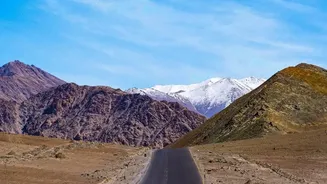
For all the technical challenges it presents, the flight into Leh is an unforgettable experience for passengers. The final approach offers a mesmerising panorama of snow-dusted, barren Himalayan peaks stretching as far as the eye can see. As the aircraft banks and weaves through the valleys, it provides an unparalleled aerial tour of the dramatic Ladakhi landscape. For many visitors, peering out the window during these final minutes is their first, and perhaps most dramatic, introduction to the sheer scale and beauty of the region.