




A Descent Unlike Any Other
The approach to Leh’s Kushok Bakula Rimpochee Airport is considered one of the most scenic and challenging in the world. Most flights from cities like Delhi are scheduled for the early morning to avoid the strong mountain winds that pick up in the afternoon.
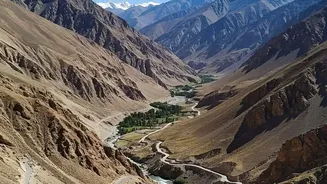
As the aircraft manoeuvres through the Indus Valley, you'll feel closer to the mountains than to the clouds. The barren, majestic landscape of the trans-Himalayan region unfolds below—a panorama of brown, grey, and white peaks. The landing itself is swift and precise, a testament to the skill of the pilots who navigate this high-altitude terrain daily. At an elevation of 3,256 metres (10,682 feet), this airport is one of the highest commercial airfields globally, and your adventure begins the moment the cabin doors open.
The First Breath of Thin Air
Stepping off the plane is an experience in itself. The first thing you'll notice is the air—it's crisp, dry, and noticeably thin. For many, especially those arriving from sea level, the simple act of walking from the tarmac to the terminal building can leave you feeling breathless. This immediate physical reminder is your body's introduction to high altitude. The sun feels intensely bright and sharp due to the thinner atmosphere, making sunglasses an instant necessity. This isn't just a change in scenery; it's a rapid change in environment that your body must adapt to, a process that cannot be rushed.
The Golden Rule: Acclimatisation is Everything
The most critical part of arriving in Leh by air is managing the risk of Acute Mountain Sickness (AMS). Because you ascend from a low elevation to over 10,000 feet in just over an hour, your body has no time to gradually adjust to the lower oxygen levels. AMS symptoms can range from mild discomfort to severe illness and are often described as feeling like a bad hangover: headache, nausea, dizziness, fatigue, and loss of appetite are common. Local authorities and travel experts unanimously agree on one rule: the first 24 to 48 hours in Leh must be dedicated to acclimatisation. This is not a suggestion; it is a mandatory safety precaution to ensure your trip is enjoyable and safe.
Your First 24 Hours: A Guide to Doing Nothing
So, what does acclimatisation actually look like? It primarily means rest. Upon arrival, check into your hotel and do as little as possible. Avoid any strenuous activity, including long walks around the market or climbing the stairs to Shanti Stupa or Leh Palace. Your itinerary for the first day should be simple: sleep if you feel tired, read a book, and let your body adjust. Hydration is key; aim to drink at least 3-4 litres of water throughout the day to help the process. Eat light, high-carbohydrate meals and strictly avoid alcohol and smoking, as they can hinder acclimatisation and worsen AMS symptoms. Listening to your body is crucial. If you develop a persistent headache or feel unwell, do not ignore it. Rest and hydrate, and inform your hotel staff or travel guide.
The Rewards of a Slow Start
It might feel counterintuitive to travel to such a spectacular destination only to spend the first day resting, but this patience pays immense dividends. By giving your body the time it needs to adapt, you set yourself up to fully enjoy the wonders that Ladakh has to offer. Once you are properly acclimatised, you can begin to explore. The ancient monasteries perched on hillsides, the vibrant Leh market, and the breathtaking high-altitude lakes like Pangong Tso await. That dramatic landing is just the prologue. A slow, mindful start is the key that unlocks the door to an unforgettable Himalayan experience, ensuring your memories are of stunning landscapes and rich culture, not of altitude-related illness.