







1. The Sinking Town: Joshimath, Uttarakhand (2023)
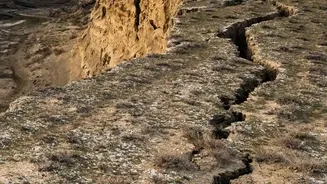
In early 2023, the pilgrimage town of Joshimath began to sink. Huge cracks split buildings and roads, forcing the evacuation of thousands. This slow-motion disaster wasn't a surprise to geologists, who had warned for decades that the town was built on ancient
landslide debris. Experts suggest that a combination of factors, including the construction of a major hydropower project tunnel and a new highway bypass, destabilised the already weak ground. The crisis in Joshimath, where homes and livelihoods crumbled without a flood or earthquake, became a stark symbol of development exceeding the land's carrying capacity.
2. The Glacial Fury: Chamoli, Uttarakhand (2021)
On February 7, 2021, a massive wall of rock and ice broke off from a peak in Chamoli district, triggering a devastating flash flood. The torrent of water and debris barrelled down the Rishiganga and Dhauliganga river valleys, completely destroying the Rishiganga hydropower project and severely damaging the larger Tapovan Vishnugad project. Over 200 people were killed or went missing, many of them workers at the construction sites. The disaster highlighted the extreme risks of placing large-scale infrastructure directly in the path of known glacial hazards in the high Himalayas.
3. The Monsoon's Rage: Himachal Pradesh (2023)
The 2023 monsoon season brought unprecedented devastation to Himachal Pradesh. Intense rainfall led to widespread flash floods and over 170 landslides. The cost was enormous, with more than 400 lives lost and economic losses estimated at over ₹10,000 crore. While the rains were extreme, experts pointed to unsustainable development as a key factor that magnified the destruction. Roads built by cutting vertically into hillsides collapsed, and buildings constructed too close to riverbeds were washed away, demonstrating how poor planning and construction can turn a natural hazard into a man-made catastrophe.
4. The Dam That Vanished: Sikkim (2023)
In October 2023, a glacial lake outburst flood (GLOF) from South Lhonak Lake sent a terrifying surge of water down the Teesta River in Sikkim. The floodwaters hit the Chungthang Dam, a major hydroelectric project, with such force that the dam was destroyed in minutes. The collapse unleashed an even greater flood downstream, killing dozens, leaving many more missing, and causing widespread destruction. Scientists had warned for years about the growing risk from the rapidly expanding glacial lake, making the dam's failure a tragic example of warnings being ignored.
5. The Collapsing Highway: Kinnaur, Himachal Pradesh (2021)
In August 2021, a horrifying landslide on the Reckong Peo-Shimla highway in Kinnaur district buried several vehicles, including a bus, killing over two dozen people. The incident was one of several major landslides in the district that year, frequently blocking the crucial national highway. Experts have repeatedly linked the increasing frequency of landslides in Kinnaur to the destabilisation of slopes from road widening and extensive construction for hydropower projects. These events serve as a deadly reminder that cutting into fragile mountainsides for roads comes with a high, often fatal, price.
6. The Unheeded Warning: Kedarnath, Uttarakhand (2013)
The 2013 Kedarnath tragedy remains one of India's worst natural disasters, with over 5,000 people presumed dead after catastrophic floods and landslides. While triggered by a cloudburst and a glacial lake outburst, the scale of the devastation was massively amplified by human activity. Unregulated construction of hotels, shops, and guesthouses had choked the river's floodplain, leaving no room for the water to pass. When the flood came, it washed away this illegal construction, adding tons of debris to the deluge and multiplying its destructive power downstream. The disaster was a brutal lesson in the consequences of allowing rampant, unplanned construction in a sacred but ecologically sensitive area.
7. The Buried Village: Malpa, Uttarakhand (1998)
Long before the recent wave of infrastructure-linked disasters, the Malpa landslide offered a grim precedent. In August 1998, a massive landslide completely wiped out the village of Malpa, killing 221 people, including 60 pilgrims. The disaster was caused by a combination of heavy rains and the inherently unstable geology of the region's steep slopes. While less directly tied to a specific project than recent events, Malpa stands as a foundational warning about the profound dangers of routing travel and building settlements in zones prone to such catastrophic failure. It demonstrated the raw power of the mountains and the deadly risks of inhabiting their most fragile parts.