







The Scale of the Data Tsunami
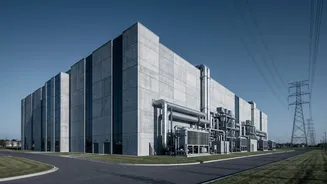
India is in the midst of an unprecedented data centre construction boom. Driven by a surge in digital services, the adoption of Artificial Intelligence, and government policies promoting data localisation, the country's data centre capacity is expanding
at a breakneck pace. Recent industry reports confirm this trajectory, with projections showing India’s operational capacity is on track to reach 2 gigawatts (GW) by the end of 2026, a significant leap in a short period. This growth has attracted staggering investment commitments, totalling approximately $38 billion in the first half of 2026 alone. This expansion is not just about building more servers; it's about laying the foundational infrastructure for India's trillion-dollar digital ambition.
An Unquenchable Thirst for Power
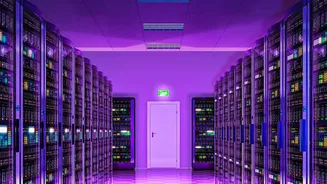
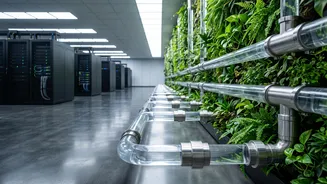
Data centres are among the most energy-intensive buildings in the world. They are the engine rooms of the digital age, operating 24/7 with a near-zero tolerance for downtime. The immense power required for computing and, crucially, for cooling the servers, places a significant strain on electricity grids. As India adds gigawatts of data centre capacity, the corresponding demand for electricity is set to soar. The Central Electricity Authority has estimated that power demand from data centres could reach as high as 17 GW by 2032. This demand is constant and non-negotiable, unlike that of many other industries, creating a unique and formidable challenge for the country's power infrastructure.
The Green Imperative Meets a Complex Reality
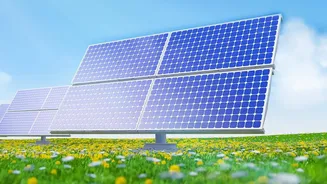
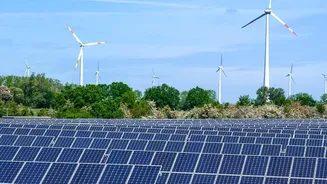
In response to environmental, social, and governance (ESG) pressures from investors and customers, major technology companies and data centre operators have made ambitious commitments to power their operations with 100% renewable energy. However, achieving this goal in India is far from straightforward. The primary challenge is the intermittent nature of the most abundant renewables, solar and wind. Solar power is only available during the day, and wind power fluctuates, while data centres require a constant, 'round-the-clock' supply of electricity. This mismatch makes a direct switch to renewables difficult without robust energy storage solutions, which are still nascent and costly.
The Procurement Puzzle
Even when renewable power is available, data centre operators face significant regulatory and logistical hurdles in procuring it. While policies like 'Green Energy Open Access' are designed to allow large consumers to buy clean power directly from producers, the process is often mired in regulatory friction and high costs. Operators must navigate a complex web of state-level regulations, grid connectivity charges, and other surcharges that can make renewable energy less economically viable than conventional power. Furthermore, grid infrastructure itself poses a challenge. Data centres need highly reliable, high-voltage connections that require dedicated infrastructure, which can lag behind the rapid pace of data centre construction.
Forging a Path to Sustainable Growth
Despite the hurdles, the industry and government are actively seeking solutions. Data centre operators are pioneering innovative procurement strategies, including entering long-term Power Purchase Agreements (PPAs) and developing captive solar and wind farms. A key emerging solution is the hybrid model, combining solar, wind, and battery energy storage systems (BESS) to provide a more reliable, 'round-the-clock' green power supply. On the policy front, there is a push for more streamlined open access rules and infrastructure upgrades, such as the Green Energy Corridor project, to better integrate renewable sources into the national grid. Some are even looking to future technologies like small modular nuclear reactors as a potential source of firm, carbon-free power.