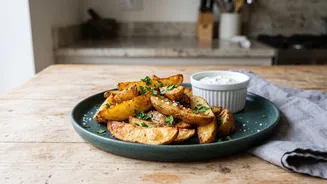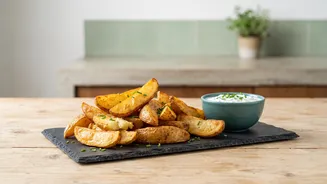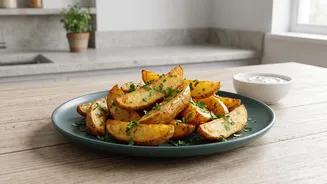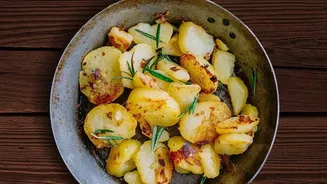






Start with the Right Potato
The foundation of a great wedge is the potato itself. For that desirable contrast between a crispy exterior and a light, airy inside, starchy potatoes are your best bet. Varieties like Russet or Maris Piper are ideal. Their high starch content and lower
moisture allow them to bake up beautifully, creating a fluffy center and a crunchy crust. While medium-starch potatoes like Yukon Golds can also work, offering a creamier interior, waxy varieties such as red or new potatoes tend to hold too much moisture and should be avoided if crispiness is your main goal.
The Crucial Cold Water Soak
One of the most important, yet often skipped, steps is soaking the cut wedges in cold water. After you've cut your potatoes into even-sized pieces, submerge them in a bowl of cold water for at least 30 minutes. This process washes away the excess starch that is released from the cut surfaces of the potato. If this surface starch isn't removed, it can hinder moisture evaporation during cooking, leading to a softer, sometimes gummy, final product instead of a truly crispy one. For even better results, some cooks prefer to soak the potatoes in salt water for several hours to both season them and draw out starch.
Parboil for a Fluffy Interior
To guarantee a soft, fully cooked center, many chefs recommend parboiling the wedges before they hit the oven. Place your soaked and drained wedges into a pot, cover them with cold water, and bring it to a boil. Let them simmer for about 5 to 7 minutes, or until they are just tender but not falling apart. This step pre-cooks the potato's interior, ensuring it becomes perfectly fluffy. A quick boil also helps to start the process of starch gelatinization on the surface, which is key to forming a robust crust later.
Dry and Rough Them Up
Moisture is the ultimate enemy of crispiness. After parboiling, it's essential to drain the wedges thoroughly and let them dry completely. Allow them to sit in a colander until they have stopped steaming, which can take at least five minutes. Any remaining surface moisture will turn to steam in the oven, preventing the wedges from browning properly. Once dry, some chefs 'chuff' the potatoes by shaking them gently in the colander. This action roughens up the surface, creating tiny ridges that will catch the oil and become extra-crispy during baking.
Seasoning and High-Heat Roasting
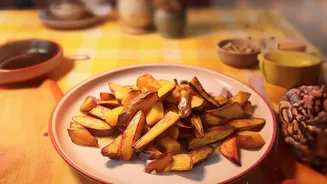
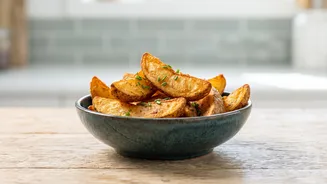
Now it's time for flavour and the final cook. Toss the dry wedges with a neutral oil that has a high smoke point, such as canola or vegetable oil. Ensure the wedges are evenly coated, but not swimming in oil. Mix your desired seasonings—like paprika, garlic powder, salt, and pepper—into the oil before tossing to ensure even distribution. For maximum crispiness, preheat your oven to a high temperature, typically between 200°C and 220°C. Spread the wedges in a single layer on a baking sheet, making sure not to overcrowd the pan, which would cause them to steam rather than roast. Flip them halfway through the 30-40 minute baking time to ensure all sides become golden-brown and delicious.