

The Claim: A Natural, Chemical-Free Hair Dye
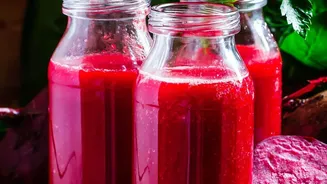
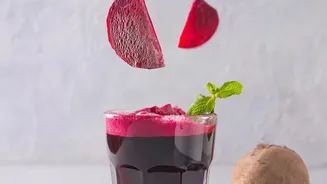
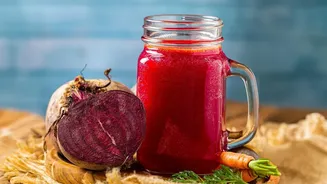
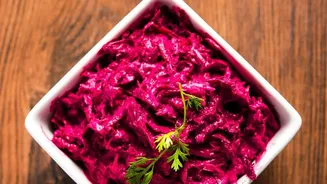
This claim is the most accurate. Beetroot is packed with pigments called betalains, which give it a potent, staining, reddish-purple colour. When applied to hair, beetroot juice can impart a temporary reddish or burgundy tint. It's a fun, chemical-free
way to experiment with colour, especially for those who want to avoid the ammonia and other harsh ingredients in many commercial dyes. However, the results are far from predictable. The tint is most visible on light, blonde, or grey hair and may not show up at all on dark brown or black hair. The final shade depends on your base colour and hair porosity. The effect is temporary, typically washing out in a few shampoos, and the application process can be incredibly messy, staining skin, clothes, and bathroom surfaces. So, as a gentle, temporary tint? Absolutely. As a replacement for a salon dye job? Not quite.
The Claim: A Magic Bullet for Hair Growth
This is where the line between fact and hope gets blurry. Many sources claim beetroot prevents hair loss because it is rich in nutrients essential for hair health, such as iron, folate, and potassium. These nutrients do indeed support healthy hair growth by improving blood circulation and oxygenating follicles. But there's a huge catch: these benefits are primarily realised when you eat the beetroot, not when you apply it to your scalp. While some proponents suggest topical application can increase blood flow to the scalp, there is no clinical evidence to prove that these nutrients can be effectively absorbed by the hair follicle from the outside to stop hair loss or stimulate new growth. Hair loss can be caused by mineral deficiencies, but the solution is to correct the deficiency internally through diet or supplements, not by rubbing a vegetable on your head.
The Claim: The Ultimate Dandruff Destroyer
The theory behind this claim is that beetroot has anti-inflammatory and potential antifungal properties. Some DIY recipes suggest that applying beetroot juice can soothe an irritated, itchy scalp and reduce flaking. The enzymatic properties are said to help remove dead skin cells and product buildup, which can contribute to a healthier scalp environment. While a beetroot mask might provide some temporary relief from dryness or itchiness due to its hydrating nature, it is not a medically proven cure for dandruff, especially for dandruff caused by fungal issues like Malassezia. Relying on it to treat a persistent scalp condition is unlikely to be effective and could delay you from seeking a proper, medicated treatment that can actually solve the problem.
The Claim: A Shortcut to Instantly Glossy Hair
There is some truth to this, but it's more about cosmetic effect than deep repair. Beetroot's natural sugars can act as a humectant, helping the hair shaft attract and retain moisture. This can make the hair feel softer and look shinier temporarily. Furthermore, beetroot juice is mildly acidic. Rinsing with a slightly acidic solution can help to flatten and seal the hair's outer layer, or cuticle. A smoother cuticle reflects more light, which is what we perceive as shine. However, this is a surface-level effect. It doesn't repair damage from within or provide the long-lasting nourishment of a protein treatment or deep conditioner. Many recipes also mix beetroot with conditioning agents like coconut oil or yoghurt, which are doing a lot of the heavy lifting when it comes to smoothness and shine.