



The Core Rule: 100ml in a 1-Litre Bag
The foundation of liquid compliance for air travel in India, governed by the Bureau of Civil Aviation Security (BCAS), is simple and aligns with global standards. All liquids, aerosols, and gels (LAGs) in your hand baggage must be in containers of 100
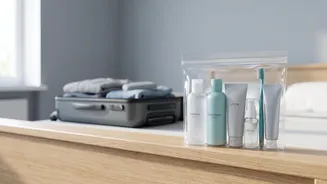
millilitres (ml) or less. Crucially, it is the size of the container that matters, not the amount of liquid inside; a 200ml shampoo bottle that is only half full is not permitted. All these small containers must then fit comfortably inside a single, transparent, re-sealable plastic bag with a capacity of no more than one litre. This is often a zip-lock bag approximately 20cm by 20cm. Each passenger is allowed only one such bag. At the security checkpoint, you must remove this bag from your carry-on and place it in a tray for separate screening.
What Counts as a Liquid?
The term 'liquid' is broader than you might think. Security officials classify any substance you can spill, spray, spread, pump, or pour as a liquid, aerosol, or gel. This includes the obvious items like water, beverages, perfumes, and shampoos. However, it also covers many common toiletries and food items that can catch travellers by surprise. Think toothpaste, hair gel, hand sanitiser, sunscreen, lotions, liquid cosmetics like foundation or mascara, and even edible pastes such as jam or hummus. A good rule of thumb is to treat anything that isn't a complete solid as a liquid and pack it accordingly. This proactive approach prevents the need for a last-minute decision at the security belt.
Packing Smart to Save Time
To make your security experience seamless, preparation is key. Instead of carrying full-sized products, invest in a set of reusable, travel-sized containers of 100ml or less. You can decant your favourite shampoo, conditioner, and lotion into these bottles. Another increasingly popular option is to switch to solid toiletries. Solid shampoo bars, conditioner bars, toothpaste tablets, and solid perfumes are not subject to liquid restrictions and can save valuable space in your one-litre bag. When packing your carry-on, keep the transparent liquid bag in an easily accessible pocket. This avoids the frantic search and fumbling that can hold up you and the entire queue behind you. For larger liquid items you can't live without, the choice is simple: they must go into your checked baggage.
Crucial Exceptions: Medicines and Baby Food
There are important exceptions to the 100ml rule for medically necessary items and infant supplies. You are permitted to carry liquid medicines, such as prescription syrups or eye drops, in quantities greater than 100ml, provided you have a prescription or a doctor's letter to justify the need. Similarly, baby food, formula, breast milk, and sterilised water for infants are exempt from the size limit in reasonable quantities for the duration of your journey. It is essential to declare these items to the security officers at the checkpoint before screening begins. They may be subject to additional screening, such as swabbing, but declaring them upfront ensures a smoother process.
What If You Forget the Rules?
Getting caught with a non-compliant liquid at security is more of an inconvenience than a serious offence. If an officer finds a liquid container larger than 100ml, you will be given a choice: you can either abandon the item to be disposed of, or, if time permits, you may be able to return to the airline's check-in counter to place it in your checked luggage. The main consequence is the delay it causes. You will slow down your own progress through security and inconvenience fellow passengers. By adhering to the rules, you not only avoid sacrificing your expensive perfume or sunscreen but also contribute to a more efficient and less stressful environment for everyone.