

India's Strawberry Heartland
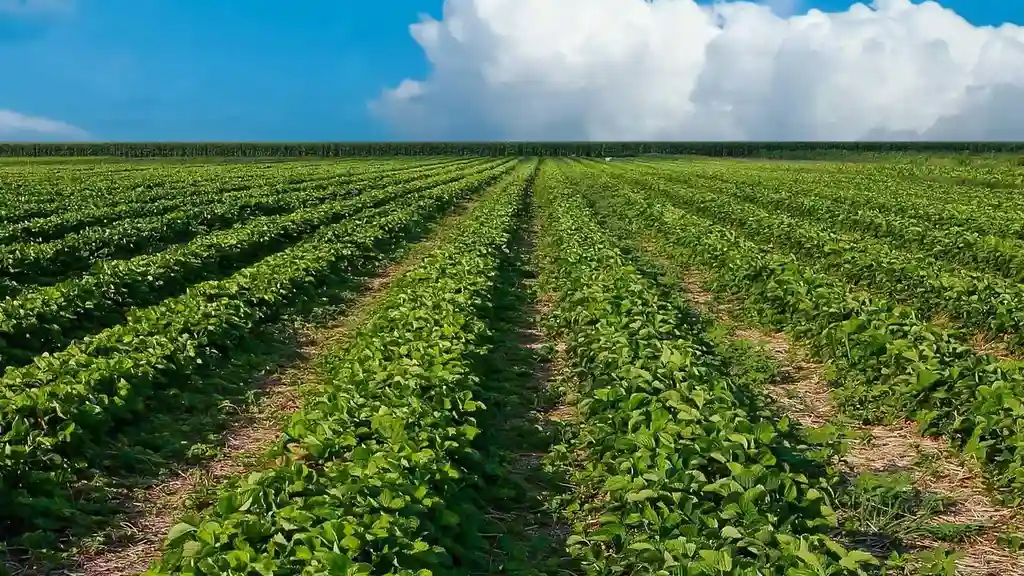
When you think of strawberries in India, you are likely thinking of Mahabaleshwar. This hill station in Maharashtra, along with nearby Panchgani, is the undisputed capital of Indian strawberry cultivation, accounting for approximately 85% of the country's
entire production. The region's cool climate and fertile red soil create the perfect conditions for growing the sweet, aromatic berries that dominate the national market. While Mahabaleshwar reigns supreme, other regions are also making their mark. The cooler northern states of Himachal Pradesh and Uttarakhand, along with emerging areas in Karnataka and the Northeast, are contributing to India's growing strawberry map, each producing fruit with unique flavour profiles.
The Challenge of Climate
Successfully cultivating strawberries in India is a constant battle against the elements. The plant is fundamentally temperate, meaning it thrives in cooler conditions and struggles with intense heat. This makes growing it in India’s subtropical plains a significant challenge. Farmers can only cultivate the crop during the cooler winter months. Beyond just heat, unpredictable weather poses a huge financial risk. Unseasonal rainfall during the peak harvest season, which typically runs from November to January, can devastate an entire open-field crop almost overnight. This vulnerability to weather events has been a major driver for farmers to seek out more stable and controlled methods of cultivation.
Breeding for Resilience
A major hurdle for the Indian strawberry industry is its dependence on foreign plant varieties. Most farmers rely on cultivars imported from the United States and Europe, such as Chandler, Selva, and Pajaro. This reliance not only increases costs for growers due to expensive planting materials but also makes the industry vulnerable to global supply chain disruptions. To solve this, a significant push is underway to create India's first truly indigenous strawberry variety. In a landmark project, institutions like the Mahatma Phule Agricultural University are collaborating with the Bhabha Atomic Research Centre, using techniques like gamma radiation to accelerate genetic mutation. The goal is to develop a strawberry plant that is not only tolerant of India's warmer climate but is also perfectly adapted to local conditions, a long-term quest for agricultural self-sufficiency.
Farming Inside a Controlled World
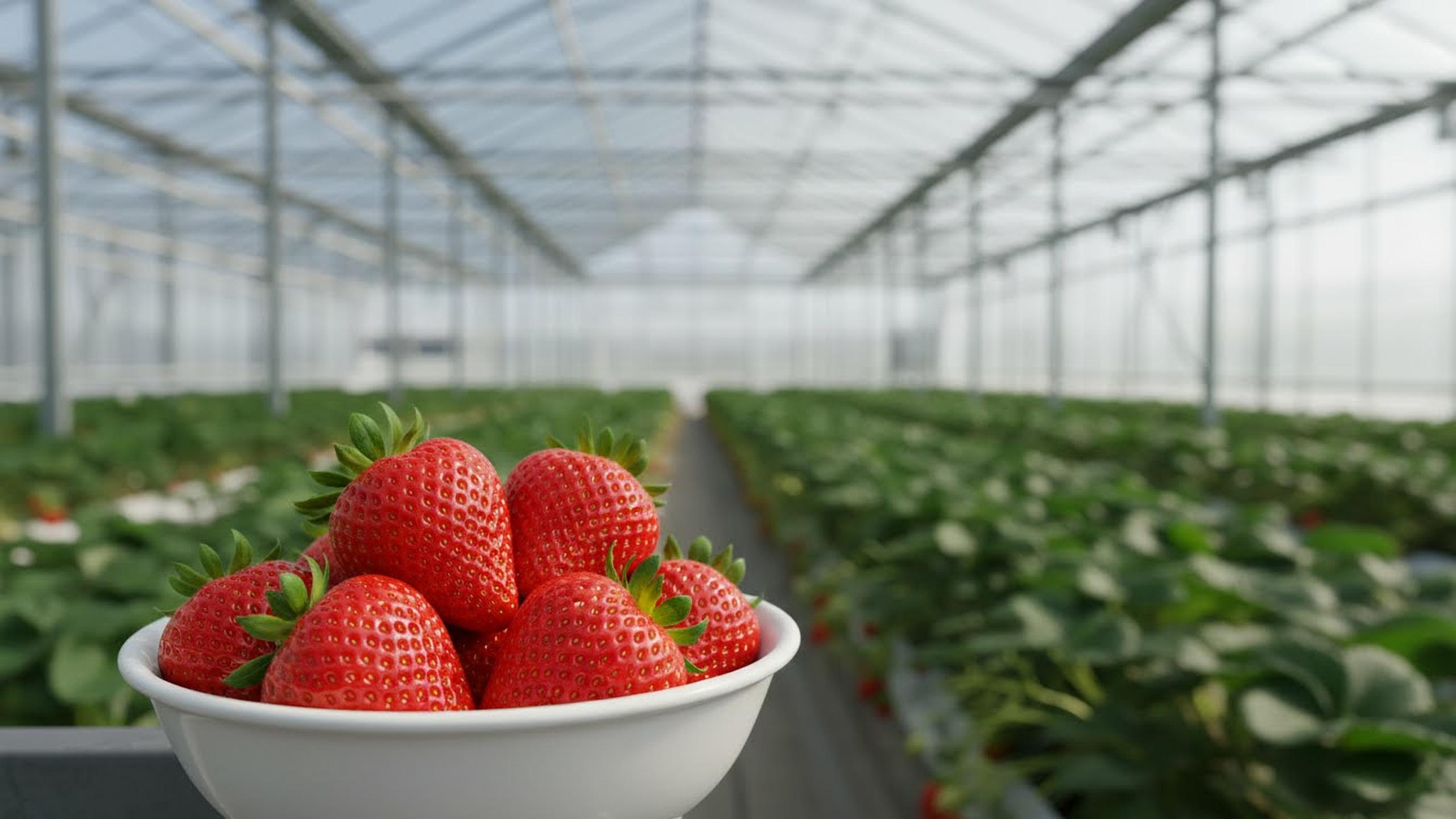
To counter the unpredictability of open-field farming, many Indian growers are turning to technology-driven solutions. The most prominent of these are polyhouses and hydroponics. A polyhouse allows a farmer to control the growing environment, shielding the delicate plants from harsh rain and sun. Some are taking it a step further with hydroponics, a method of growing plants without soil. In a hydroponic system, strawberries are grown in a medium like coco peat, receiving nutrients directly through a water-based solution. This technique dramatically reduces water consumption by up to 80%, minimises the risk of soil-borne diseases, and often leads to higher yields because the fruit never touches the ground, reducing spoilage.
The Rise of the Smart Farm
The technological revolution in strawberry farming doesn't stop with hydroponics. The most advanced farms are now embracing the Internet of Things (IoT) and artificial intelligence (AI) to create truly 'smart' operations. These farms use a network of sensors to constantly monitor crucial data points like temperature, humidity, and nutrient levels, allowing for precise, real-time adjustments. Some systems even use computer vision models to automatically detect the early signs of disease on leaves or fruit, enabling farmers to intervene quickly and prevent widespread damage. By leveraging data, growers can move beyond simply protecting their crops to actively optimising every stage of the growth cycle for maximum quality and yield.