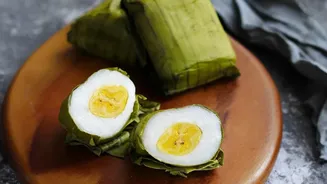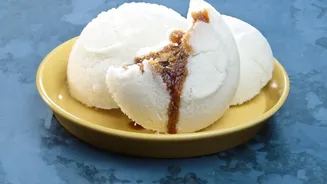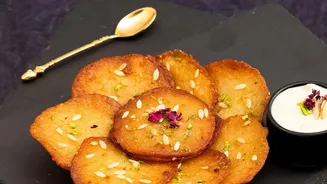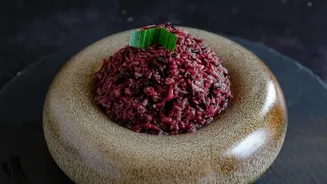




Japanese Mochi: The Ultimate Chew
When you think of a chewy sweet, Japanese mochi likely comes to mind. This iconic rice cake is celebrated for its soft, elastic, and delightfully stretchy consistency. The secret is glutinous rice flour, also called sweet rice flour. Despite the name,
it contains no gluten; the term 'glutinous' refers to its glue-like, sticky quality when cooked. This flour is high in a starch called amylopectin, which gelatinizes with heat and liquid to form a flexible, bouncy structure that stretches instead of breaks. It’s this unique property that gives mochi its signature taffy-like pull, a texture impossible to achieve with regular flour.
Indian Modak: A Delicate Steam
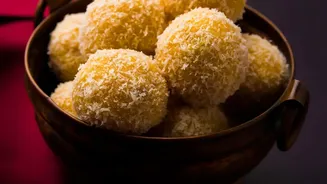
A beloved offering during Ganesh Chaturthi, the Ukadiche Modak from Maharashtra showcases a completely different side of rice flour. Here, regular (non-glutinous) rice flour is mixed with hot water to create a soft, pliable dough called an 'ukad'. This dough is then shaped into a delicate dumpling, filled with a sweet mixture of coconut and jaggery, and steamed. The result is not chewy, but incredibly soft, smooth, and melt-in-the-mouth. The texture is tender and silky, acting as a perfect container for the rich filling inside. A well-made modak covering should be thin and should not feel sticky or overly dense when touched.
Filipino Bibingka: Spongy and Soft
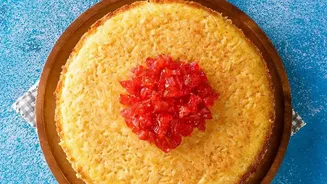
Bibingka is a traditional Filipino rice cake that’s especially popular during the Christmas season. Unlike the previous examples, it’s baked, which gives it a texture similar to a slightly dense, moist quickbread. Made with regular rice flour, coconut milk, and eggs, Bibingka has a soft, close-knit, and slightly spongy crumb. The rice flour contributes a subtle graininess that distinguishes it from wheat-based cakes. While some variations exist, the classic version uses plain rice flour, as glutinous flour would make it dense and sticky, altering its character entirely. Often topped with cheese or salted egg, it’s a wonderful study in sweet and savory flavors, all held together by a tender, comforting texture.
Vietnamese Banh Bò Nướng: The Honeycomb Sponge
This Vietnamese baked cake is a textural marvel, famous for the honeycomb-like tunnels that run through its interior. Banh Bò Nướng achieves its unique appearance and texture through a combination of ingredients and technique. The batter typically uses both tapioca starch for elasticity and rice flour for structure. The magic happens during baking: baking powder creates carbon dioxide, while the high moisture content from coconut milk and eggs turns to steam. This steam inflates the elastic batter, creating long, vertical air pockets that give the cake its signature airy, yet satisfyingly chewy and springy, texture.
Bengali Patishapta Pitha: The Crêpe-like Crisp
Pitha is a broad category of rice-flour snacks from Eastern India, with textures ranging from steamed and soft to fried and crispy. The Patishapta Pitha is a perfect example of how rice flour can be used to create something delicate and crêpe-like. A thin batter of fine rice flour, milk, and a touch of sweetener is poured onto a hot griddle, much like a French crêpe. It’s cooked until the edges are slightly crisp while the center remains soft. The crepe is then filled with a sweet coconut or khoya mixture and rolled up. Here, the rice flour provides a light, non-stretchy structure that can be made thin and slightly crisp, offering a delicate shell for its sweet filling, showcasing yet another of its many textural possibilities.