






The Promise of AI in Climate Action
First, it's important to understand why there is so much excitement. AI, with its ability to analyse massive datasets, offers powerful tools to fight climate change. In agriculture, it can help farmers anticipate climate risks like drought by simulating
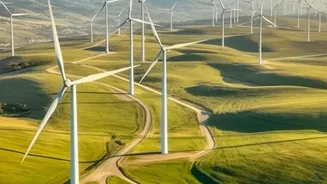
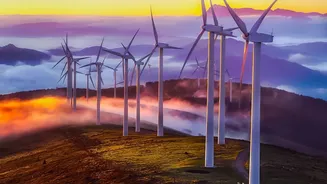
future weather patterns. In the energy sector, AI can optimize renewable energy grids, improving forecasts for wind and solar power to ensure a stable supply. It can also accelerate scientific discovery in areas like climate modeling and the development of new, sustainable materials. The IIT Madras workshop, titled "AI in Action: Climate and Energy Systems Applications," is designed to explore these very applications, focusing on renewable energy forecasting, power-system optimisation, and climate modeling. The goal is to move beyond theory and see how these tools can be applied to real-world problems.
Limitation 1: The Data Dilemma
One of the most significant hurdles is data. AI models are only as good as the data they are trained on, and when it comes to climate science, high-quality data can be hard to come by. In a country as vast and diverse as India, climate data is often inconsistent or unavailable, especially in remote areas. This lack of comprehensive data can lead to AI models that are unreliable or produce skewed results. For instance, an AI model trained to predict sea-level rise using inaccurate data was found to have overestimated the threat by up to 30%. Without robust and consistent data, the predictive power of AI is severely handicapped, a fundamental problem that workshops and researchers must continuously navigate.
Limitation 2: The 'Black Box' Problem
Another major issue is the 'black box' nature of many advanced AI systems. While deep learning models can be highly accurate, their decision-making processes are often opaque, making it difficult for humans to understand how they arrived at a particular conclusion. This lack of interpretability is a major barrier to trust and implementation. If an AI model recommends a costly and disruptive policy—say, relocating a coastal community based on its flood prediction—policymakers need to be able to scrutinize and understand the reasoning behind it. Without that transparency, stakeholders are unlikely to trust or act on AI-driven recommendations, rendering the technology ineffective in a real-world policy context.
Limitation 3: The Carbon Footprint of AI
There's a significant irony in using AI to solve climate change: the technology itself has a substantial carbon footprint. Training large-scale AI models requires immense computational power, which consumes vast amounts of electricity. Many of the data centers that power these computations still rely on fossil fuels, contributing to the very greenhouse gas emissions we are trying to reduce. Furthermore, cooling these energy-intensive facilities requires enormous volumes of water, straining resources in already water-scarce regions. This creates a paradox where the tool being used to fight climate change could inadvertently be contributing to it, a factor that must be weighed when deploying AI solutions at scale.
Limitation 4: From Insight to Action
Finally, even the most perfect AI model is just a tool for generating insights. It cannot, on its own, implement solutions. There is a wide gap between an AI predicting an extreme weather event and the on-the-ground action required to mitigate its impact. Effective climate action requires robust governance, policy implementation, public awareness, and the capacity to act on information. In India, challenges like fragmented governance and a lack of coordination between agencies can hinder the implementation of climate adaptation strategies, regardless of the technology used. An AI can highlight a problem, but it takes human institutions, political will, and financial investment to build resilient infrastructure, manage resources, and protect vulnerable communities.