






As India’s e-commerce demand booms, so does the carbon footprint of its delivery network. Now, a landmark collaboration between Tata Motors and Amazon aims to tackle this challenge head-on, signaling a pivotal shift for logistics in the country.
The Landmark Deal in Detail
In a significant
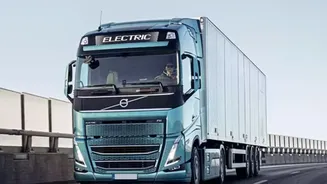
move for India's logistics sector, Amazon and Tata Motors have announced a collaboration to deploy 3,000 electric trucks across Amazon's transportation network. This initiative represents the largest single deployment of electric trucks by any e-commerce company in India to date. The first batch of these vehicles, specifically the Tata Ultra E.7 model, was flagged off in Delhi to coincide with the busy festive season. Under the arrangement, Tata Motors will supply the electric trucks, but it is Amazon's existing network of carrier partners who will own and operate the vehicles. This asset-light approach allows Amazon to rapidly scale up its electric fleet without a massive direct capital investment, while providing its logistics partners with access to new, sustainable technology.
Meet the Tata Ultra E.7
The star of this initiative is the Tata Ultra E.7, a light commercial electric truck designed specifically for modern urban and regional logistics. Built on a proven vehicle platform, it features a 96 kWh Lithium-Iron Phosphate (LFP) battery pack and an integrated e-axle that powers the vehicle with a peak torque of 950 Nm, ideal for the stop-start nature of city freight. With a payload capacity of around 3,100 kg and a gross vehicle weight of 7,490 kg, it is well-suited for moving goods between fulfilment centers and sorting hubs—a process known as middle-mile logistics. Its practical operating range is stated to be up to 180 km on a single charge, and it supports CCS2 fast charging, which can significantly reduce downtime. Tata has also equipped it with a crash-tested cabin and connected vehicle technology for enhanced safety and fleet management.
Amazon's Green Mile Gets Longer
This deployment is a crucial step in Amazon's global commitment to The Climate Pledge, which aims for the company to achieve net-zero carbon emissions by 2040. In India, Amazon had already surpassed its goal of deploying 10,000 EVs, mostly for last-mile delivery, a year ahead of its 2025 schedule. This new collaboration with Tata Motors expands that focus significantly into the middle-mile network. The plan is not just limited to Delhi; the companies intend to electrify the crucial 2,800-kilometre Delhi-Bengaluru-Chennai corridor along National Highway 48. This route is one of the nation's busiest freight arteries, connecting major e_commerce hubs across seven states. To support this, Amazon is working with partners like Yahhvi to develop a network of charging yards, with ten already established and more planned.
The Road Ahead for Electric Freight
While this partnership is a milestone, the broader transition to electric trucking in India faces hurdles. The high upfront cost of an electric truck, often two to three times that of a diesel equivalent, remains a major barrier for smaller fleet operators who dominate the industry. Furthermore, scaling the required charging infrastructure, especially highndensity chargers needed for trucks, presents a significant challenge for India's power grid. Experts note that while the technology is maturing, widespread adoption will depend on supportive financing, reliable charging networks, and clear government policies. This deal between an industry giant like Amazon and a manufacturing leader like Tata is seen as a crucial test case that could demonstrate the operational and economic viability of electric freight at scale, potentially paving the way for wider adoption across the logistics sector.