






A Planet of Extremes
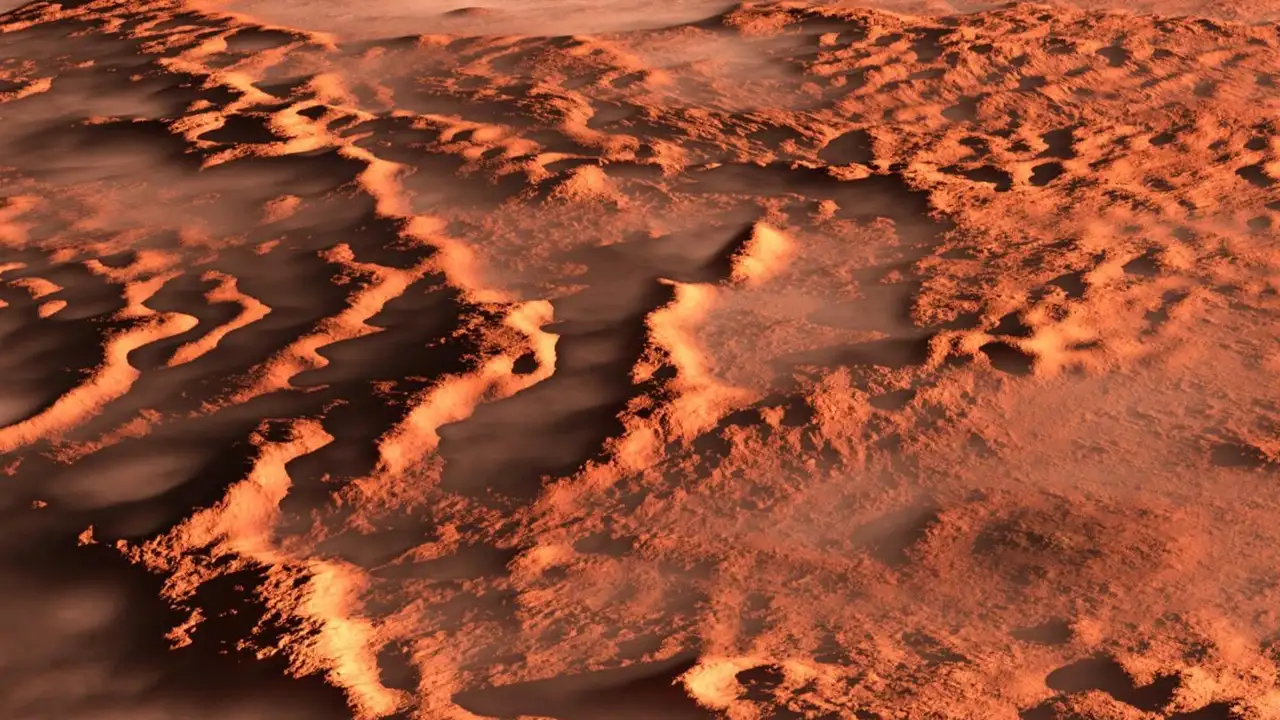
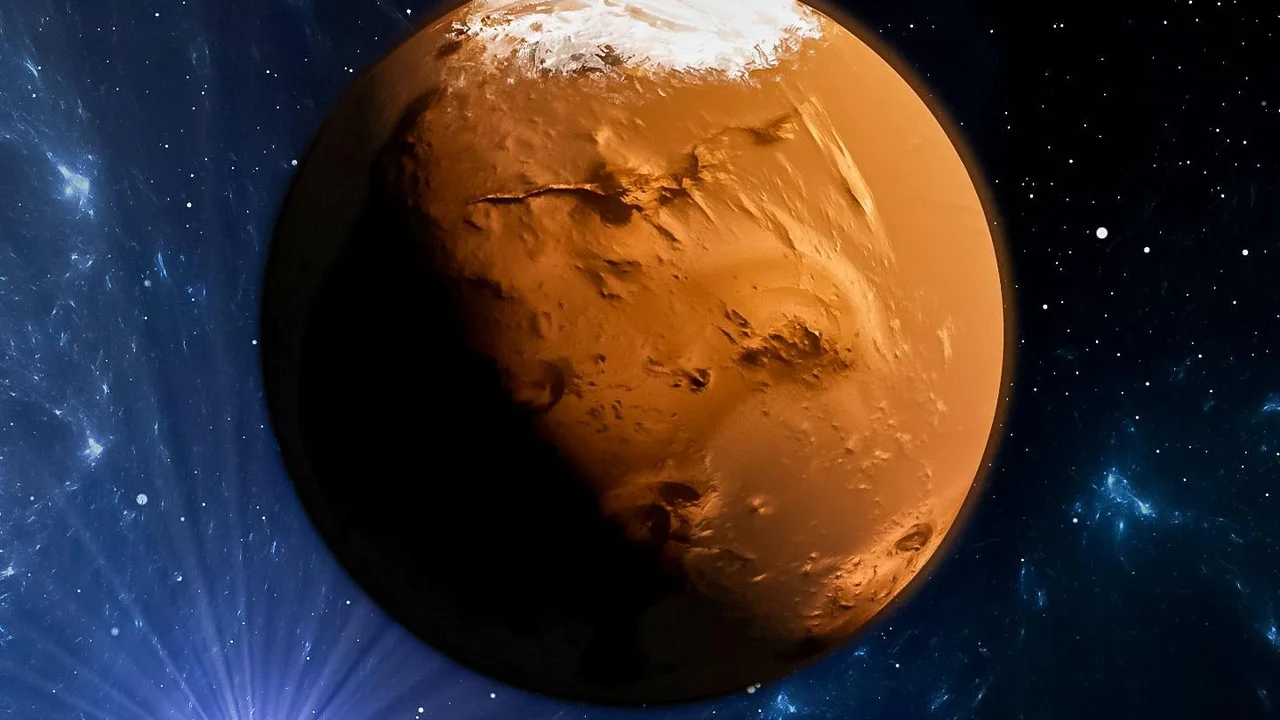
The research, led by scientists from the Physical Research Laboratory (PRL) in Ahmedabad, mapped out the temperature variations across the Martian surface. They discovered staggering fluctuations, with surface temperatures ranging from a frigid -123°C
in winter to a surprisingly mild 27°C during peak summer conditions. These enormous swings are primarily due to Mars's incredibly thin atmosphere, which is about 95% carbon dioxide and is unable to hold or distribute heat effectively like Earth’s thicker atmosphere. As a result, the surface heats up very quickly under sunlight and loses that heat just as fast when the sun sets.
The Southern Summer Effect
The study highlights a key factor in Martian weather: its elliptical orbit. Unlike Earth, Mars's path around the sun is much more oval-shaped. The planet reaches its closest point to the sun, known as the perihelion, during its southern hemisphere's summer. This proximity results in a significantly more intense summer season for the southern half of the planet. The Indian research team noted that temperatures in some southern regions were about 25 Kelvin (a 25-degree Celsius difference) higher than during the same season in the northern hemisphere, creating a major seasonal imbalance.
How Dust Fuels the Fire
This intense solar heating is the main driver for another major Martian phenomenon: dust storms. As the sun warms the southern surface, strong winds are generated, which can lift fine dust particles high into the atmosphere. Once aloft, this dust creates a powerful feedback loop. The airborne dust particles absorb sunlight, heating the air around them. This warmer air intensifies the winds, which in turn lifts even more dust from the surface. This cycle can cause small dust devils to grow into continent-sized storms that can last for weeks, dramatically warming the atmosphere. Observations from India's Mars Orbiter Mission (Mangalyaan) have been crucial in studying these storms and their effect on the Martian climate.
Mapping Atmospheric Waves
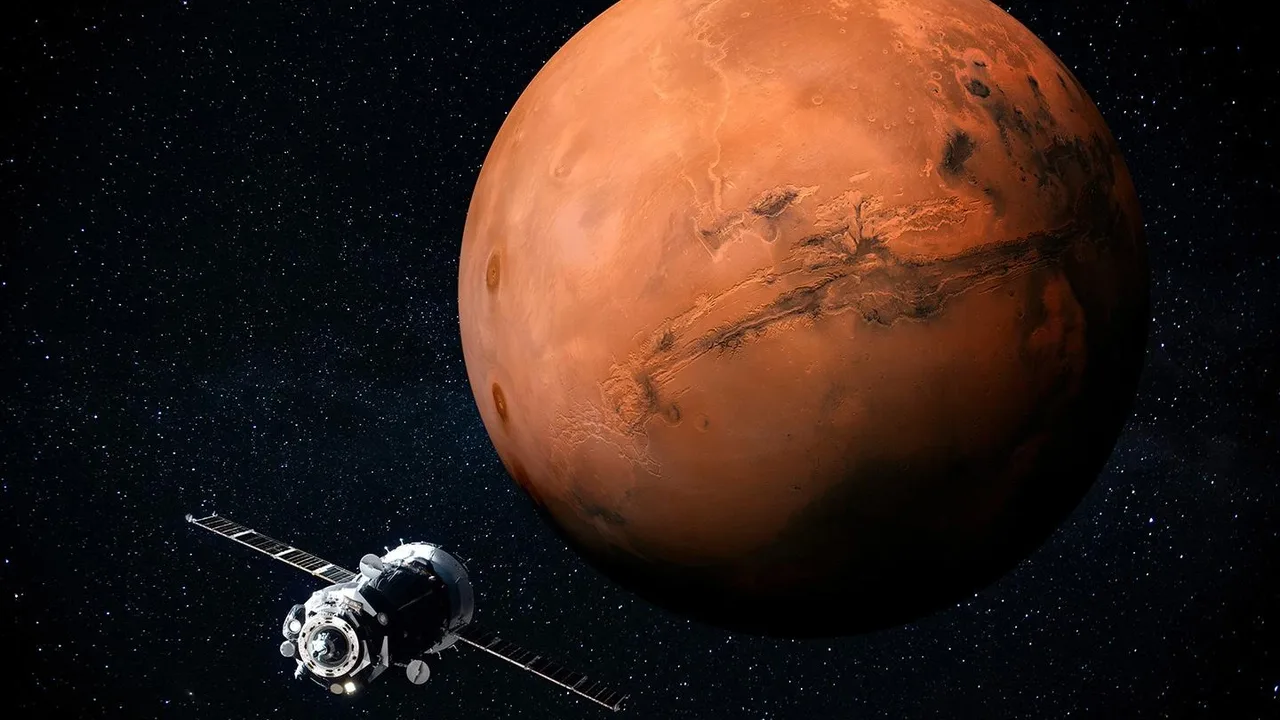
Using data from the Emirates Mars Mission's Hope spacecraft, the PRL scientists focused on two massive impact basins, Hellas and Argyre, to understand these temperature changes. They discovered that the warming doesn't happen uniformly. Instead, thermal energy moves across the planet in large, structured patterns known as zonal waves. These waves are like ripples on a pond, providing an indirect way to track how the thin Martian atmosphere circulates. The unique topography of the deep basins, combined with the intense seasonal heating, drives these complex atmospheric patterns.
Why This Matters for Future Missions
This detailed mapping of Mars's climate is not just an academic exercise. It has critical implications for the future of Mars exploration. The findings from the study showed that existing climate models often predicted temperatures that were about 10 Kelvin cooler than what was actually observed. By refining these models with real-world data, scientists can better predict Martian weather. Understanding these extreme temperature swings and powerful dust storms is essential for designing robotic rovers and, eventually, human habitats that can withstand the harsh and dynamic Martian environment. This research by Indian scientists provides a vital piece of the puzzle for safely landing and operating future missions on the Red Planet.