




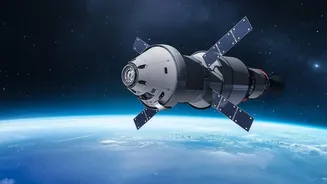

A New Home in Low-Earth Orbit
India is officially on the path to building its own orbiting outpost, the Bharatiya Antariksh Station (BAS). This ambitious project will place India in an elite club of nations with a continuous human presence in space. The government has confirmed that
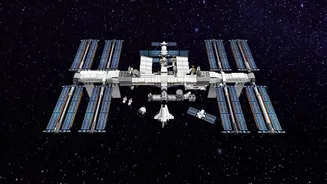
ISRO has started designing the critical subsystems for the station after key approvals were secured. Planned as a 52-tonne, five-module orbital laboratory, the BAS will orbit approximately 400 kilometres above Earth. This will serve as a platform for advanced scientific research in microgravity, astronomy, and materials science, while also acting as a crucial stepping stone for future interplanetary missions. The full station is targeted for completion by 2035, marking the next logical evolution after the Gaganyaan human spaceflight programme.
The Foundation: BAS-01 Module
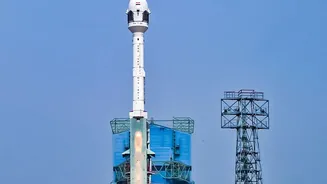
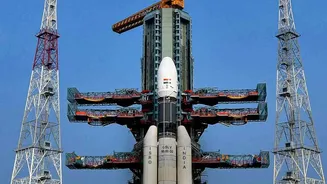
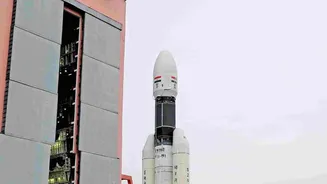
The recent milestone centres on the first and foundational module, known as BAS-01. In a statement to Parliament, the government announced that the Baseline Design Review and System Engineering for this initial module have been completed. This isn't just a conceptual nod; it means a high-level expert committee has reviewed and approved 31 detailed baseline design documents, giving the green light for ISRO's various centres to begin designing the actual subsystems. The BAS-01 module is targeted for launch by 2028 aboard a Human-Rated Launch Vehicle (HLVM3), the same powerful rocket family developed for the Gaganyaan missions. This first module will serve as a test bed for vital technologies like life support systems and will initially accommodate robotic operations before human activity begins.
Building on the Gaganyaan Legacy
The Bharatiya Antariksh Station is not being built from scratch. It heavily leverages the technologies and expertise gained from the Gaganyaan programme, which aims to send Indian astronauts, or 'Gaganauts', into orbit. Key systems developed for Gaganyaan, such as the HLVM3 rocket, the orbital module, crew escape systems, and ground infrastructure, form the technological bedrock for the space station. ISRO has already completed several precursor missions to test these capabilities, including vehicle demonstrations and air drop tests, with the first uncrewed Gaganyaan mission now in advanced stages of preparation. Furthermore, the government has approved the indigenous development of other critical technologies like flight suits, crew viewports, and docking systems, reducing reliance on foreign suppliers and building self-reliance for the long-duration missions planned for the BAS.
The Road to 2035
With the design foundation for BAS-01 now set, the roadmap for India's space station is becoming clearer. Following the module's launch in 2028, ISRO plans to add four more modules to complete the 52-tonne station by 2035. These will include a core docking module, science and laboratory modules, and a common berthing module, all assembled in orbit. This modular approach allows ISRO to manage the technical and financial complexity of such a massive undertaking in a phased manner. The development and launch of the first module alone has an estimated cost, showcasing the nation's significant investment in its space future. This entire endeavour is part of a 25-year roadmap for Indian space exploration laid out by ISRO, which ultimately aims to send an Indian astronaut to the Moon by 2040.