
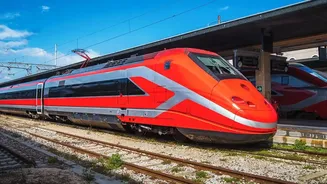

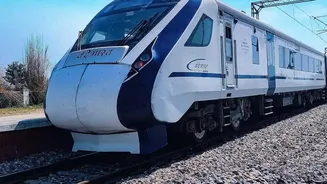
The Current Status: A Phased Launch
As of September 2026, the ambitious Mumbai-Ahmedabad High-Speed Rail (MAHSR) corridor is progressing at a rapid pace, with a phased launch strategy now firmly in place. According to recent updates from Railway Minister Ashwini Vaishnaw, the first section
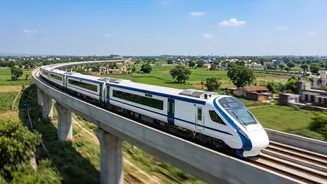
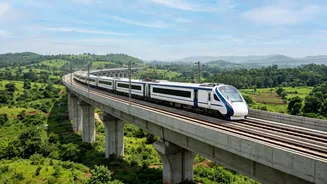
of the bullet train is expected to become operational in August 2027. This initial service will run between Surat and Bilimora in Gujarat, a significant milestone for the project. Construction is advancing swiftly, with work on the Vapi-Surat section expected to be completed by December 2026. Physically, the project's progress is visible on the ground. A recent update from the National High Speed Rail Corporation Limited (NHSRCL) noted that pier work has been completed over 453 km and viaducts have been constructed over 359 km of the 508-km corridor. This shift from planning to tangible infrastructure has moved the project from public skepticism to cautious optimism.
A Landmark Project Years in the Making
The foundation for India's bullet train was laid in September 2017, born from a partnership between India and Japan. The project aims to connect India's financial capital, Mumbai, with the economic hub of Ahmedabad. The 508-kilometre line is designed to operate at speeds of up to 320 kmph, drastically cutting the travel time between the two cities from around eight hours to just about two hours for limited-stop services. The project is being executed with technology and funding from Japan, utilizing the world-renowned Shinkansen system. The agreement includes a significant loan from Japan at a very low interest rate, with a long moratorium on repayments. While the initial target for completion was August 2022, the project faced significant hurdles that pushed back the timeline.
Overcoming Hurdles and Delays
The path to building India's first bullet train has not been smooth. The most significant challenge has been land acquisition, particularly in Maharashtra. For years, progress was slowed by difficulties in securing the necessary land from farmers and other landowners, leading to legal challenges and increased costs. These delays were so pronounced that they became a point of contention, even drawing comments from a former Japanese minister who cited issues on the Indian side. However, Indian officials have since rejected these claims, stating that cooperation is progressing well. In recent years, land acquisition has accelerated dramatically, now standing at over 98% complete across both Gujarat and Maharashtra, which has allowed construction to finally gather steam. Beyond land, the project has also navigated the complexities of large-scale engineering, including the construction of 17 river bridges and an undersea tunnel at Thane Creek.
The 'Make in India' Push
A crucial aspect of the project's recent progress is the emphasis on indigenous manufacturing under the 'Atmanirbhar Bharat' initiative. While the core technology is Japanese, there is a strong push to build the trainsets in India. The first body frame of an indigenous bullet train has been completed and sent for testing. According to the Railway Minister, India's own bullet train is expected to be on the tracks for testing by May or June 2027. After a testing period of a few months, it will be formally inaugurated. This is a two-stage process; the first generation of Indian-made trainsets will have an operating speed of 280 kmph, with later versions aiming for 350 kmph. This domestic manufacturing capability is seen as critical for the long-term vision of expanding the high-speed rail network across the country.