






What Are 'Floatovoltaics'?
Imagine solar panels not on rooftops or fields, but gently floating on the surface of a reservoir or lake. This is the concept behind floating solar, also known as 'floatovoltaics'. It involves mounting standard solar photovoltaic (PV) panels onto buoyant
platforms, which are then anchored to the bed or banks of a water body. These systems transform otherwise unused surfaces of man-made water bodies like dams, reservoirs, and industrial ponds into power-generating hubs. The technology is fundamentally the same as land-based solar, but its application on water unlocks a unique set of advantages and challenges, making it a particularly compelling option for land-scarce countries.
The Land-Saving Advantage
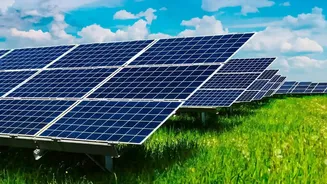
The most significant benefit of floating solar is right there in the headline: it saves land. In a country like India, where land is a precious and often contested resource, this is a game-changer. Traditional utility-scale solar farms require vast tracts of land, often between 5 and 10 acres per megawatt (MW) of capacity, which can create conflicts with agriculture, housing, and conservation efforts. Floating solar sidesteps this entire issue. By utilising the surfaces of existing water bodies, it frees up land for other critical needs. This is especially crucial as India aims to install 500 gigawatts (GW) of renewable energy capacity by 2030, a goal that would be difficult to achieve with land-based projects alone. The National Institute of Solar Energy (NISE) estimates India has a floating solar potential of over 100 GW across its reservoirs and inland water bodies, highlighting a massive, untapped resource.
More Than Just Saving Space
The benefits of putting solar panels on water extend beyond land conservation. One of the key advantages is a boost in efficiency. Solar panels lose performance as they get hotter, a significant issue in India's climate. The water beneath the panels provides a natural cooling effect, which can increase their energy output by 5% to 15% compared to their land-based counterparts. Furthermore, the panel arrays shade the water surface, which significantly reduces evaporation. This is a crucial co-benefit in water-stressed regions, helping to conserve water for drinking, irrigation, and hydropower generation. The shade also helps to suppress the growth of harmful algae blooms, which can improve water quality.
India's Floating Solar Ambition
Recognising this potential, India is beginning to embrace floating solar in a big way. While the current installed capacity is modest at around 700 MW, major projects are underway. These include the large-scale Omkareshwar project in Madhya Pradesh and the Kayamkulam project in Kerala. In a significant policy push in mid-2026, the Union Cabinet approved the Pradhan Mantri Surya Sarovar Yojana (PM-SSY). This INR 5,070-crore scheme aims to install 5,000 MW (5 GW) of floating solar capacity, integrated with energy storage systems, by 2030. The scheme includes financial assistance for project development and feasibility studies, aiming to de-risk investments and accelerate adoption across the country.
Navigating the Challenges
Despite its promise, floating solar is not without its hurdles. The primary challenge is cost. The need for specialised floats, robust mooring systems to handle wind and water level fluctuations, and marine-grade components makes the initial investment for floating solar higher than for traditional solar farms. There are also environmental considerations that require careful study. While often installed on man-made reservoirs, these systems can alter the aquatic ecosystem by reducing sunlight and changing water temperatures, which may affect life below the surface. Some studies have even noted a potential increase in greenhouse gas emissions from certain types of smaller water bodies covered by panels. Ensuring the long-term reliability of these floating structures and streamlining the complex approval processes are other key issues that need to be addressed for the technology to scale effectively.